Why West Nile struggles to speak with one voice when other regions stand united
The Teso Parliamentary Group's appeal to President Museveni over retired Gen. Peter Elwelu has reignited debate about regional solidarity, political cooperation and why West Nile struggles to speak with one voice despite its influential leaders.
Founder & Chief Editor · 5 November 2026 · 9 min read
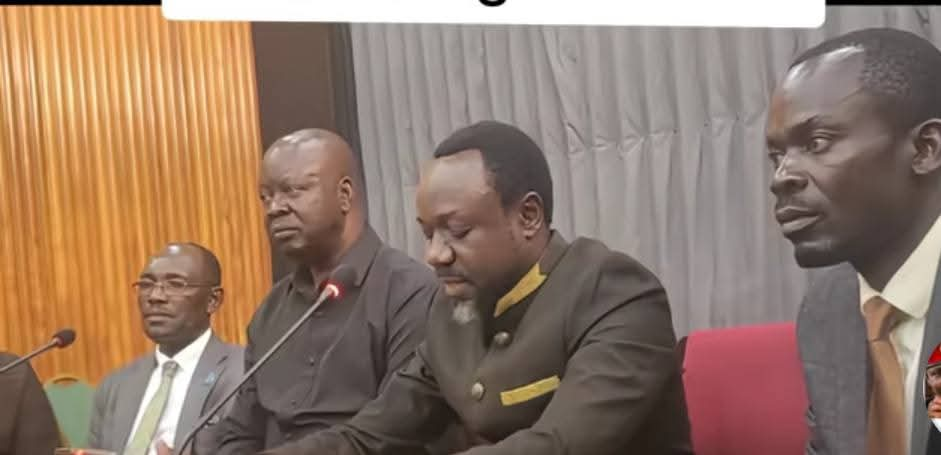
The appeal by the Teso Parliamentary Group to President Yoweri Kaguta Museveni over the arrest of retired Lieutenant General Peter Elwelu has brought an important national conversation into focus: the value of regional solidarity and the ability of leaders to speak collectively on matters affecting their communities. On November 4, 2026, Teso legislators, led by their chairperson, Hon. Simon Peter Opolot Okwalinga, appealed to President Museveni to intervene in Elwelu's matter.
They also requested meetings with the President and the Chief of Defence Forces, Gen. Muhoozi Kainerugaba, to discuss the circumstances surrounding the retired general's arrest.
The legislators called for fairness in handling the matter, citing Elwelu's military service and connection to the people of Teso. They described him as a loyal, patriotic and sociable individual who had demonstrated commitment to his community, government and the military.
Their intervention is significant because it illustrates how regional representatives can organise themselves, identify issues of common concern and collectively seek engagement with national leadership.
It also raises a question that deserves serious reflection in West Nile: Why do some regions appear capable of putting aside political differences to speak collectively for their people, while West Nile often struggles to establish a common voice?
For Osmara Digital Media, this is not simply a question about the arrest of one retired military officer. It is part of a broader conversation about leadership, regional identity, political cooperation and the future of a region with enormous human and economic potential.
WHY OSMARA DIGITAL MEDIA IS RAISING THIS QUESTION NOW Osmara Digital Media has chosen to examine regional solidarity at this particular time because the Teso Parliamentary Group's intervention provides a timely example of collective regional advocacy.
The development presents an opportunity for West Nile to reflect on its own leadership structures, political relationships and capacity to mobilise around issues affecting its people.
As a media organisation committed to covering Africa's political, economic, social and governance developments, Osmara believes journalism should not only report what leaders say and do but also raise questions that encourage public reflection, constructive debate and accountability.
West Nile has many influential sons and daughters serving in government, Parliament, the security forces, public institutions, business, religious organisations and professional bodies. Yet, despite this wealth of human resources, the region's collective voice is not always as visible, coordinated or consistent as it could be.
This matters because regional disunity can weaken the region's ability to articulate development priorities, attract investment, advocate for public services and respond collectively to challenges affecting its communities.
The intention is not to suggest that West Nile should embrace tribal politics, compete against other regions or demand preferential treatment. Rather, the central question is whether its leaders can cooperate across political, ethnic and geographical boundaries in pursuit of the common good.
OTHER REGIONS AND THE POWER OF COLLECTIVE ADVOCACY Across Uganda, different regions have demonstrated the value of organised political and cultural representation. In Teso, the current intervention over retired Gen. Elwelu demonstrates how parliamentary representatives can collectively approach national leadership over an issue involving one of their prominent personalities.
In Acholi, the Acholi Parliamentary Group has historically provided a platform for legislators to discuss shared regional priorities, including education, land, historical injustices and development. Former Minister Henry Okello Oryem has previously emphasised the importance of unity among Acholi legislators. His November 2025 call to restore unity within the parliamentary group highlighted the importance of collective lobbying, including past efforts associated with the establishment of Gulu University and Laroo Boarding School.
In Bugisu, Butiru County MP Godfrey Matembo Wakooli, chairperson of the Bugisu Parliamentary Caucus, has advocated for coordinated engagement among regional legislators. Northern City Division MP Umaru Nangoli, the caucus vice chairperson, has also emphasised the importance of regional MPs speaking with one voice when pursuing development priorities.
Busoga has its own examples of collective engagement through cultural and political leadership, particularly around the interests of the Kyabazinga institution, regional development and community identity.
In Lango, political and cultural leaders have similarly used collective platforms to raise concerns affecting their communities and advance regional development.
These regions are not without political disagreements, internal competition or leadership challenges. Nevertheless, their experiences demonstrate that differences do not have to prevent cooperation on matters of common interest.
The important lesson is that regional solidarity requires organisation, commitment and purposeful leadership.
WEST NILE: A REGION WITH POTENTIAL BUT A FRAGMENTED VOICE? West Nile is one of Uganda's culturally diverse regions, bringing together communities including the Lugbara, Madi, Kakwa, Alur, Aringa and others. Its people have made significant contributions to national development through politics, the military, public administration, education, journalism, business, agriculture and religious leadership.
The region has produced prominent politicians, ministers, legislators, senior military officers, professionals and entrepreneurs.
However, a recurring concern among residents is the apparent difficulty of bringing these different leadership groups together around a sustained regional agenda.
Political competition, ethnic differences, subregional interests and individual ambitions are among the issues that deserve closer examination.
There is also a perception that West Nile leaders are more visible in collective mourning when a prominent son or daughter dies than when that person is alive and facing challenges that require support, intervention or collective advocacy.
When a prominent person dies, leaders often travel from different parts of the region to attend burial ceremonies. Condolence messages are issued, speeches are delivered and communities gather to demonstrate solidarity.
However, when someone is alive and needs support, encouragement, collective intervention or assistance in overcoming difficult circumstances, the same level of mobilisation is not always evident.
This raises an uncomfortable but important question: Why should it take death to bring West Nile leaders together?
There is a provocative Lugbara saying, "Lugbara le avuni", loosely translated to mean that Lugbaras only love a dead body.
The expression reflects a painful criticism of the tendency to demonstrate love and solidarity during funerals while failing to stand together when fellow community members are alive and need support.
Although the saying is associated with the Lugbara community, its message invites wider reflection across West Nile.
Should solidarity only become visible when there is a funeral? Should communities wait until a prominent person has died before organising meetings, making speeches and demonstrating collective support?
Osmara believes genuine solidarity should be demonstrated during people's lifetimes. It should be reflected in supporting their legitimate interests, celebrating their achievements, respecting their rights and helping them overcome challenges.
A Member of Parliament from Yumbe should be able to work with a colleague from Arua, Koboko, Maracha, Moyo, Adjumani, Terego, Zombo, Nebbi or Pakwach whenever an issue affects the wider region.
The same principle should apply to cultural leaders, religious institutions, businesspeople, professionals, civil society organisations and youth representatives.
West Nile needs stronger platforms that bring these stakeholders together beyond election campaigns and occasional political gatherings.
A regional leadership forum or a more active and inclusive West Nile Parliamentary Caucus could provide an opportunity to develop common positions on infrastructure, education, healthcare, agriculture, trade, employment, refugee-hosting communities and investment.
Such a platform should not be controlled by one political party, ethnic group or individual personality. Instead, it should accommodate different voices while maintaining a shared regional development agenda.
WHAT WEST NILE CAN LEARN FROM TESO
The Teso Parliamentary Group's intervention over Gen. Elwelu provides an opportunity for West Nile to examine the value of collective representation.
The legislators have demonstrated the importance of organising, agreeing on a common concern and approaching national leadership through an established channel. Their appeal does not mean that Elwelu should be exempted from the law. Every citizen, regardless of position or military rank, is subject to the law.
However, their call for fairness, due process and engagement demonstrates how regional representatives can articulate concerns while respecting the country's legal institutions.
West Nile should embrace a similar approach whenever legitimate regional interests require collective attention. If a prominent individual from the region faces allegations, leaders should be able to call for due process without prejudging the matter.
If communities experience inadequate infrastructure, limited economic opportunities or poor public services, their representatives should be able to develop a common advocacy position.
If a young entrepreneur, journalist, professional, sports personality or public servant achieves national recognition, the region should be able to celebrate and support that achievement.
Regional solidarity should not be reserved for political emergencies or funerals. It should become a consistent culture of cooperation, mutual support and shared responsibility.
A CALL TO WEST NILE'S POLITICAL AND CULTURAL LEADERSHIP West Nile does not lack influential people. What it needs is a stronger mechanism for bringing their influence together.
Serving and former MPs, ministers, district chairpersons, mayors, cultural leaders, religious institutions, professionals, businesspeople and civil society organisations must consider what they can achieve through cooperation.
The region also needs to recognise that unity does not mean silencing criticism or demanding that everyone agree on every issue. Healthy disagreement is necessary for democratic development.
However, there must be issues on which leaders can agree regardless of political affiliation, ethnicity or geographical location. Development, equal treatment, economic opportunity, infrastructure, education, healthcare and the dignity of West Nile's people should provide common ground.
The region should also look beyond individual personalities and invest in institutions capable of sustaining regional cooperation beyond electoral cycles and changes in political leadership.
THE QUESTION WEST NILE MUST ANSWER
The Teso Parliamentary Group's intervention over retired Gen. Peter Elwelu has provided a timely reminder that collective leadership can give a community a stronger voice.
For West Nile, the challenge is to turn its diversity into an advantage rather than allowing differences to become lasting barriers to cooperation.
Osmara Digital Media raises this issue not to embarrass West Nile leaders but to encourage an honest, constructive conversation about the region's future.
Why can leaders in Acholi, Lango, Busoga, Teso and Bugisu organise collective engagements around issues affecting their communities while West Nile continues to struggle with the question of who speaks for the region?
What prevents West Nile's influential political, cultural and professional leaders from establishing a common platform? And, perhaps most importantly, what could the region achieve if its leaders decided to put aside their differences and pursue a shared development agenda?
West Nile should not wait for another prominent son or daughter to die before recognising the importance of standing together. It must learn to stand with its people while they are alive, celebrate their achievements, support them through difficult moments and collectively pursue opportunities for the next generation.
The region has the people, experience, cultural heritage and resources to command a stronger voice in national affairs.
The question is not whether West Nile has capable leaders. The question is whether those leaders are prepared to work together for the people they represent.
Osmara Digital Media firmly believes that a united West Nile is an important pillar of national unity and a positive force for Uganda's progress. Through collective purpose, stronger regional representation and meaningful participation in national affairs, West Nile can make an even greater contribution to inclusive development, social cohesion and the shared vision of a peaceful, united and prosperous Uganda.
Founder & Chief Editor
Founder and Chief Editor of Osmara Digital Media. Journalist and historian telling Africa's stories through an African lens, from West Nile to the continent.
Related stories
Iganga traders protest disputed taxes, warn of threat to businesses and livelihoods
PRESIDENT MUSEVENI COMMISSIONS 280 UPDF OFFICER CADETS, CALLS FOR ECONOMIC PROTECTION AND STRONGER SECURITY
160 Boreholes, One MP: Hon. Achon's Example Raises a Big Question for Uganda's 353 Constituency MPs