
Iganga traders protest disputed taxes, warn of threat to businesses and livelihoods
Traders, landlords and shop owners in Iganga Municipality are protesting disputed tax demands, alleging excessive charges, inadequate consultation and enforcement measures that threaten businesses, jobs and family livelihoods.

Founder & Chief Editor · 31 October 2026 · 4 min read
By Barasa Richard
IGANGA MUNICIPALITY – For many small business owners in Iganga, keeping a shop open is more than a daily commercial activity. It is how they feed their families, pay school fees, support employees and meet other household responsibilities.
But that source of livelihood is now facing uncertainty as traders, landlords and shop owners protest against what they describe as excessive tax demands and an increasingly difficult business environment under Iganga Municipal Council.
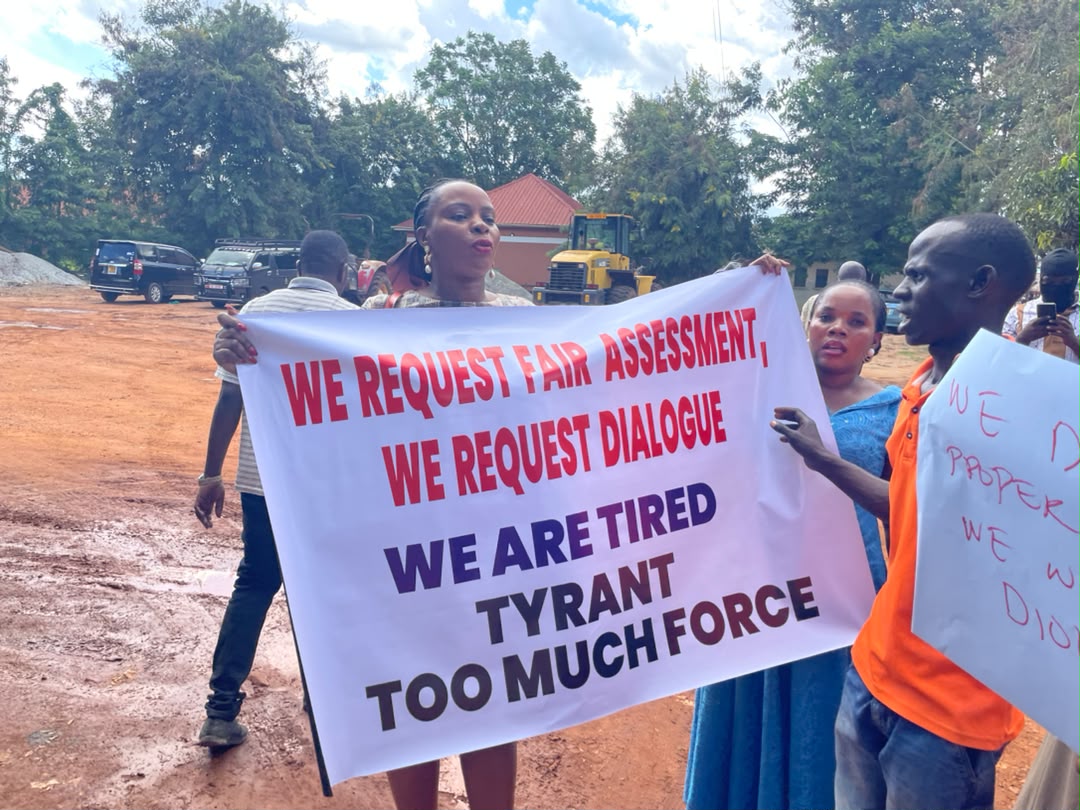
Their frustration recently spilled onto the streets, with vendors marching towards the Town Clerk's office to demand explanations over disputed municipal charges, alleged enforcement measures and what they say is a failure to consult the business community before implementing the tax collection exercise.
For the affected traders, the concern goes beyond the amount of money they are being asked to pay. They fear that if the disputed charges are maintained without review, some businesses could close permanently, employees could lose their jobs and families that depend on daily business income could face further economic hardship.
The enforcement exercise, reportedly spearheaded by the new Town Clerk, Majerani Luboyera, has heightened tensions between municipal authorities and business operators, with reports that several shops and commercial premises have temporarily closed amid uncertainty over the demands.
Kisaka Sharif, spokesperson for the Iganga Business Community, said traders and property owners were deeply dissatisfied with what he described as increased tax rates and charges imposed without adequate consultation with their representatives.
Speaking on behalf of the business community, Sharif called on municipal authorities to reconsider the disputed charges and engage stakeholders before taking further enforcement measures.
He argued that while traders understand their responsibility to contribute to local government revenue, taxation should not become a burden that undermines the very businesses expected to generate that revenue.
Among the reported demands is a charge of Shs40,000 for every worker employed at business premises, alongside alleged increases in trading licence fees.
Landlords are also reportedly facing several property-related charges, including occupation permits, building fees, ground rent, property rates, premium and transfer fees.
Some property owners claim that certain transfer-related charges have reportedly risen to as much as Shs2 million, raising concerns among landlords and potential investors.
However, the applicable rates, the specific categories of property affected and the legal basis of the individual charges require clarification from the municipal authorities.
The dispute has also raised concerns about the reported closure of commercial premises.
Mr Nkwanga Hassan, the LC1 Chairperson of Kasokoso Central 1, said he had received information that some shops were allegedly being closed at night, with municipal authorities reportedly placing seals on the premises.
He expressed concern that such reports were creating fear among business operators, many of whom depend on their shops for daily survival.
For traders operating on limited capital, even a few days without business can mean difficulty paying rent, meeting household expenses and honouring financial commitments.
The situation has therefore become a matter of concern not only for shop owners but also for employees, landlords, suppliers and families whose incomes are connected to the municipality's commercial activities.
During their protest, vendors insisted that they were not refusing to pay legitimate taxes. Instead, they want municipal authorities to explain the disputed charges, demonstrate their legal basis and provide an opportunity for meaningful consultation.
They called for a meeting involving the Town Clerk, municipal councillors, business representatives, landlords and other stakeholders to review the charges and agree on a fair way forward.
The traders also warned that excessive taxation could discourage investment in Iganga, reduce employment opportunities and weaken the commercial activities that sustain many households in the municipality.
Police call for calm
As tensions grew, the Spokesperson for Busoga East Police, ASP Kasadha Michael, appealed to the vendors to remain calm and maintain law and order as they pursue their grievances.
ASP Kasadha urged members of the business community to express their concerns peacefully and avoid actions that could disrupt public order or create security challenges within the municipality.
He emphasised the importance of maintaining peace and stability as the dispute unfolds, calling on all parties to exercise restraint while the concerns surrounding municipal tax enforcement are addressed.
Iganga Municipality remains an important commercial centre in the Busoga sub-region, supporting businesses of different sizes and providing employment to numerous residents.
Its commercial activities also sustain a wider network of people, including market vendors, transport operators, casual labourers, landlords and suppliers.
A prolonged disruption could therefore have consequences beyond the individual traders directly affected by the disputed charges.
For a small shop owner, a closed business can mean more than lost sales. It can mean a child missing school requirements, rent falling into arrears, an employee losing income or a family struggling to afford its next meal.
This is why the business community is appealing for dialogue rather than confrontation.
The traders want Iganga Municipal Council to urgently clarify the disputed tax demands, explain the procedures governing enforcement and address concerns surrounding the reported closure of business premises.
They also want a revenue collection system that recognises the economic realities of small businesses while allowing the municipality to raise the revenue needed to provide public services.
As the standoff continues, the central question facing municipal authorities is how to balance the need for local revenue with the survival of the businesses that sustain the local economy.
For Iganga's traders, the appeal is straightforward: they are willing to meet their tax obligations, but they want to remain in business, protect their employees and continue providing for their families.
Founder & Chief Editor
Founder and Chief Editor of Osmara Digital Media. Journalist and historian telling Africa's stories through an African lens, from West Nile to the continent.
Related stories

Intelligence-led operations lead to arrest of over 300 suspects in Kampala

BUSOGA KINGDOM URGES PR PROFESSIONALS TO PUT PUBLIC TRUST BEFORE PUBLICITY
160 Boreholes, One MP: Hon. Achon's Example Raises a Big Question for Uganda's 353 Constituency MPs