Arua’s Dusty Gateway: The Road Carrying East Africa’s Trucks to DR Congo
A busy unpaved road through Onduparaka in Arua City is carrying heavy trucks from Kenya toward the Democratic Republic of Congo, highlighting the growing importance of Arua as a regional trade gateway.

Founder & Chief Editor · 9 August 2026 · 3 min read
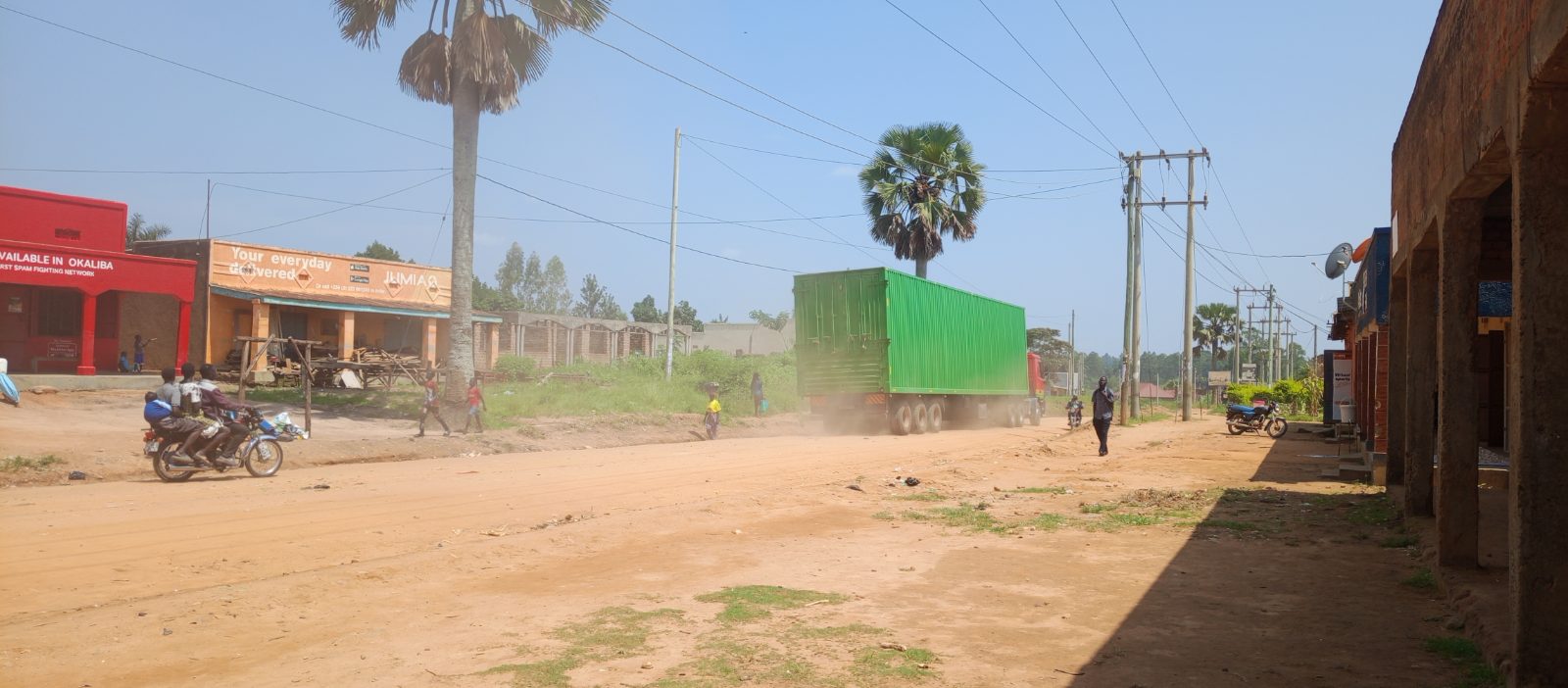
ARUA, UGANDA — Every day, heavy trucks make their way through Arua toward the Democratic Republic of Congo, carrying goods that connect markets across East and Central Africa. Yet, despite the importance of this trade route, one of the key roads leading towards the border remains unpaved, leaving motorists and residents to contend with dust, potholes and deteriorating sections of the road.
The road may cover only a relatively short distance, but its importance stretches far beyond Arua. It forms part of a busy commercial route serving trucks and traders moving goods from countries such as Kenya, Tanzania and Zambia toward the vast Congolese market.
For Arua, a city strategically positioned close to the DR Congo border, the road represents both an economic opportunity and a major infrastructure challenge. During dry weather, passing vehicles raise clouds of dust that settle on nearby businesses, homes and pedestrians. Heavy trucks also place considerable pressure on the road surface, while sections can become difficult to navigate when conditions deteriorate.
The situation has created a striking contradiction. Arua is increasingly seen as an important commercial gateway between Uganda and DR Congo, yet some of the infrastructure connecting the city to this regional market remains below the standard expected of a major trade corridor.
The significance of the road becomes clearer when the movement of goods is considered. Trucks arriving from the wider East African transport network can pass through Uganda before continuing toward DR Congo, making Arua an important point along a route that links producers, traders and consumers across several countries.
For truck drivers, however, the journey is not simply about moving goods from one market to another. Poor road conditions can mean slower travel, higher vehicle maintenance costs, increased fuel consumption and greater wear on tyres and other mechanical components.
For businesses along the route, the road is equally important. Transporters, fuel stations, mechanics, restaurants, accommodation providers and small traders all depend on the movement of people and goods generated by cross-border commerce. A better road could therefore have consequences far beyond transport. Improved connectivity could encourage more investment around Arua, strengthen border trade and create opportunities for businesses that depend on regional logistics.
The proximity of Arua to DR Congo gives the city a natural advantage. The Democratic Republic of Congo is one of Africa's largest countries and has a huge consumer market, while Uganda has increasingly sought to deepen commercial links with its neighbours. But proximity alone does not guarantee economic growth. Roads, border facilities, warehouses, markets, security and efficient customs systems all play a role in determining whether a border city can fully benefit from its geographical position.
For Arua, the unpaved road is therefore more than an inconvenience. It is a reminder of the infrastructure gap that can stand between a city's location and its economic potential.
Residents and transport operators have a strong interest in seeing the road upgraded, particularly as commercial activity around the Uganda-DR Congo border continues to grow. A paved and well-maintained connection would make the movement of trucks smoother while reducing the dust and disruption experienced by communities along the route.
The road also raises a wider question for policymakers: if Arua is expected to serve as one of Uganda's gateways to Central Africa, should the infrastructure connecting it to the border receive the same strategic attention as the trade it supports?
Arua's future may increasingly depend on its ability to turn geography into opportunity. Sitting close to one of Africa's biggest markets is an advantage, but that advantage can only be fully realised when the roads connecting the two sides are capable of carrying the growing volume of trade. For now, the trucks keep moving. From Kenya, Tanzania and Zambia, goods continue to make their way toward DR Congo, passing through a dusty stretch of road that carries a surprisingly large regional economic burden. It may look like just another unpaved road on the outskirts of Arua. But beneath the dust lies a much bigger story about trade, infrastructure and the future of a city positioned at the crossroads of East and Central Africa.
Founder & Chief Editor
Founder and Chief Editor of Osmara Digital Media. Journalist and historian telling Africa's stories through an African lens, from West Nile to the continent.