Day Two: Cocoa Farmers Turn Students Again as Jabara Training Moves From Classroom to Field
Adult cocoa farmers at Jabara Agricultural Vocational Institute turned the field into a lively outdoor classroom on day two of training, learning practical skills in plantation layout, spacing and preparation of planting holes for cocoa seedlings.

Founder & Chief Editor · 1 September 2026 · 6 min read
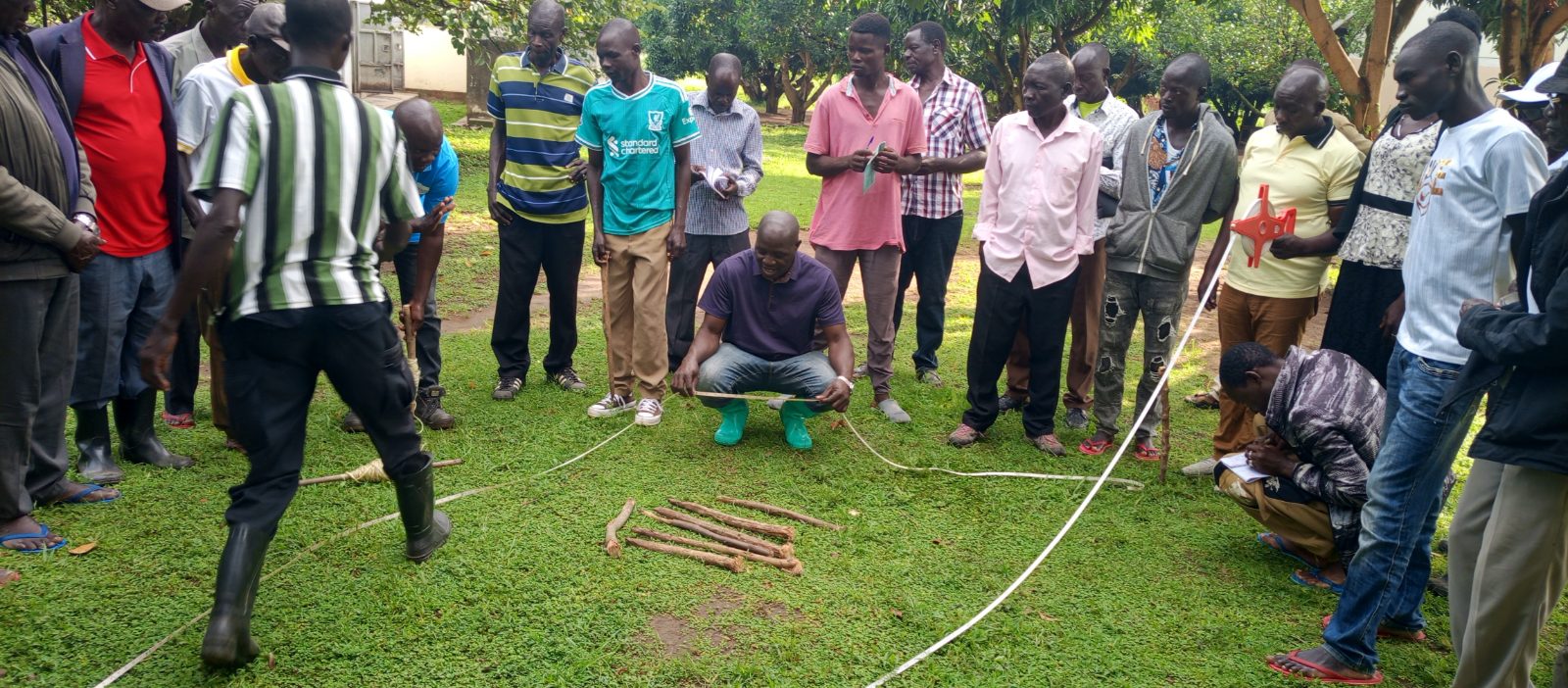
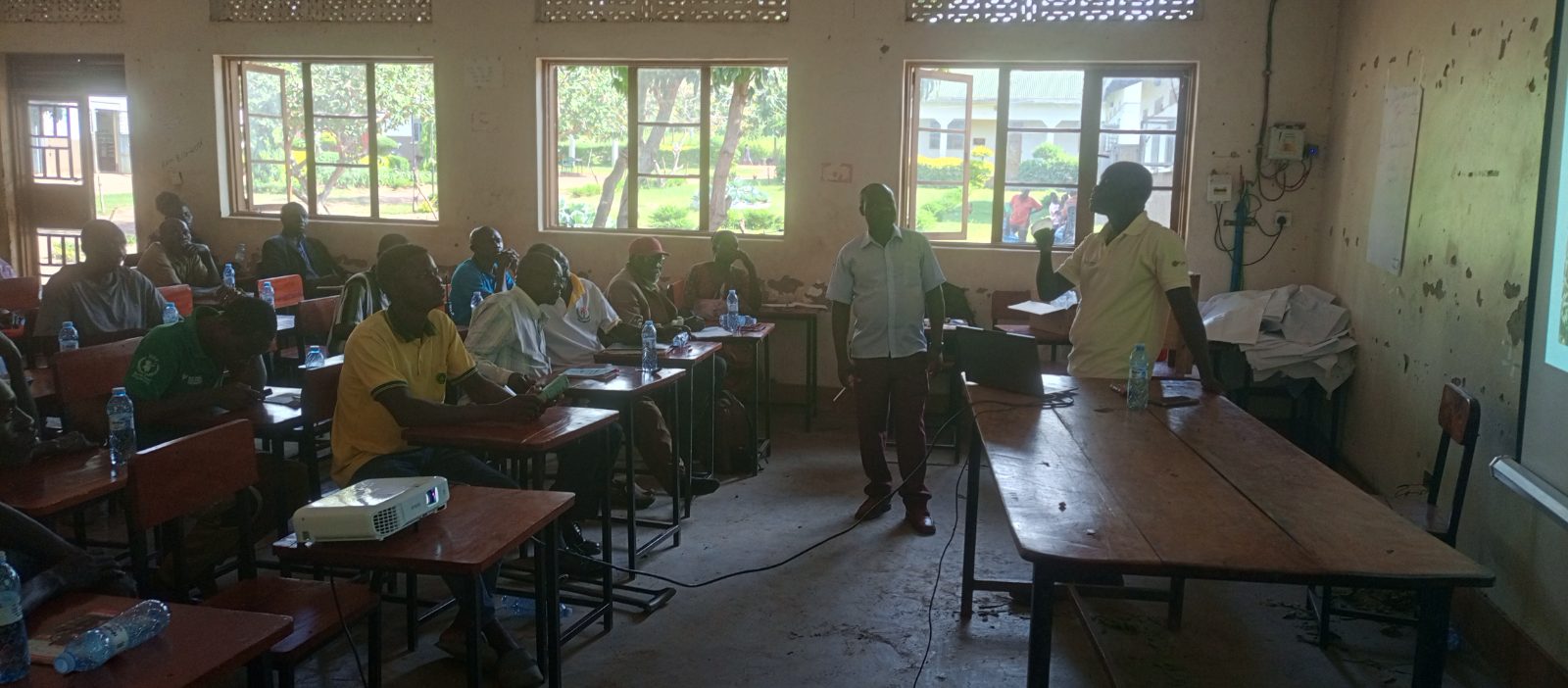
JABARA, KOBOKO — The classroom was still the classroom on the second day of cocoa training at Jabara Agricultural Vocational Institute, but this time the desks and notebooks gave way to measuring tapes, ropes, wooden pegs and hoes as the learners stepped into the field to discover that successful cocoa farming starts with a ruler, a straight line and plenty of questions.
For the adult cocoa farmers taking part in the training, the day offered a refreshing return to the kind of practical learning associated with school days. They gathered around the demonstration field with the curiosity of children seeing a new lesson for the first time, watching closely as instructor William Aliku stretched the measuring line and began explaining how a farmer should plan the position of every cocoa tree before putting a seedling into the ground.
The atmosphere quickly became lively as students followed the demonstration, measured distances, held the line, inserted wooden pegs and recorded observations. Every few moments, another hand went up with a question, turning the open field into an interactive classroom where nobody appeared shy about asking for an explanation.
Aliku told the students that plantation layout and spacing should not be treated as a minor part of cocoa farming because mistakes made at the beginning can affect the plantation for many years. A farmer who plants without carefully measuring the field may later struggle with movement between rows, pruning, canopy management, pest and disease inspection and harvesting.
The practical centred on the establishment of a one-acre cocoa plantation designed for approximately 459 trees, using a 3-metre by 3-metre spacing arrangement. Aliku guided the students in establishing a straight baseline along the edge of the field and marking three-metre intervals where the wooden pegs would be placed.
The students immediately became part of the lesson. Some stretched the measuring tape across the field, others held the line firmly while measurements were taken, while those carrying notebooks carefully recorded what was being demonstrated. The work created the impression of a school practical session, only that the students were adults who had returned to the classroom to improve a skill connected to their farms.
Questions came from different corners of the group as the students sought to understand not only what Aliku was demonstrating, but also why each measurement mattered. They asked why three metres was being used, how the spacing would affect the growth of cocoa trees, how walkways could be maintained and what farmers should do when the land is not perfectly level.
Others wanted to know how they could ensure that rows remained straight across a large plantation and how they could establish the corners accurately. Rather than dismissing the questions as simple, Aliku used each one as an opportunity to explain another aspect of plantation establishment.
The instructor demonstrated the 3-4-5 method for establishing a right angle, showing the students how measurements can be used to create properly aligned rows. The students watched carefully before putting the lesson into practice, with several taking turns to handle the measuring equipment and place the pegs.
At one point, the field was filled with the sort of excitement normally associated with a classroom where students have just discovered an interesting practical experiment. A question from one learner would often trigger another question from someone else, while others leaned forward to watch the demonstration more closely before returning to their own measurements.
From Pegs to Planting Holes Once the layout had been established, the practical moved to another important stage of cocoa production — digging and preparing planting holes. Aliku explained to the students that correct spacing is only the beginning because the position marked by each peg must eventually become a properly prepared planting point. The students were therefore shown how to locate the centre of each marked position and dig a suitable hole for a cocoa seedling.
The learners watched as Aliku demonstrated how to remove the soil carefully while maintaining the position of the planting point. The recommended planting-hole dimensions used during the practical were approximately 60 centimetres long, 60 centimetres wide and 60 centimetres deep, giving the young cocoa seedling enough prepared soil in which to establish its roots.
Again, the questions came quickly. Students wanted to know why the holes needed to be that size, what should be done with the soil removed from the holes and whether the same measurements should be maintained across the entire plantation.
Aliku explained that properly prepared holes give the seedlings a better start because the soil around the planting point can be loosened and prepared before the seedling is transplanted. He also stressed the importance of preparing the holes correctly rather than simply making shallow openings in the ground and placing seedlings inside.
The students then took turns practising the technique. With hoes and other basic field tools, they began opening the marked planting points while checking the depth and width of the holes. Those who were not digging watched their colleagues closely, sometimes asking questions and comparing the measurements to ensure they were following the demonstration correctly.
The exercise turned the field into a busy practical laboratory, with students moving from one marked point to another and applying what they had just learned. Some concentrated on digging, others checked measurements, while classmates observed and offered questions whenever something was unclear.
The lesson also helped the students understand the connection between the different stages of plantation establishment. The measuring line determines where the tree will stand, the peg identifies the exact planting point and the properly prepared hole creates the space where the seedling will eventually establish itself.
For the farmers attending the training, this was perhaps one of the most important messages of the day: good cocoa production begins before the seedling reaches the soil. The quality of the preparation can influence how easily a young tree establishes itself and how manageable the plantation becomes as it grows.
The practical therefore moved beyond mathematics and measurements. It gave the students a chance to understand how decisions made before planting can influence the future life of a cocoa farm. What appeared to be simple lines, measurements, wooden pegs and holes were, in reality, the first blueprint of a plantation that could remain productive for years.
For the farmers attending the training, the experience also demonstrated the value of learning by doing. Instead of sitting quietly and waiting for information to be delivered, they asked questions, challenged themselves to understand the measurements, handled the tools and participated directly in preparing the field.
By the end of the session, the open field had taken on the appearance of a giant classroom exercise book, with lines and pegs replacing written diagrams and freshly dug planting holes marking where future cocoa trees could stand. The students had not only heard about proper cocoa spacing and planting-hole preparation; they had physically measured it, marked it and practised it on the ground.
Day two therefore left the learners with a practical lesson that could be taken straight from Jabara back to their own farms: before planting cocoa, measure carefully, plan properly, prepare the planting holes well and never be afraid to ask questions.
For these cocoa farmers, going back to class may have brought back memories of their school days, but the lesson at Jabara was firmly connected to their future — and this time, the classroom could lead directly to a more organised and productive farm.
Founder & Chief Editor
Founder and Chief Editor of Osmara Digital Media. Journalist and historian telling Africa's stories through an African lens, from West Nile to the continent.
Related stories
Koboko Cocoa Farmers Cooperative Takes Farmers Back to Class at Jabara
West Nile Cocoa Future Begins at Jabara: Farmers Trained to Turn the ‘Green Gold’ into Household Income
Koboko Cocoa Cooperative Brings West Nile Farmers Together for Three-Day Training