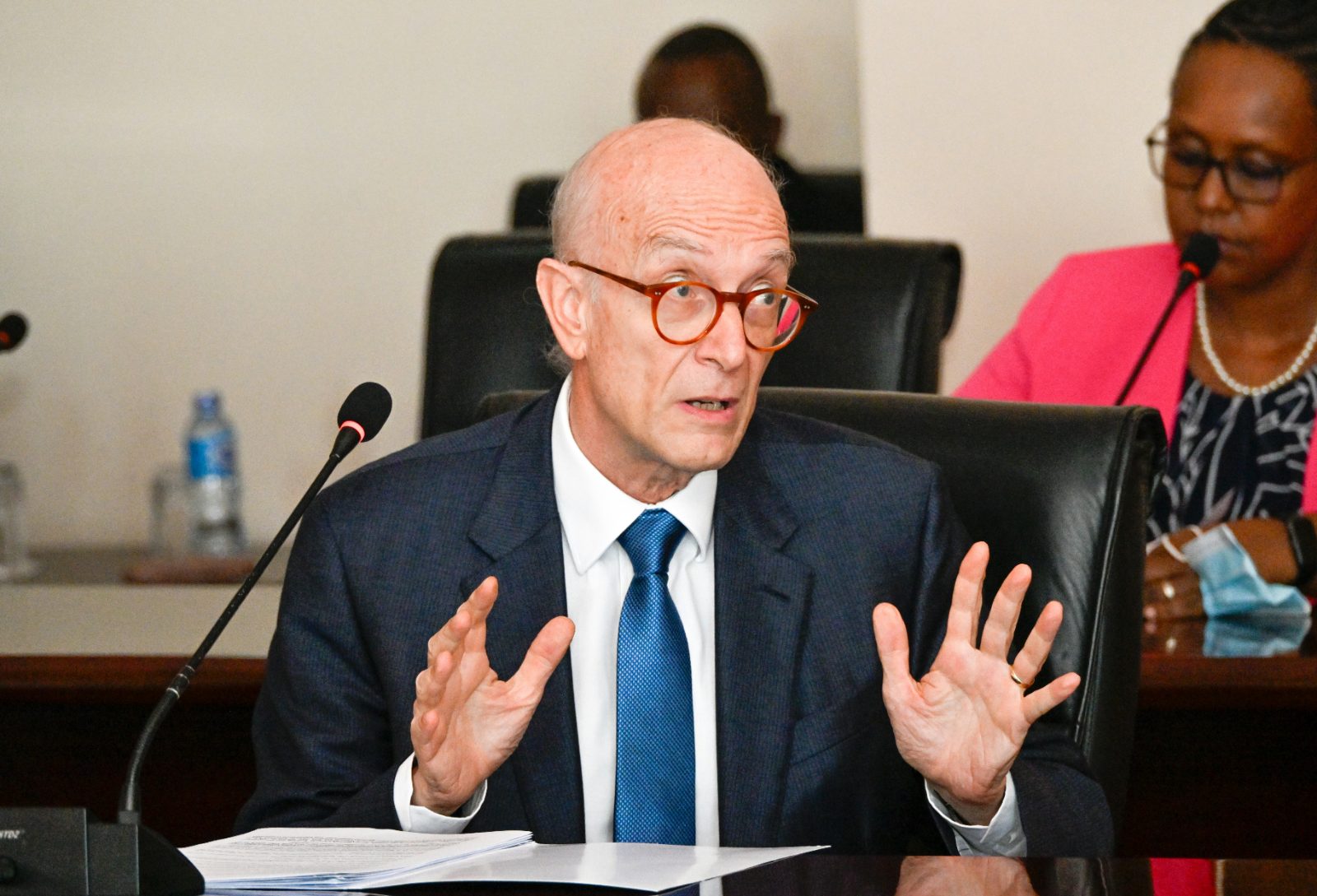
Koboko Mourns a Pioneer: The Political Legacy of George Ambe from Arua District to Koboko
Koboko mourns George Wilson Ambe, a pioneer local government leader whose political journey from Arua District to the creation of Koboko District helped shape the district’s early institutions.
Founder & Chief Editor · 28 August 2026 · 7 min read
By Osmara Digital Media
KOBOKO, UGANDA — When a community loses one of the people who helped shape its political foundations, the mourning is never only about the death of an individual. It is also a moment when a community pauses to remember where it came from, the people who carried its hopes before it had strong institutions of its own, and the leaders who helped transform an idea of self-governance into a functioning reality.
In Koboko, the death of George Wilson Ambe has brought such a moment of reflection, reopening memories of a political journey that stretches from the wider Arua District to the emergence of Koboko as a district in its own right.
Ambe's death has therefore touched a particularly important part of Koboko's political history because his public life was closely connected to the period when the area was moving from being administered within the wider Arua District to having its own district identity and local government structures.
Before Koboko became a district, it was part of the larger Arua District, one of the major administrative areas of West Nile. Political leaders from Koboko operated within that wider framework, representing their communities in structures whose administrative reach extended far beyond the boundaries that residents of Koboko know today.
It was within that political environment that Ambe began building his record of public service. He served on the Arua District Council, becoming part of a generation of local leaders who participated in governance before Koboko acquired district status.
His experience in the Arua District Council gave him an understanding of local government at a time when communities were increasingly looking for greater representation and closer access to government services. It also prepared him for the political changes that would eventually reshape the administrative map of West Nile.
A major turning point came in 1997, when Koboko was elevated to district status after being carved out of the larger Arua District. The creation of the new district marked an important moment in the history of the area, giving the people of Koboko their own district administration and creating new political institutions through which local priorities could be articulated.
For Koboko, becoming a district was more than an administrative adjustment. It represented a new chapter in the community's political identity. The people were no longer looking only towards a larger district headquarters for local government leadership; they now had their own district structures that required leaders, systems and institutions to be established. George Ambe was among the pioneers who stepped into that new political landscape. He became the first Local Council V chairperson of Koboko District, placing him at the centre of the district's formative political period. He later became the first Speaker of Koboko District, further cementing his place among the leaders who helped establish the foundations of the new local government.
Being the first to occupy such offices meant that Ambe and his contemporaries were operating without the benefit of an established institutional tradition within the new district. They were helping to create the political culture that subsequent leaders would inherit.
The council chambers of the early Koboko District were therefore not simply places where political debates took place. They were spaces in which the meaning of local government for a newly created district was being defined.
Ambe's experience was particularly significant because he had witnessed both sides of the transition. He had served under the wider Arua District administration and later participated in the political leadership of Koboko after it gained district status. His career consequently provides a human link between two periods in West Nile's administrative history.
The journey from Arua District to Koboko District also reflected a wider process of decentralisation that was changing local governance across Uganda. New districts were being created in different parts of the country with the aim of bringing administration and public services closer to communities. For residents, the creation of a district created expectations of better representation, improved service delivery and greater local participation in decisions affecting their lives. Those expectations placed enormous responsibility on the first generation of leaders.
Ambe's generation had to navigate the practical realities of establishing a new district while responding to the expectations of citizens who wanted to see the benefits of local government translated into development. Roads, education, health services, agriculture, community mobilisation and other local priorities all required political attention.
His contribution to local government must therefore be understood within the broader circumstances of the period in which he served.
But Ambe's political legacy was not confined to the offices he occupied. His involvement in public affairs continued to connect him with discussions about the future of Koboko and the aspirations of its people.
In later years, he was associated with the “Koboko We Want” initiative, reflecting an enduring interest in the direction and development of the district. The initiative provided another avenue through which ideas about the future of Koboko could be discussed, particularly by people who had witnessed the area's political transformation over several decades.
That continued engagement is important in understanding Ambe's legacy. Political service does not always end when an individual leaves formal office. For many leaders of his generation, public life remained connected to community affairs long after their official responsibilities had ended.
His death has consequently revived conversations about the people who helped establish Koboko's political foundations and the extent to which their contribution is remembered by younger generations.
For a district that has undergone significant social, political and economic change since 1997, the story of its pioneers provides an important record of where it came from.
Ambe's passing also raises a wider question about the preservation of local history in West Nile. Much of Uganda's political history is remembered through presidents, ministers, Members of Parliament and national political events, while the contributions of district leaders can receive far less attention.
Yet local government is where many citizens encounter the state most directly. The councillors, chairpersons, speakers and other local leaders who served during the formative years of new districts played an important role in building institutions that continue to operate today. Their experiences, decisions and struggles form part of the historical foundation of communities. In Koboko, George Ambe was one of those figures.
His political journey from the Arua District Council to becoming the first LC V chairperson and later the first Speaker of Koboko District captures a significant part of the district's transformation. It is a story of a politician whose career moved alongside the changing administrative identity of his community.
For those who came after him, the institutions may now appear established and familiar, but they were once new and uncertain. Someone had to sit in the first council, preside over the first debates, establish procedures and help give meaning to the new political structures. Ambe was among the people who carried that responsibility.
As Koboko mourns him, the district is therefore mourning not only a former political leader but also a witness to an important chapter of its own history. His death provides an opportunity for the community to remember the generation that helped move Koboko from being part of the wider Arua District to becoming a district with its own political and administrative identity.
For his family and friends, his death is a deeply personal loss. For former colleagues and political leaders, it is the passing of a colleague whose public life formed part of the history of local government in West Nile. For the people of Koboko, it is the loss of one of the pioneers associated with the early years of their district.
The challenge now is to ensure that the history represented by his life does not disappear with his passing.
The memories of those who served with him, worked alongside him and witnessed the birth of Koboko District can help preserve a record of the difficult and important journey that preceded the district's present-day identity.
As younger leaders take responsibility for Koboko's future, the story of Ambe offers an opportunity to reflect on the meaning of public service and the responsibilities that come with being entrusted with the leadership of a community. His political journey began when Koboko was still part of the larger Arua District. It continued through the historic creation of Koboko District in 1997 and into the years when its new political institutions were taking shape.
That journey makes George Wilson Ambe more than a former local government leader. It makes him part of the institutional memory of Koboko. And as the people of Koboko say farewell to one of their pioneers, they are also remembering the journey of their district itself — a journey from the political structures of Arua to a Koboko that today stands with an administrative and political identity of its own.
Founder & Chief Editor
Founder and Chief Editor of Osmara Digital Media. Journalist and historian telling Africa's stories through an African lens, from West Nile to the continent.
Related stories
Yumbe’s Cultural Heritage: Traditions That Still Define the People
Dr Michelle Corral Returns to Uganda With Mission to Support Refugees and Spark Revival
Dr Michelle Corral to Visit Bidi Bidi in Yumbe District with Hope and Christmas Gifts