Burkina Faso's Farming: Building Resilience in the Sahel
Burkina Faso's farming supports livelihoods despite climate and security challenges.

Founder & Chief Editor · 31 July 2026 · 4 min read
By Osmara Digital Media
Agriculture is the backbone of Burkina Faso's economy and the main source of livelihood for the majority of its population. Located in the Sahel region of West Africa, the landlocked country depends heavily on farming and livestock production to support food security, create employment, and generate income. Nearly 80 percent of Burkinabè rely directly or indirectly on agriculture for their daily living, making the sector one of the country's most important economic pillars. It contributes a significant share of the national Gross Domestic Product (GDP) and plays a crucial role in reducing poverty, especially in rural communities.
Most farmers in Burkina Faso are smallholder producers cultivating family-owned plots using traditional farming methods, although the adoption of improved technologies is gradually increasing. Agriculture is largely rain-fed, with the farming season depending on rainfall between May and October. This reliance on seasonal rains makes crop production highly vulnerable to changing weather patterns. Climate change has intensified droughts, irregular rainfall, rising temperatures, and occasional floods, all of which threaten harvests and increase food insecurity. The country also faces challenges from desertification, soil degradation, and declining soil fertility, reducing the amount of productive agricultural land available each year.
Despite these obstacles, Burkina Faso produces a wide variety of crops that feed the nation and contribute to exports. Staple food crops include sorghum, millet, maize, rice, cowpeas, groundnuts, Bambara beans, cassava, and sweet potatoes. Sorghum and millet are especially important because they are well suited to the country's dry climate and remain the primary food source for millions of households. Rice cultivation has expanded in irrigated areas as the government works to reduce dependence on imported rice and strengthen national food production.
Cotton remains Burkina Faso's most important cash crop and one of its largest export commodities. The country has long ranked among Africa's leading cotton producers, with thousands of farming households depending on cotton sales to pay for education, healthcare, housing, and other essential needs. Other important commercial crops include sesame, cashew nuts, shea nuts, mangoes, onions, tomatoes, green beans, and various fruits and vegetables. Shea nuts are particularly valuable because they are processed into shea butter, a product widely exported for use in cosmetics, pharmaceuticals, and food industries. The shea industry also provides employment and income for thousands of rural women who collect and process the nuts.
Livestock farming is another essential part of Burkina Faso's agricultural economy. Many households combine crop cultivation with the rearing of cattle, goats, sheep, poultry, pigs, donkeys, and camels in the northern regions. Livestock provides meat, milk, hides, transport, manure for improving soil fertility, and a reliable source of income during difficult farming seasons. The country also exports live animals to neighboring West African countries, contributing to regional trade and economic growth.
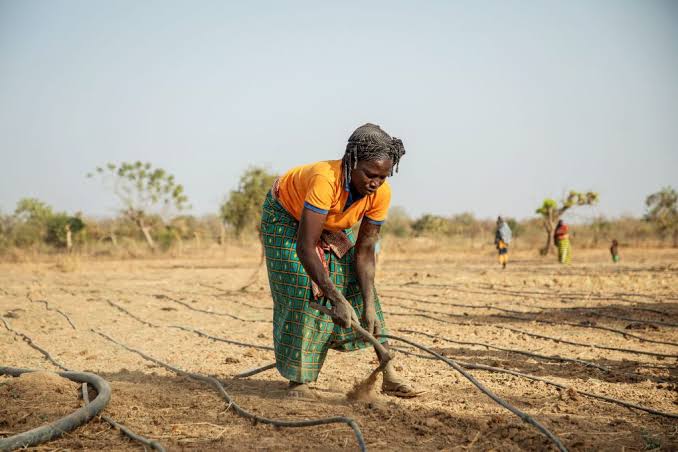
Although irrigation covers only a small percentage of cultivated land, investments in water management have increased in recent years. Small dams, reservoirs, boreholes, solar-powered irrigation systems, and water harvesting techniques are helping farmers produce vegetables and other high-value crops during the dry season. These initiatives improve food availability, increase household incomes, and reduce dependence on unpredictable rainfall.
Burkina Faso has also embraced climate-smart agriculture to strengthen resilience against climate change. Farmers are increasingly adopting improved seed varieties, conservation agriculture, agroforestry, crop rotation, composting, organic manure, rainwater harvesting, and soil conservation practices such as stone bunds that reduce erosion and improve water retention. These techniques help maintain soil fertility, increase crop yields, and protect the environment for future generations.
Women play a central role in agriculture, participating in planting, harvesting, food processing, livestock management, and local markets. They are especially active in vegetable farming and shea butter production, which provides an important source of household income. Young people are also being encouraged to enter agriculture through vocational training, agribusiness initiatives, access to finance, and digital technologies that improve farming practices and market access.
Despite its importance, the agricultural sector continues to face major challenges. Climate change remains one of the greatest threats, bringing prolonged droughts, floods, and unpredictable rainfall. Farmers also struggle with land degradation, soil erosion, pests, crop diseases, high fertilizer prices, limited access to improved seeds, insufficient agricultural financing, poor rural roads, inadequate storage facilities, and post-harvest losses. In recent years, insecurity caused by armed conflict has forced many farming families to flee their homes, leaving productive land uncultivated and disrupting food production across several regions.
The Government of Burkina Faso, working alongside development partners such as the Food and Agriculture Organization (FAO), the African Development Bank, the International Fund for Agricultural Development (IFAD), and the World Bank, continues to invest in strengthening the agricultural sector. Efforts include distributing improved seeds, supporting fertilizer programs, expanding irrigation infrastructure, improving rural roads, promoting agricultural mechanization, strengthening extension services, encouraging farmer cooperatives, supporting livestock health through vaccination campaigns, and investing in agricultural research and innovation.
Looking ahead, Burkina Faso has significant potential to transform its agricultural sector through increased investment in irrigation, mechanization, climate adaptation, agro-processing industries, rural infrastructure, and access to finance. Expanding value addition for cotton, sesame, shea butter, fruits, vegetables, and livestock products could create jobs, increase exports, and improve incomes for farming households. Continued investment in sustainable agriculture, peace, innovation, and rural development will be essential to ensuring long-term food security and economic growth.
Agriculture will remain the heart of Burkina Faso's economy for many years to come. The resilience, determination, and innovation demonstrated by the country's farmers continue to sustain millions of families despite difficult conditions. With stronger policies, increased investment, and continued support for climate-resilient farming, Burkina Faso's agricultural sector has the potential to drive inclusive economic development, reduce poverty, and strengthen food security across the nation.
Founder & Chief Editor
Founder and Chief Editor of Osmara Digital Media. Journalist and historian telling Africa's stories through an African lens, from West Nile to the continent.
Related stories

Koboko Woman MP Aate Sharifah Taban Explores Development Partnerships to Boost Agriculture and Local Trade
Kamuli Police Arrest Man Accused of Impersonating Coffee Enforcement Officers
Day Two: Cocoa Farmers Turn Students Again as Jabara Training Moves From Classroom to Field