Uganda's Oil Journey: Albertine Graben, EACOP and First Oil
From the Lake Albert discoveries to Tilenga, Kingfisher and EACOP, what Uganda's push for first oil could mean for jobs, energy and the environment.
Founder & Chief Editor · 5 July 2026 · 4 min read
KAMPALA, Uganda - Uganda's oil story begins in the Albertine Graben, the western arm of the East African Rift where Lake Albert marks the border with the Democratic Republic of Congo. After years of seismic surveys and exploratory wells, companies confirmed commercial quantities of crude in 2006, setting off one of the longest-running oil development sagas on the continent.
Government estimates put the discovered resource at about 6.5 billion barrels of oil in place, of which roughly 1.4 billion barrels are considered recoverable. That is enough to rank Uganda among sub-Saharan Africa's notable crude holders, though well behind established producers such as Nigeria and Angola.
The journey from discovery to development was slow, held up by tax disputes, licensing negotiations and the difficulty of moving landlocked crude to market. Tullow Oil, an early leader in the basin, sold its entire Ugandan stake to TotalEnergies in 2020. In February 2022, TotalEnergies, China's CNOOC and the Ugandan government took a final investment decision worth more than 10 billion US dollars, formally unlocking the development phase.
Tilenga and Kingfisher: the two producing projects
Tilenga, operated by TotalEnergies, is the larger of the two upstream projects. It covers fields in Buliisa and Nwoya districts north of Lake Albert and is designed to produce about 190,000 barrels per day at its peak, from more than 400 wells drilled on around 30 well pads. Part of the project area lies inside Murchison Falls National Park, Uganda's largest protected area.
Kingfisher, operated by CNOOC, sits on the eastern shore of Lake Albert in Kikuube district and is designed to produce about 40,000 barrels per day. Drilling began at Kingfisher in January 2023, with Tilenga following later that year.
EACOP: the pipeline to the sea
Because Uganda is landlocked, its crude needs a route to the Indian Ocean. The answer is the East African Crude Oil Pipeline (EACOP), a 1,443 kilometre line running from Kabaale in Hoima district to the Chongoleani peninsula near the Tanzanian port of Tanga.
Uganda's crude is waxy and thickens at ambient temperatures, so the pipeline must be electrically heated along its length. Once complete, it is expected to be the longest heated crude oil pipeline in the world, with a capacity of about 246,000 barrels per day. TotalEnergies holds 62 per cent of the pipeline company, with the Uganda National Oil Company and the Tanzania Petroleum Development Corporation at 15 per cent each and CNOOC at 8 per cent.
Refinery plans and energy security
Uganda has long insisted that some of its crude must be refined at home. The government plans a 60,000 barrels per day refinery at Kabaale in Hoima, alongside the Kabalega Industrial Park and a new international airport built to serve the oil region. In 2024, the government signed an implementation agreement with Alpha MBM Investments, a UAE-based firm, to develop the refinery.
The prize is energy security. Uganda currently imports all of its refined petroleum products, leaving the economy exposed to supply disruptions and price swings. A domestic refinery could supply Uganda and its neighbours with petrol, diesel and other products, trimming a substantial import bill.
Jobs, revenue and the wider economy
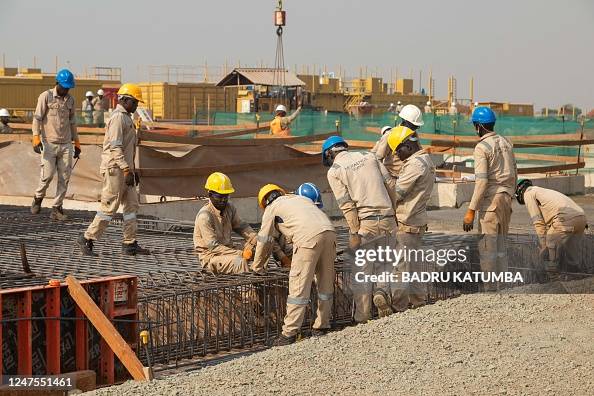
The Petroleum Authority of Uganda has projected that the sector could generate about 160,000 direct, indirect and induced jobs at the peak of development. Local content rules require operators to procure many goods and services from Ugandan firms, and thousands of Ugandans have already been trained and employed on the projects.
Oil revenues, when they arrive, will flow through a Petroleum Fund established under Uganda's public finance law. Economists caution that receipts will depend on prices, costs and production levels, and that avoiding the resource curse seen elsewhere will require disciplined management.
The environmental debate
The projects face sustained opposition from environmental and human rights campaigners, notably the international StopEACOP coalition. Critics point to drilling inside Murchison Falls National Park, risks to Lake Albert and the wider Lake Victoria basin, the displacement of thousands of households along the pipeline route, and the climate impact of new fossil fuel production. The European Parliament passed a resolution in 2022 raising human rights and environmental concerns, and several international banks and insurers have said they will not finance the pipeline.
TotalEnergies, CNOOC and the two governments reject those characterisations. They argue that the projects passed environmental and social impact assessments, that affected households are compensated, and that the footprint inside protected areas has been kept deliberately small. The debate is unlikely to end before first oil, which the government has targeted for the middle of this decade after repeated delays.
Frequently asked questions
How much oil does Uganda have?
Government estimates put discovered resources in the Albertine Graben at about 6.5 billion barrels of oil in place, with roughly 1.4 billion barrels considered recoverable.
What is the East African Crude Oil Pipeline?
EACOP is a planned 1,443 kilometre electrically heated pipeline that will carry crude from Hoima in western Uganda to the port of Tanga in Tanzania, with a capacity of about 246,000 barrels per day.
When will Uganda start producing oil?
The final investment decision was taken in 2022 and drilling began in 2023. The government has targeted first oil in the mid-2020s, though timelines have shifted several times since the 2006 discoveries.
Why are the oil projects controversial?
Campaigners cite the displacement of households, drilling inside Murchison Falls National Park, risks to Lake Albert and the climate impact of new oil production. The companies and governments say impacts are assessed, mitigated and compensated.
Founder & Chief Editor
Founder and Chief Editor of Osmara Digital Media. Journalist and historian telling Africa's stories through an African lens, from West Nile to the continent.