
WOMEN TURN SUGARCANE BY-PRODUCT INTO A SOURCE OF LIVELIHOOD IN KAKIRA
Women in Kakira are turning molasses, a by-product of sugar production, into a source of income, supporting their families, educating their children and meeting food and medical needs.
Founder & Chief Editor · 6 September 2026 · 5 min read
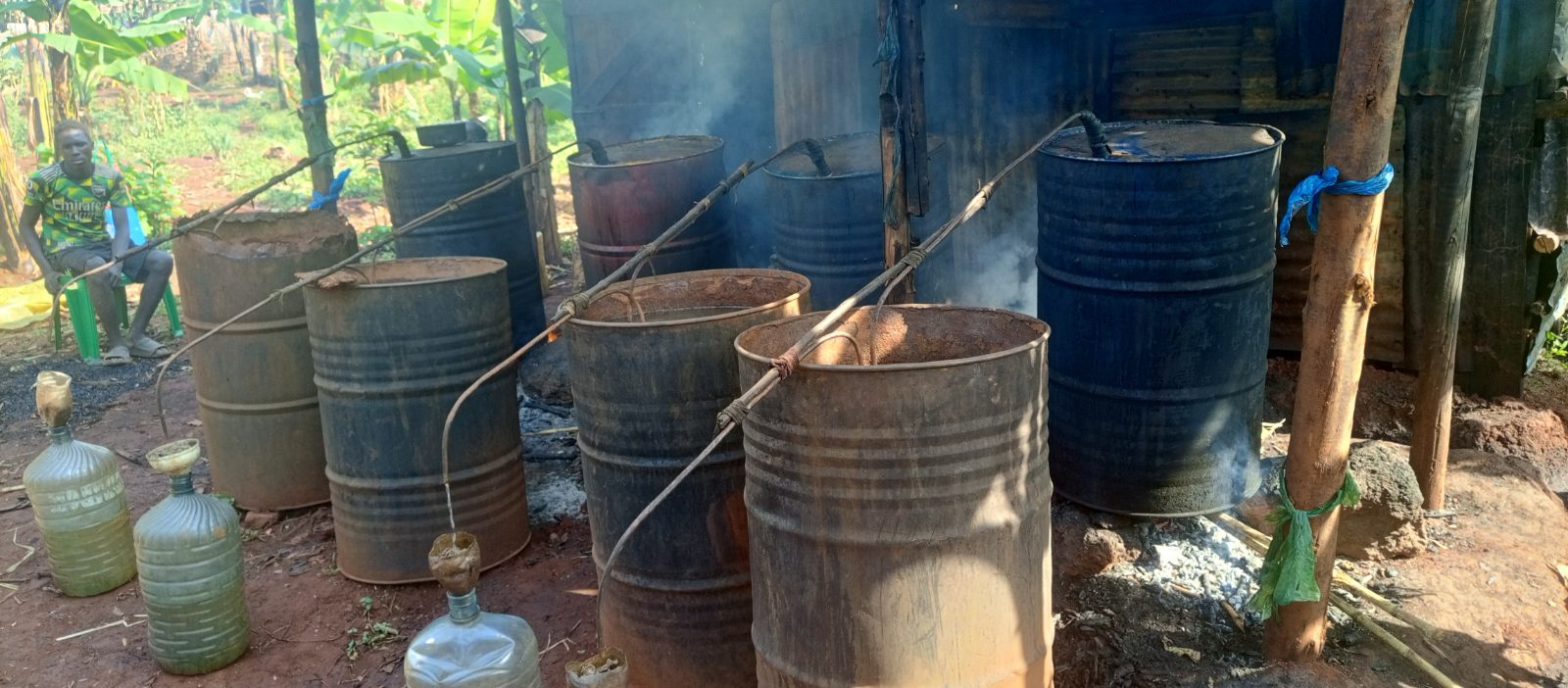
KAKIRA | 6 SEPTEMBER 2026: In Porota, a busy, dusty trading area in the heart of Kakira, a group of resilient women are turning a by-product of sugar production into a source of livelihood, helping support their families and keep their children in school. Porota is known for its bustling informal trade and a strong culture of alcohol consumption, creating a ready market for traditional alcoholic beverages produced by local entrepreneurs.
Among those benefiting from this informal economy are women who procure molasses—the thick, dark syrup left behind during sugar extraction—and use it as a key raw material in the production of traditional distilled spirits commonly known as Enguli or Waragi. For the women, however, the business is more than the production and sale of alcohol. It is a livelihood that enables them to provide food for their families, meet medical expenses and pay school fees for their children.
ROOTS DEEPLY PLANTED IN KAKIRA Many of the women engaged in the business are of Sudanese origin, with families whose parents and forebears settled in Kakira many years ago. They told Osmara Digital Media that although their ancestry traces back to Sudan, Kakira has become their home and the place where they have built their lives, families and livelihoods. They say they have nowhere else to go, having spent generations establishing their homes and businesses in the area. “Kakira is our home. We have nowhere else to go. Even when we die, we are buried here,” the women said, describing the deep connection they have developed with the community.
Their story reflects the long-standing movement of people across the region and how communities of different backgrounds have established permanent roots through generations of settlement, marriage, business and community life.
FROM SUGARCANE BY-PRODUCT TO LIVELIHOOD The enterprise begins with the collection or purchase of molasses from sugar-processing activities in the Kakira area. The molasses is mixed with water and yeast in large containers and left to ferment for several days. During fermentation, the sugars in the mixture are converted into alcohol.
The fermented mixture is then heated in metal drums placed over firewood-powered stoves. Alcohol vapour produced during heating is directed through pipes towards cooling points, where it condenses into liquid and is collected in containers.
The resulting spirit is then measured and sold to local customers and traders, forming part of an informal value chain that connects sugar processing, small-scale production, transportation and retail. “THIS BUSINESS EDUCATES OUR CHILDREN” For the women, the most important measure of the business is not simply the volume of spirit they sell, but what the income enables them to do at home.
They told Osmara that proceeds from the business help them pay school fees and meet other education-related expenses for their children. “This is the business that educates our children,” they said, explaining that without the income, meeting school expenses would be difficult. Beyond education, the women said earnings from the trade help them put food on the table and respond to medical needs whenever family members fall sick.
The income therefore provides a critical safety net for households whose economic opportunities are largely concentrated in informal businesses. A MARKET THAT REACHES MOROTO The business has also developed a market beyond Kakira, with some customers coming from as far away as Moroto. The movement of buyers from distant parts of Uganda demonstrates the wider informal trading networks that have developed around traditional alcoholic beverages produced in Kakira.
For the women, these customers provide an important market that enables them to maintain their businesses and generate income for their families. POROTA'S BUSY INFORMAL ECONOMY Porota's dusty roads and busy trading environment are characteristic of many informal commercial centres that have grown around Uganda's agricultural and industrial communities.
With Kakira being one of the country's major sugar-producing areas, economic activities around the sugar industry have created opportunities for communities to engage in different forms of enterprise.
The production and sale of traditional spirits is one such activity, particularly in an area where alcohol consumption has become part of the local commercial landscape.
For women engaged in the business, the income can provide an important economic lifeline, particularly where formal employment opportunities are limited.
TURNING A BY-PRODUCT INTO VALUE The enterprise demonstrates the economic possibilities that can emerge from industrial by-products. Molasses, which remains after sugar extraction, becomes an input into another economic activity, creating an additional livelihood opportunity for communities located near sugar-processing facilities.
This reflects the broader concept of a circular local economy, where materials generated from one industrial process can become inputs for other economic activities. However, traditional alcohol production also comes with concerns surrounding product safety, public health, occupational hazards and regulatory compliance.
The use of open fires, metal drums and improvised equipment can expose producers to risks, making safer production practices, appropriate regulation and awareness important considerations for authorities and stakeholders.
WOMEN AT THE CENTRE OF THE BUSINESS Despite the challenges, the women say they remain committed to the enterprise because of the role it plays in sustaining their families. For them, every sale can contribute to a child's education, a family's next meal or medical treatment when illness strikes.
Their experience illustrates the broader role played by women-led informal enterprises in sustaining households and driving economic activity at community level. Their connection to Kakira also goes beyond business. Having lived there for generations, they consider the area their permanent home and community.
As Uganda continues to promote industrialisation, value addition and inclusive economic participation, the story of these women demonstrates how communities can build livelihoods around resources generated by major industries.
In this dusty but vibrant corner of Kakira, molasses has become more than a residue of sugar production. For these women, it has become a source of livelihood, household support and economic resilience—and a means of investing in the next generation.
Founder & Chief Editor
Founder and Chief Editor of Osmara Digital Media. Journalist and historian telling Africa's stories through an African lens, from West Nile to the continent.
Related stories

BABALANDA LAUNCHES ONE VOICE27 DIGITAL EVANGELISM MISSION IN IGANGA IGANGA | 6 SEPTEMBER 2026
IGANGA RDC DIRECTS TOWN CLERK, CAO TO PRODUCE ALL GOVERNMENT LAND TITLES FOR VERIFICATION
Koboko Woman MP Aate Sharifah Taban Explores Development Partnerships to Boost Agriculture and Local Trade