Messi's 2022 World Cup: Lessons for Africa's Young Footballers
Persistence, team-first leadership and reinvention: why the Argentine's Qatar triumph remains a masterclass for academies and young players across the continent.
Founder & Chief Editor · 12 July 2026 · 4 min read
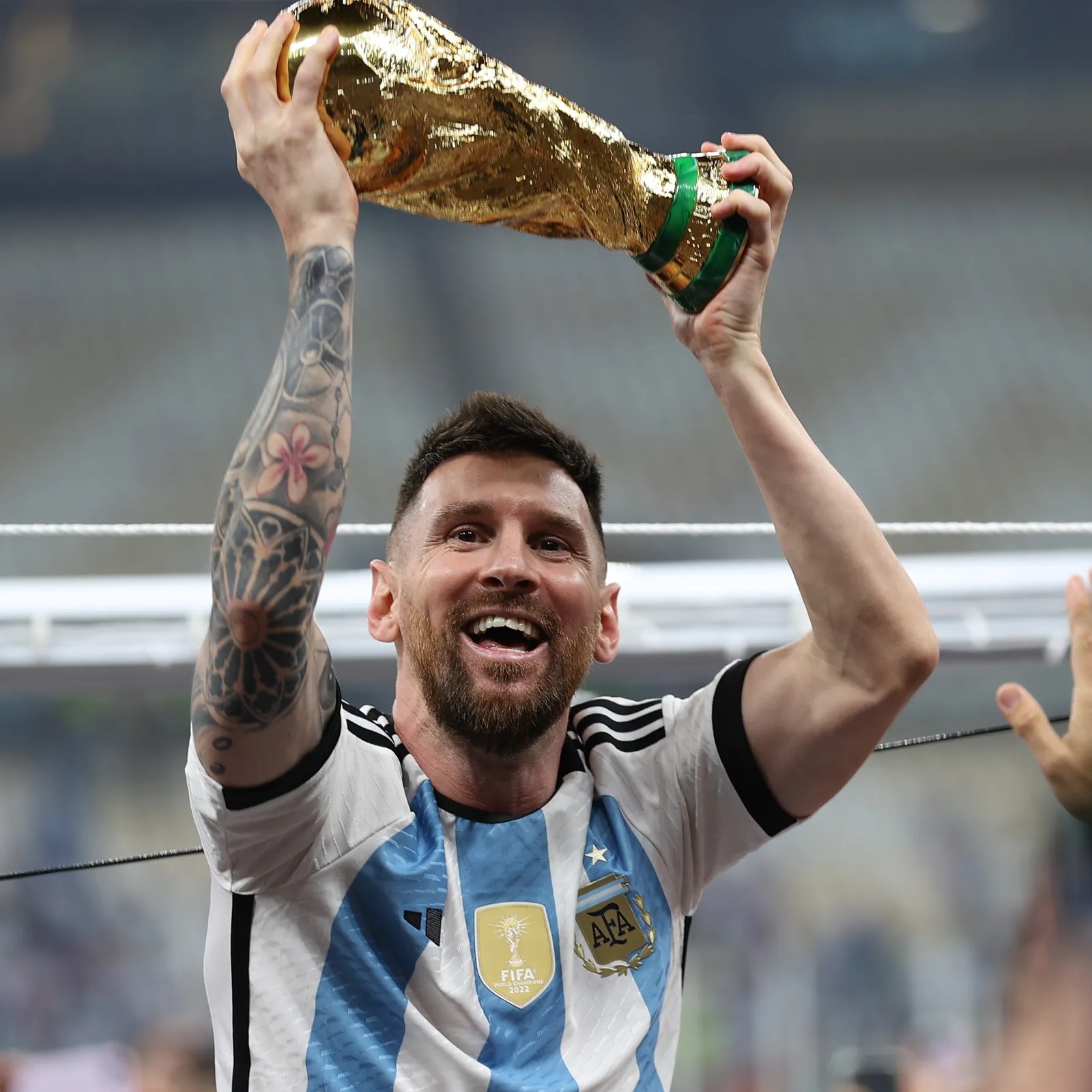
KAMPALA, Uganda - On a December night in Lusail in 2022, Lionel Messi finally lifted the trophy that had defined and eluded his career. Argentina beat France on penalties after a 3-3 draw in one of the great World Cup finals, and a 35-year-old playing his fifth World Cup completed football's most patient pursuit.
More than three years on, the images from Qatar have settled into history. Yet for Africa's young footballers, from academy pitches in Dakar to school tournaments in Kampala, that night has not aged. Three lessons endure: persistence, team-first leadership and late-career reinvention.
Persistence across five World Cups
Messi's Qatar story only makes sense as the final chapter of a much longer one. He made his World Cup debut as a teenager in Germany in 2006, lost the 2014 final to Germany in extra time, and suffered successive Copa América final defeats in 2015 and 2016. After the second, he briefly retired from international football altogether.
He came back. The 2021 Copa América, won at the Maracanã against Brazil, was his first major title with Argentina, and it arrived in his mid-thirties. Even the victorious Qatar campaign began badly, with a shock 2-1 defeat to Saudi Arabia in the opening match. Argentina absorbed the blow and won every game that followed.
For a young player in Kumasi, Kigali or Kampala, the message is not complicated. Careers are long, setbacks are information rather than verdicts, and the willingness to return after public failure is what separates good players from great ones. Africa's academies preach this daily; Messi's career is its clearest illustration.
Leadership that serves the team
In Qatar, Messi captained an Argentina side that blended his experience with emerging talent. He scored seven goals and won the Golden Ball as the tournament's best player, becoming the only man to win the award twice, but the campaign was defined by the collective: Emiliano Martínez's saves, Julián Álvarez's running, Enzo Fernández's emergence as the tournament's best young player. Messi's genius was placed at the service of a structure, not above it.
That is precisely the model Morocco used to make African football history at the same tournament. Walid Regragui, appointed only months before kick-off, built a side on defensive discipline, collective sacrifice and belief. Morocco topped a group containing Belgium and Croatia, beat Spain on penalties, defeated Portugal through Youssef En-Nesyri's header and became the first African team to reach a World Cup semi-final.
Yassine Bounou's goalkeeping, Achraf Hakimi's composure and Sofyan Amrabat's tireless midfield work confirmed the truth Messi's Argentina embodied: tournaments are won by teams whose best players make themselves servants of the whole. Ghana's Mohammed Kudus impressed in Qatar, Cameroon beat Brazil in the group stage, and Senegal reached the last 16 without the injured Sadio Mané. The continent's best moments in Qatar were collective ones.
Reinvention as a career skill
The Messi of Qatar was not the Messi of 2010. The explosive dribbler had become a conductor, conserving energy, choosing his moments and managing matches. He had left Barcelona for Paris Saint-Germain in 2021, and within a year of Qatar he moved again, to Inter Miami, where he promptly delivered the club's first trophy, the 2023 Leagues Cup.
Reinvention is a lesson African football can apply at every level. Players must evolve their games as their bodies change. Federations and domestic leagues must reinvent too, through better coaching education, sports science and competitions strong enough that teenagers are not pushed abroad before they are ready.
Morocco's Mohammed VI Football Academy, which developed squad members such as Azzedine Ounahi and Youssef En-Nesyri, shows what patient, well-funded local development can produce. Senegal's Génération Foot, which shaped Sadio Mané, and Ghana's Right to Dream, where Kudus began, tell the same story: world-class talent can be built at home.
The standard has been set
Qatar 2022 left African football with two enduring images: Messi completing a two-decade pursuit, and Morocco proving the continent belongs in the final rounds of the biggest tournament of all. Neither happened by accident. Both grew out of years of unglamorous work, resilience after failure and structures that outlasted individual brilliance.
For the young footballer training at dawn in Lagos, Nairobi or Kampala, the inheritance of that tournament is simple: persist through defeats, put the team above the ego, and keep remaking your game. Messi needed five World Cups. Morocco needed generations of investment. The next great African football story will demand both kinds of patience.
Founder & Chief Editor
Founder and Chief Editor of Osmara Digital Media. Journalist and historian telling Africa's stories through an African lens, from West Nile to the continent.