After the 2026 World Cup: Is Africa Really Closing the Gap on Europe?
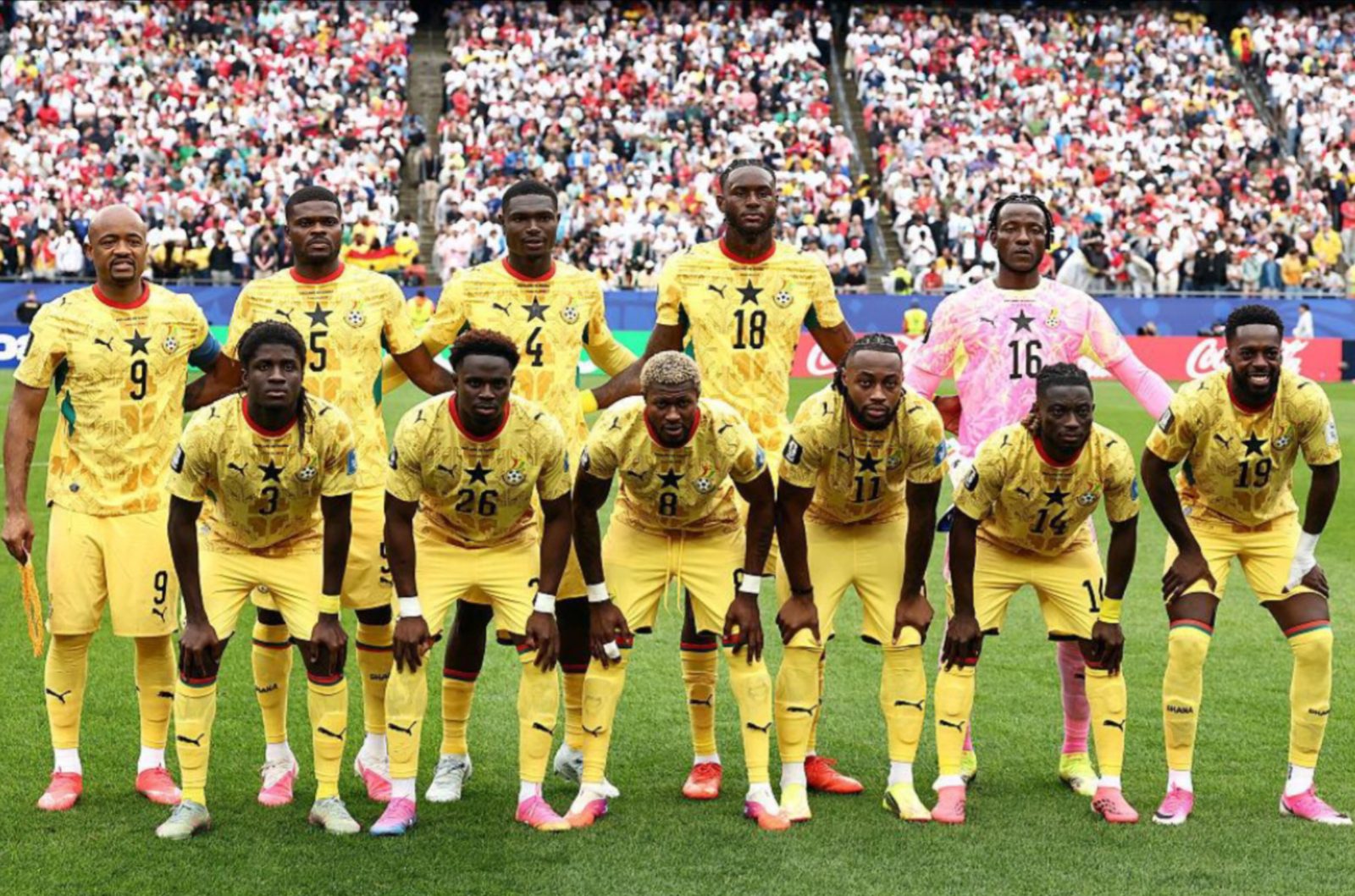
Ghana’s Black Stars are part of a growing African football generation challenging the traditional dominance of Europe on the world stage.
Founder & Chief Editor · 9 August 2026 · 7 min read
By Osmara Digital Media
The 2026 FIFA World Cup has left African football with plenty to celebrate, but it has also raised an uncomfortable question: is Africa genuinely closing the gap on Europe, or does a significant distance still separate the continent from the world’s strongest football powers? Africa entered the expanded 48-team tournament with a record 10 representatives — Algeria, Cape Verde, Côte d’Ivoire, DR Congo, Egypt, Ghana, Morocco, Senegal, South Africa and Tunisia.
The Confederation of African Football (CAF) described the expanded representation as a landmark moment for the continent. The group stage provided even more reason for optimism. Nine of Africa’s 10 teams advanced to the Round of 32, with South Africa, Morocco, Côte d’Ivoire, Cape Verde, Egypt, Senegal, Ghana, DR Congo and Algeria continuing their campaigns. Tunisia was the only African team eliminated in the group stage. CAF described the nine knockout-stage places as an unprecedented achievement for African football.
But the final picture was more complicated. Morocco emerged as Africa’s best performer, reaching the quarter-finals before losing 2–0 to France. Egypt also reached the last 16 before losing 3–2 to Argentina. The other African teams that advanced from the group stage were eliminated in the Round of 32. FIFA’s official tournament results confirm Morocco’s 3–0 victory over Canada before the Atlas Lions’ quarter-final defeat to France, while Egypt’s campaign ended with a 3–2 loss to Argentina. Europe, meanwhile, continued to dominate the latter stages.
Spain defeated Argentina 1–0 after extra time in the final to become world champions. France reached the semi-finals, while England defeated France 6–4 in the bronze-medal match. FIFA’s final tournament standings confirm Spain as the 2026 world champions and show the strength of European representation deep into the knockout rounds. The result is a mixed verdict: Africa has clearly increased its depth, but Europe remains stronger at the very top. Morocco remains Africa’s strongest evidence of progress If there is one team that can make the strongest case that Africa is closing the gap, it is Morocco. The Atlas Lions followed their historic run to the semi-finals at the 2022 World Cup with another impressive campaign in 2026. They defeated Canada 3–0 in the Round of 16, with Azzedine Ounahi scoring twice and Soufiane Rahimi adding a late third goal. FIFA noted that the victory sent Morocco into the quarter-finals for the second consecutive World Cup. That consistency is important. Morocco’s success is no longer easily dismissed as a one-off achievement. The country has developed a generation of players capable of competing against elite opposition, while its football structures have become increasingly ambitious. Yet the quarter-final defeat to France also exposed the remaining gap. France had the quality and depth to win the decisive contest 2–0. Morocco is getting closer, but Europe still has more teams operating consistently at that level.
Egypt showed resilience — and belief Egypt provided another encouraging African story. The Pharaohs secured their place in the knockout phase after a dramatic 1–1 draw with Iran, with CAF reporting that a late Iranian goal was ruled out for offside following a VAR review. Egypt then defeated Australia 4–2 on penalties after a 1–1 draw to reach the Round of 16. CAF described the victory as one of the greatest nights in Egypt’s World Cup history. Their reward was a meeting with Argentina. Egypt eventually lost 3–2, bringing their campaign to an end. FIFA’s official results record the Round of 16 defeat. The performance nevertheless demonstrated that African teams can compete deep into the tournament. But it also illustrated the difference between being competitive and consistently defeating the world’s elite. Egypt could challenge Argentina. Argentina still found a way to win. Senegal: Talent needs to become tournament consistency Senegal arrived at the World Cup with one of Africa’s most experienced squads and the status of 2021 Africa Cup of Nations champions. But the Teranga Lions were eliminated in the Round of 32.
Their campaign illustrates a broader challenge for African football. The continent continues to produce players capable of playing for major European clubs, but national teams must find ways to convert that individual quality into consistent tournament success. Talent alone cannot guarantee progression.
At the highest level, teams need depth, tactical flexibility, elite preparation and the ability to perform under pressure across several matches. Ghana, Algeria and South Africa underline Africa’s growing depth Perhaps the most encouraging aspect of the 2026 World Cup was not one individual African team's performance but the number of teams that became competitive. CAF reported that Ghana, Algeria, South Africa, Cape Verde, Côte d’Ivoire and DR Congo joined Morocco, Egypt and Senegal in the Round of 32. Several of those achievements carried historic significance.
South Africa and Côte d’Ivoire reached the knockout stage for the first time, while Cape Verde advanced from the group stage at its first-ever World Cup appearance. That is evidence of a broader shift. Africa is no longer relying on only two or three traditional powers to carry the continent’s hopes. More national teams are becoming capable of surviving the group stage and competing internationally. The problem is that greater depth has not yet produced a semi-finalist in 2026. Nigeria’s absence is a warning Nigeria’s absence from the tournament provides another side to the story. The Super Eagles remain one of Africa’s traditional football powers, but they were not among the continent’s 10 representatives in 2026.
Their absence demonstrates that reputation alone is not enough. Even with Africa receiving significantly more places because of the expanded 48-team format, established football nations can still miss out if qualification campaigns go wrong. That should be a warning to the continent.
Africa’s challenge is not simply producing star players. It is building football systems capable of delivering consistent performances across qualification campaigns, domestic competitions and major international tournaments. Then there is Europe
The comparison becomes more difficult when Africa is measured against Europe’s elite. Spain won the World Cup. France reached the semi-finals. England reached the bronze-medal match, while Belgium and Norway reached the quarter-finals. Spain ultimately defeated Argentina 1–0 after extra time in the final.
Europe therefore continues to possess something Africa has struggled to reproduce consistently: depth at the highest level. European national teams can draw on players developed in highly competitive domestic leagues and academies. Their squads often contain multiple players capable of performing at an elite level in the same position.
For many African teams, the starting XI can compete with the best. The bigger challenge is maintaining the same quality when injuries, suspensions or fatigue force changes. That difference becomes increasingly important during long tournaments. The money gap still matters There is also an economic explanation.
European football has built a powerful commercial ecosystem around domestic leagues, broadcasting rights, sponsorship, academies, stadiums and player development. African football has enormous talent and passionate supporters, but many domestic leagues remain financially weaker.
The result is a familiar cycle: African players are discovered and developed before moving to European clubs, where they gain access to elite facilities, coaching and competition.
African national teams then bring many of those players together during relatively short international windows.
Africa is therefore producing footballers capable of playing at the highest level, but it still needs stronger domestic football environments capable of developing and retaining more elite talent.
The 2026 World Cup changed the argument It would be wrong to describe Africa’s performance as a failure. The continent produced nine knockout-stage teams, the strongest collective showing in its World Cup history, according to CAF.
Morocco reached the quarter-finals. Egypt reached the last 16. Cape Verde made history on its debut. South Africa and Côte d’Ivoire achieved historic knockout-stage appearances.
Those results demonstrate that the gap is not static. Africa is producing stronger teams, better players and more competitive national programmes. But the tournament also demonstrated an important distinction: closing the gap is not the same as eliminating it. What Africa needs next The next step cannot simply be celebrating qualification. African football needs stronger domestic leagues, better youth academies, improved coaching education, modern training facilities and more sustainable sports-business structures.
The continent must also capture more of the economic value generated by its football talent.
If African clubs become financially stronger and capable of providing better development environments, national teams could benefit from a deeper football ecosystem. The 2026 World Cup has therefore provided both encouragement and a challenge.
Africa has demonstrated that it can compete with the world's best. The next question is whether it can consistently beat them when the biggest prizes are at stake. For now, Morocco remains the clearest evidence that the distance is shrinking. Spain’s World Cup triumph, however, is a reminder that Europe still occupies the summit. Africa is closer than before — but the gap is not yet closed.
Sources This analysis is based primarily on official tournament information and reports from the Confederation of African Football (CAF) and FIFA, including CAF’s reports on Africa’s nine Round-of-32 teams and FIFA’s official 2026 World Cup results, knockout-stage results and final standings.
Founder & Chief Editor
Founder and Chief Editor of Osmara Digital Media. Journalist and historian telling Africa's stories through an African lens, from West Nile to the continent.
Related stories
Uganda-Nigeria Business Forum to Boost Market Access and AfCFTA Trade
Nigerian Pastor Triumph Ndukwe Stirs Kampala With Powerful Message of Faith
Dr Michelle Corral Returns to Uganda With Mission to Support Refugees and Spark Revival