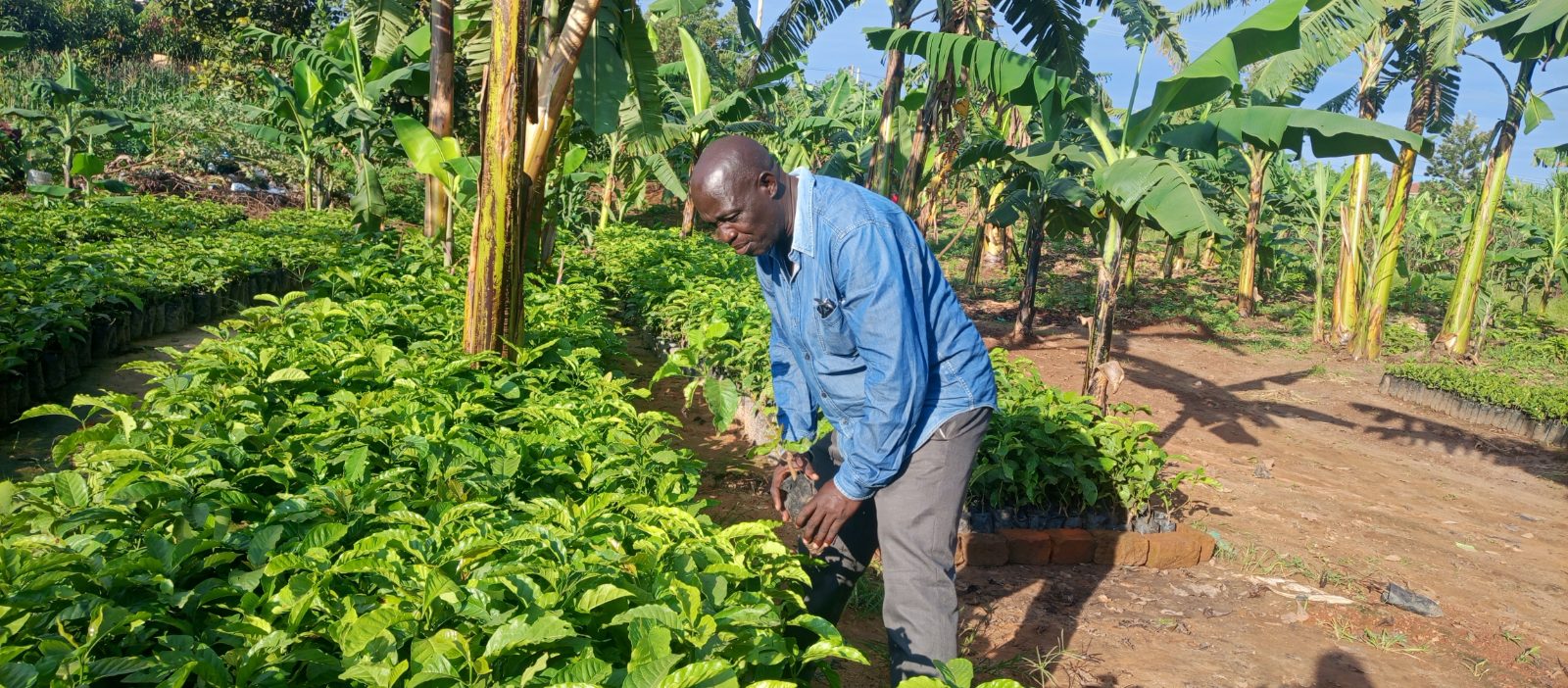
President Museveni Highlights Uganda’s Economic Transformation, Sets Vision for Further Growth
President Museveni highlights Uganda’s economic growth and wealth creation agenda as he receives the Uganda Prisons Service Medal at the 64th Independence Day celebrations.
Founder & Chief Editor · 10 October 2026 · 5 min read
ENTEBBE, Uganda | October 9, 2026 President Yoweri Kaguta Museveni has outlined Uganda’s economic transformation since 1986, highlighting growth from an economy valued at approximately USD 3.9 billion to USD 69.3 billion, while setting out priorities for further industrialisation, value addition and household wealth creation.
Speaking during Uganda’s 64th Independence Day celebrations, held virtually from State House, Entebbe, President Museveni said the next phase of national transformation would focus on expanding production, increasing household incomes and retaining more value from locally produced goods.
The celebrations were held under the theme, “Embracing Our Sovereignty with Hope and Visionary Leadership.” Uganda attained independence from Britain on October 9, 1962. Reflecting on the country’s history, President Museveni said 24 of the 64 years since independence had been lost to political instability, conflict and economic decline before the National Resistance Movement (NRM) government took power in 1986. He said Uganda’s economy had contracted to approximately USD 3.9 billion by 1986 but had since expanded through successive phases of recovery, production growth and economic diversification.
The President projected that the economy would approach USD 74 billion by June 2027, supported by industrialisation, value addition, anticipated oil production and emerging sectors.
From Economic Recovery to Transformation
President Museveni said colonial economic structures had left Uganda dependent on a limited range of agricultural and commodity exports, while many households remained outside the money economy. He added that the government pursued five phases of transformation: minimum recovery, expansion, diversification, value addition and the development of a knowledge-based economy.
Citing agricultural recovery, he said tea production had increased from three million kilogrammes to 60 million kilogrammes, while coffee production had grown from approximately three million bags to nine million bags. He emphasised the importance of commercialising a wider range of agricultural products, including milk, fruits, maize, beans, bananas, millet and fish, to create employment, increase household incomes and strengthen domestic industries.
According to the President, economic diversification would reduce dependence on traditional exports and broaden Uganda’s productive capacity. Value Addition and the Knowledge Economy President Museveni identified value addition as a major priority, arguing that processing raw materials locally would enable Ugandans to earn more from their production. “When you add value, you get much more money than when you sell raw materials,” he said.
Using coffee as an example, he explained that processed products could command significantly higher prices than raw beans, depending on the product and market. He also identified science, technology and innovation as essential to Uganda’s next phase of development, citing electric vehicle manufacturing, pharmaceuticals and other knowledge-intensive industries. He said building technological capacity and developing skilled human resources would help Uganda produce higher-value goods for domestic consumption and international markets.
Infrastructure and Household Wealth Creation
The President identified transport infrastructure as another priority, citing traffic congestion and the heavy reliance on roads for cargo and petroleum transportation. He highlighted cooperation with Kenya on petroleum pipeline infrastructure, rehabilitation of the metre-gauge railway, plans for the Standard Gauge Railway (SGR) and improvements in water transport.
He also cited proposed railway connections to western Uganda and mineral-rich Karamoja, noting the region’s deposits of marble, limestone and gold. President Museveni estimated that transport inefficiencies cost Uganda approximately USD 1 billion annually, saying improved infrastructure would reduce logistics costs and enhance competitiveness.
On household incomes, he said Operation Wealth Creation had increased the proportion of Ugandans participating in the money economy from 32 per cent to 61 per cent, while the Parish Development Model (PDM) had raised the figure to 67 per cent. He urged political, religious and cultural leaders to identify households still excluded from commercial economic activity and support them in developing sustainable sources of income.
The government, he said, would continue promoting coffee and fruit growing, dairy production, pasture development, piggery, poultry and fish farming to expand household participation in the money economy.
President Receives National Recognition
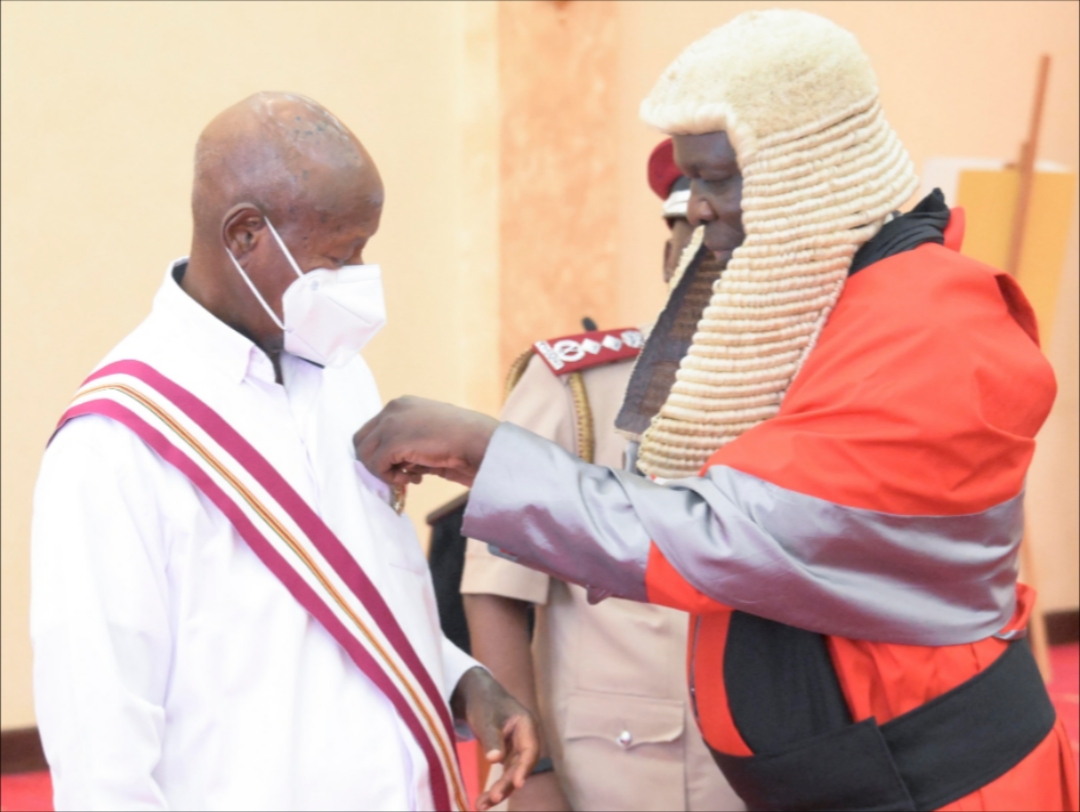
During the celebrations, President Museveni was decorated with the Order of the Commander-in-Chief (Uganda Prisons Service Medal) in recognition of his leadership and contribution to peace, security and the development of the Uganda Prisons Service. The award recognised initiatives promoting large-scale production, including cotton growing, food security, import substitution, locally manufactured furniture and improved staff accommodation.
The medal was conferred under Section 3(2), Second Schedule, Part I of the National Honours and Awards Act, 2001, as amended. Deputy Chief Justice Hon. Justice Moses Kawumi Kazibwe presented it on behalf of the Presidential Awards Committee, chaired by Hajjat Zamina Malole.
Leaders Reaffirm Commitment to National Development Vice President H.E. Jessica Alupo congratulated Ugandans on the anniversary, commending the country’s progress in peace, stability, unity and development. She also highlighted women’s empowerment and pledged continued support for the government’s development agenda. Minister for the Presidency Hon. Babirye Milly Babalanda said the anniversary was an opportunity to honour those who fought for independence and reflect on the responsibilities accompanying national sovereignty.
She paid tribute to historical figures, including Omukama Kabalega of Bunyoro and Kabaka Mwanga, and emphasised the importance of economic independence alongside political freedom. At least 19 other people, including six women, received decorations for their contributions to Uganda. Among them were Commissioner General of Prisons Can. Dr. Johnson Byabashaija, Kampala Parents' School founder Edward Kasole Bwerere Lwanga, Deputy Commander of the Air Force Maj. Gen. David Isimbwa and Chief of Staff of the Land Forces Maj. Gen. Francis Bagonza.
Attorney General Hon. Dr. Sam Mayanja also launched his book, The Odyssey in the Uganda Land Cobwebs, examining land matters in Uganda. The celebrations were attended physically by a select group of distinguished guests, while other Ugandans followed the proceedings through Uganda Broadcasting Corporation (UBC) and other media houses.
President Museveni’s address placed industrialisation, value addition, infrastructure development and household wealth creation at the centre of Uganda’s next phase of economic transformation.
Founder & Chief Editor
Founder and Chief Editor of Osmara Digital Media. Journalist and historian telling Africa's stories through an African lens, from West Nile to the continent.
Related stories
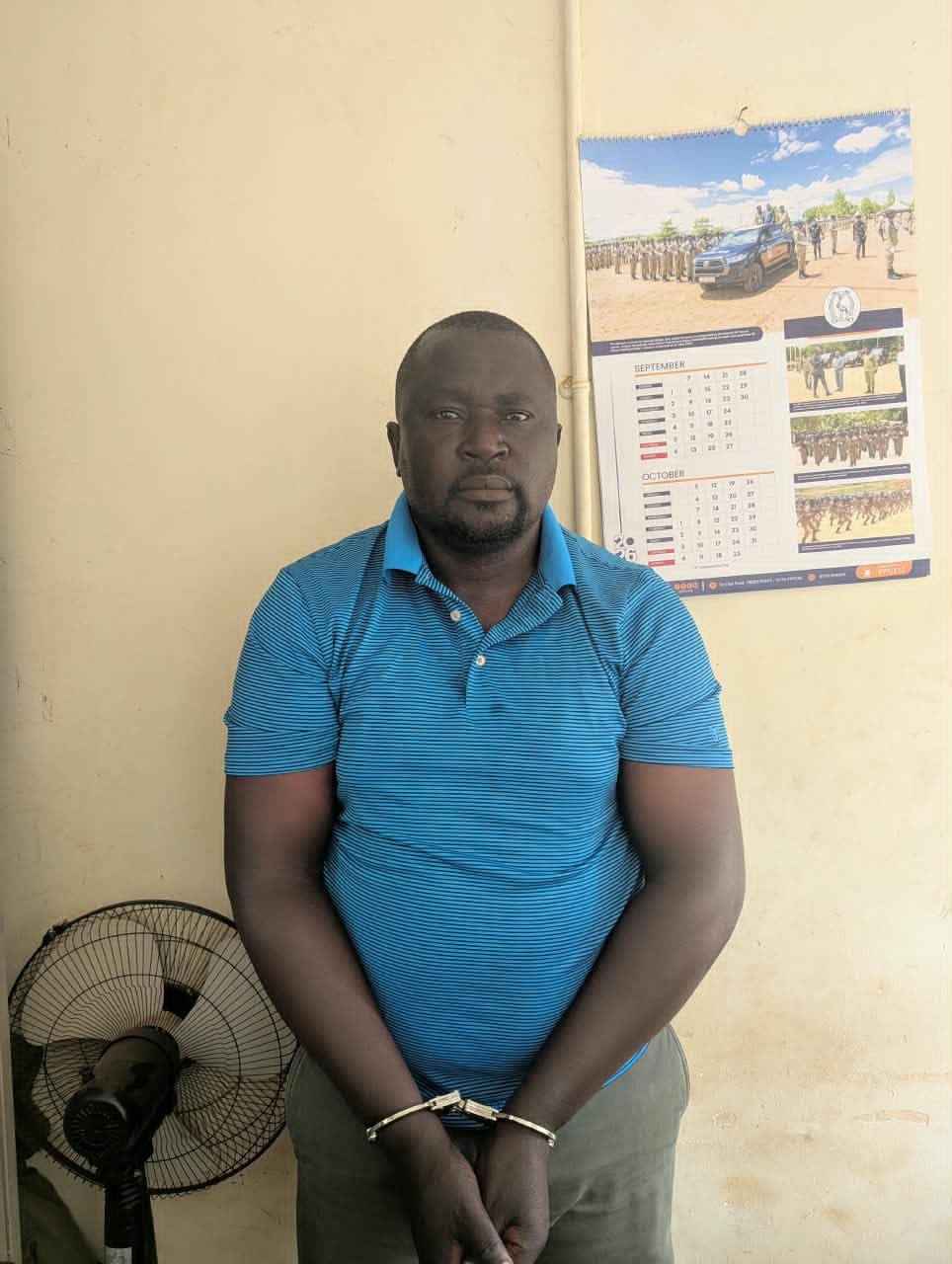
Bugweri Accountant Arrested over Alleged Impersonation, Extortion
Kenya President Ruto Announces Plan to Scrap 25% Mobile Phone Import Duty
Bugiri Police Arrest Suspected Motorcycle Thief, Recover Bike Stolen in Busia