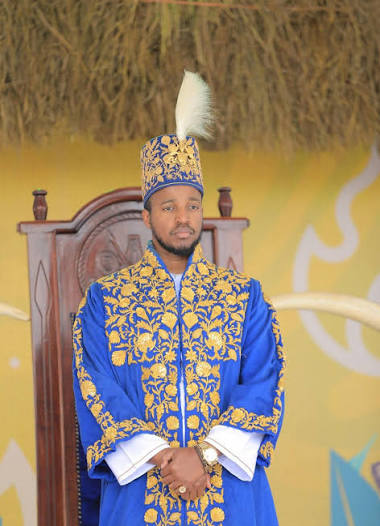
He Was a King to Us Too: West Nile Fishermen in Ntoroko Mourn King Oyo
For West Nile fishermen who came to Ntoroko in search of better livelihoods, King Oyo’s death has become a deeply personal loss shaped by years of shared work, friendship and belonging.
Founder & Chief Editor · 28 August 2026 · 7 min read

By Osmara Digital Media
An African proverb says that when a king dies, the grief does not remain inside the walls of the palace; it travels through the villages, across the markets, along the roads and into the homes of ordinary people whose lives were connected to the kingdom. In Ntoroko, where the waters of Lake Albert meet the ancient wilderness of the Semliki, the death of King Oyo has carried that grief far beyond the royal establishment, reaching communities whose own journeys began hundreds of kilometres away in West Nile.
For the West Nile fishermen who have made the shores of Lake Albert part of their daily lives, the death of the young King Oyo is being felt in a deeply personal way. They may not have been born in Toro, and their ancestral homes remain in places such as Arua, Koboko, Yumbe, Maracha and Moyo, but years of work, friendship and shared hardship have created a relationship with the communities in Ntoroko that goes beyond the boundaries drawn on a map. The landing sites became places where they could earn a living, the markets became places where they could trade, and the surrounding communities became neighbours with whom they shared the ordinary struggles and hopes of life.
That is why the death of a young king has struck them with particular force. King Oyo was not an elderly ruler whose passing could easily be understood as the natural conclusion of a long life. He was young, and his age made the news more difficult to accept because youth is normally associated with possibility, continuity and the promise of tomorrow. Many people expected that his reign would continue for decades, giving them time to watch his leadership develop and to see the story of the kingdom unfold under his generation. His death has therefore brought not only grief for the man who has been lost, but also sadness for the future that many people believed still lay ahead of him. For the West Nile community in Ntoroko, this moment has also exposed the depth of a relationship that has quietly developed over many years. Many came to the area for a simple reason: they were looking for better ways to support themselves and their families. Fishing offered an opportunity, Lake Albert provided a source of livelihood, and Ntoroko became one of the places where they could work and build their lives. They arrived as people from another part of Uganda, but through daily interaction they became part of the social and economic fabric of the communities around them.
Their story is therefore not simply about migration from one region to another. It is a story about how human relationships can grow in places where people initially arrive only to make a living. A fisherman who leaves his home in West Nile and spends years working on Lake Albert gradually becomes familiar with the people around the landing site, the traders in the market, the boat owners, fellow fishermen and families living nearby. Over time, the place where he works becomes a place where he knows people, understands the rhythms of life and experiences both happiness and hardship.
For some families, that connection stretches beyond one generation. Children can grow up hearing stories about the villages their parents left behind while at the same time developing their own memories around the lake and the communities of Ntoroko. They may know the sound of fishing boats leaving before sunrise, the movement of traders at the landing sites and the changing moods of Lake Albert. In such circumstances, the meaning of home becomes more complicated than a birthplace. A person's roots may remain in West Nile while another part of his identity is shaped by the place where he has spent years working, raising children, forming friendships and surviving the demands of everyday life.
This is why the mourning of King Oyo has resonated among people who might otherwise be regarded simply as visitors or migrants. They came searching for a better life, but the Kingdom of Toro accommodated them. It gave them room to work, communities in which to live and an environment where they could pursue their livelihoods alongside people from many different backgrounds. The relationship that emerged from that experience cannot easily be reduced to geography or tribal origin.
In moments of tragedy, the question of where someone comes from can begin to lose its importance. What matters more is where that person has lived, worked, built relationships and found a sense of belonging. For many West Nile fishermen in Ntoroko, Toro has become part of that story. They have not abandoned their ancestral homes, but their lives have become connected to another part of Uganda through work, friendship, family and shared experiences.
The death of King Oyo has brought that connection into sharper focus. His passing has reminded the West Nile community that belonging is not always something inherited at birth. Sometimes it develops slowly through years of living alongside other people, sharing their markets, depending on their services, exchanging stories, facing hardships together and participating in the life of a community. A person can arrive as a stranger and, after many years, discover that the place he once came to simply for survival has become part of his emotional home. Along the shores of Lake Albert, however, life must continue despite the grief. Fishermen still have families waiting for them, boats still need to be prepared and nets still have to be repaired. The lake does not stop because a king has died, just as hunger does not disappear because communities are mourning. Before sunrise, men will continue making their way towards the water, carrying the equipment on which their livelihoods depend and returning to the same waters that have sustained them for years.
Yet the normal rhythm of the landing sites will now carry a different feeling. Conversations about the king's death will continue among fishermen and traders, while memories of his life and the shock of his passing will remain part of the conversations taking place around the lake. The work of survival may continue, but grief has already entered the community's story, creating a moment in which people are forced to recognise how deeply connected their lives have become to the wider history of Toro.
Even the natural landscape around Ntoroko seems to provide a powerful backdrop to the mourning. Lake Albert continues to stretch towards the horizon, its waters moving with the same ancient rhythm that has sustained generations of people along its shores. Beyond the human settlements, the Semliki wilderness carries on with its own life, where animals move through a landscape that has existed long before today's political and administrative boundaries were drawn. The forests, rivers and wildlife remain part of an ecosystem in which human communities have lived and survived for generations.
In such a landscape, the death of a young king can feel especially profound because it reminds people of the fragile nature of human life. The lake continues to shine, the fishermen continue to work and the animals of the wilderness continue their movements, but a generation has lost a young leader whose life was expected to extend much further into the future. The contrast between the continuing life of nature and the sudden ending of a human life makes the grief even more difficult to absorb.
For the West Nile people who found their way to Ntoroko, King Oyo's death is therefore not merely the passing of a royal figure whose story belongs to another community. It has become a reminder of the place that received them when they were searching for a better livelihood and of the relationships they formed after crossing the geographical distance between West Nile and Toro. Their mourning carries a simple but powerful message about Uganda itself. Communities are not built only by those who are born within their borders; they are also built by people who arrive, work, contribute, form friendships and eventually become part of the social life of the place. The fisherman from West Nile and the neighbour from Toro may have different ancestral histories, but years of sharing the same lake, markets, roads and hardships can create a bond that is stronger than distance.
That is why the grief surrounding King Oyo's death has travelled beyond the palace and into communities far from the traditional centre of the kingdom. For the West Nile fishermen in Ntoroko, his passing has touched something personal because their own lives have become intertwined with the land and people of Toro. They came looking for a better life, and they found more than a place to work. They found neighbours, friendships, livelihoods and a community that became part of their story.
And so, as the boats continue to move across Lake Albert and the Semliki landscape remains quiet beneath the changing sky, the mourning from the landing sites carries a message that goes beyond royal ceremony. For those who travelled from West Nile and built their lives along the shores of Ntoroko, King Oyo was not simply a king of a distant kingdom. He was a king whose people shared their workplace, their markets, their struggles and their daily lives, and his death has therefore been felt as the loss of a leader who had, in his own way, become part of the wider community they had come to call home.
Founder & Chief Editor
Founder and Chief Editor of Osmara Digital Media. Journalist and historian telling Africa's stories through an African lens, from West Nile to the continent.
Related stories

Uganda and Italy Strengthen Bilateral Cooperation on Coffee, Trade and Investment

Rutte Welcomes US Defence Policy Chief to NATO Headquarters as Allies Discuss European Force Posture
WFTU European Office Condoles Nepal Flood Victims