The New Business Corridor: Hundreds of Cargo Trucks Turn Mbale–Tororo–Busia Highway into East Africa's Trade Lifeline
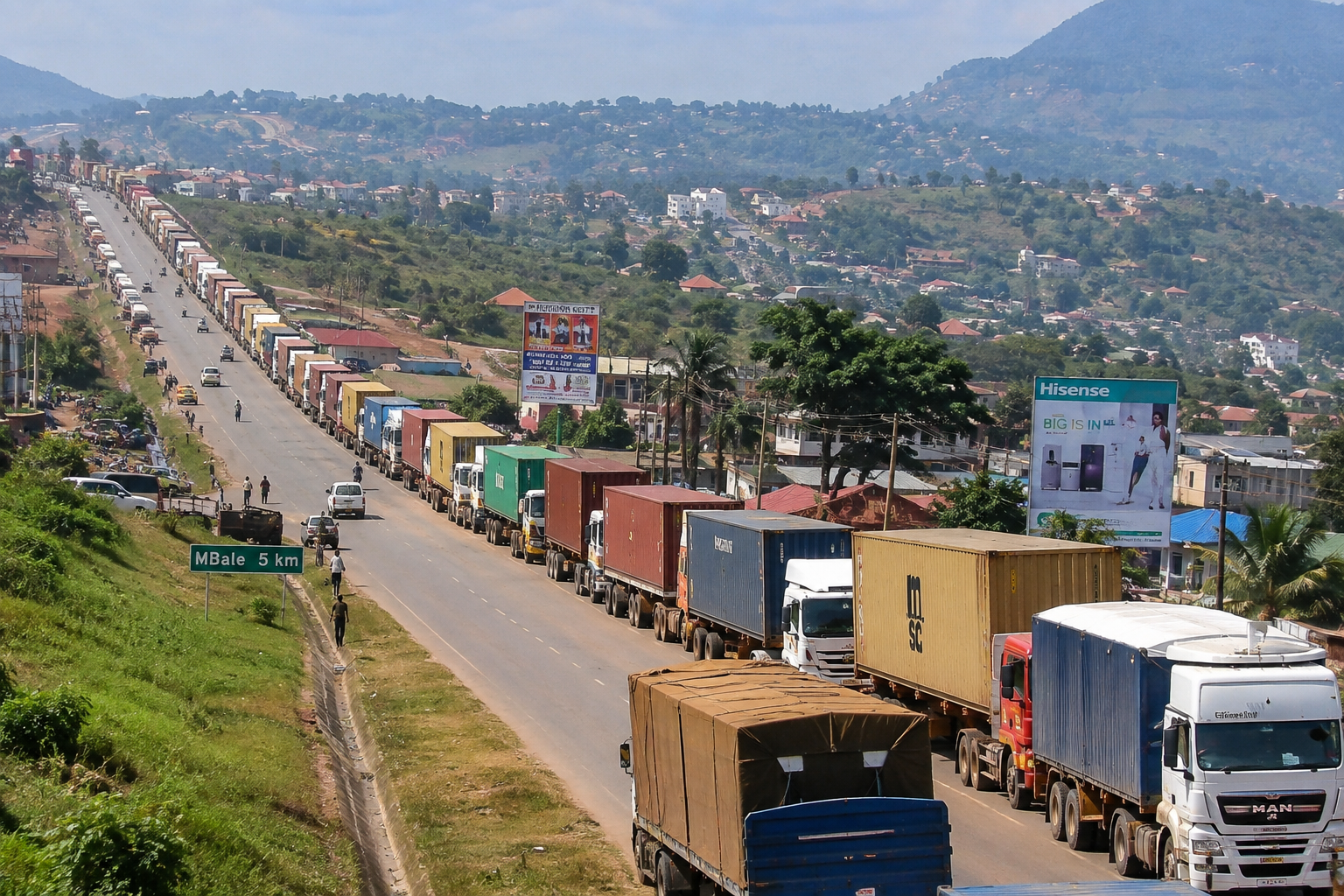
The Mbale–Tororo–Busia highway has become one of East Africa's busiest trade routes, carrying hundreds of cargo trucks that power regional commerce every day.

Founder & Chief Editor · 3 August 2026 · 2 min read
By Osmara Digital Media | Africa in Focus
"Trade is the bridge that connects nations and creates prosperity." — African proverb. Every day, hundreds of cargo trucks roll through the Mbale–Tororo–Malaba or Busia highway, carrying goods that keep the economies of Uganda, Kenya and the wider East African region moving. What was once viewed simply as a transport route has evolved into one of the region's busiest business corridors, linking producers, traders and consumers across borders.
From the bustling commercial streets of Mbale to the industrial town of Tororo and the busy Malaba or Busia border post, the corridor has become a vital gateway for regional trade under the East African Community (EAC).
The highway is a constant stream of container trucks transporting coffee, tea, maize, cement, sugar, steel, petroleum products, manufactured goods and other commodities destined for markets in Uganda, Kenya, Rwanda, South Sudan and the Democratic Republic of the Congo.
For businesses, the corridor represents more than a road. It is a lifeline that supports thousands of jobs in transport, logistics, hospitality, customs clearing, fuel supply, warehousing and retail trade. Local communities also benefit as roadside markets, restaurants, hotels and service stations continue to grow alongside the increasing movement of people and goods.
Mbale has strengthened its position as a regional commercial hub, attracting traders from across eastern Uganda. The city's strategic location enables agricultural produce from surrounding districts to reach national and international markets more efficiently.
Tororo remains one of Uganda's key industrial centres, with its proximity to Kenya making it an important point for manufacturing, logistics and cross-border commerce. Meanwhile, Busia serves as one of Uganda's busiest entry and exit points, where customs officials, clearing agents and transport companies facilitate the movement of goods every hour of the day.
Economically improved road infrastructure and regional integration have significantly increased trade volumes along the corridor. The implementation of the East African Community Common Market and the African Continental Free Trade Area (AfCFTA) is expected to further boost commercial activity by reducing barriers to trade and encouraging investment.
However, the rapid growth has also exposed challenges. Traffic congestion, delays at border crossings, road safety concerns and inadequate parking facilities remain issues requiring continued investment and coordinated planning.
Transport operators have called for expanded truck parking yards, faster customs clearance procedures and continued upgrades to road infrastructure to improve efficiency and reduce transport costs.
Despite these challenges, the outlook remains positive. As trade within East Africa continues to grow, the Mbale–Tororo–Busia corridor is increasingly becoming one of Uganda's most valuable economic assets.
For many travellers, the endless line of cargo trucks symbolises more than heavy traffic. It reflects the movement of commerce, opportunity and regional cooperation that is helping shape the future of East Africa. As Uganda strengthens its position as a regional trade hub, this corridor will continue to play a central role in connecting businesses, creating employment and driving sustainable economic growth.
Founder & Chief Editor
Founder and Chief Editor of Osmara Digital Media. Journalist and historian telling Africa's stories through an African lens, from West Nile to the continent.