
The Hidden Cost of Fuel Theft: Inside Iganga's Suspected Siphoning Trade
A police operation in Iganga has uncovered suspected stolen petrol and diesel concealed in village stores, behind structures and in a maize plantation, raising concerns about fuel security, transport business losses and community safety.

Founder & Chief Editor · 17 November 2026 · 5 min read
By Barasa Richard
Eastern Uganda Correspondent | Osmara Digital Media
IGANGA DISTRICT – Behind structures, inside village stores and even within a maize plantation, police officers discovered containers holding suspected stolen petrol and diesel during an operation that has brought renewed attention to fuel theft along eastern Uganda's busy highways.
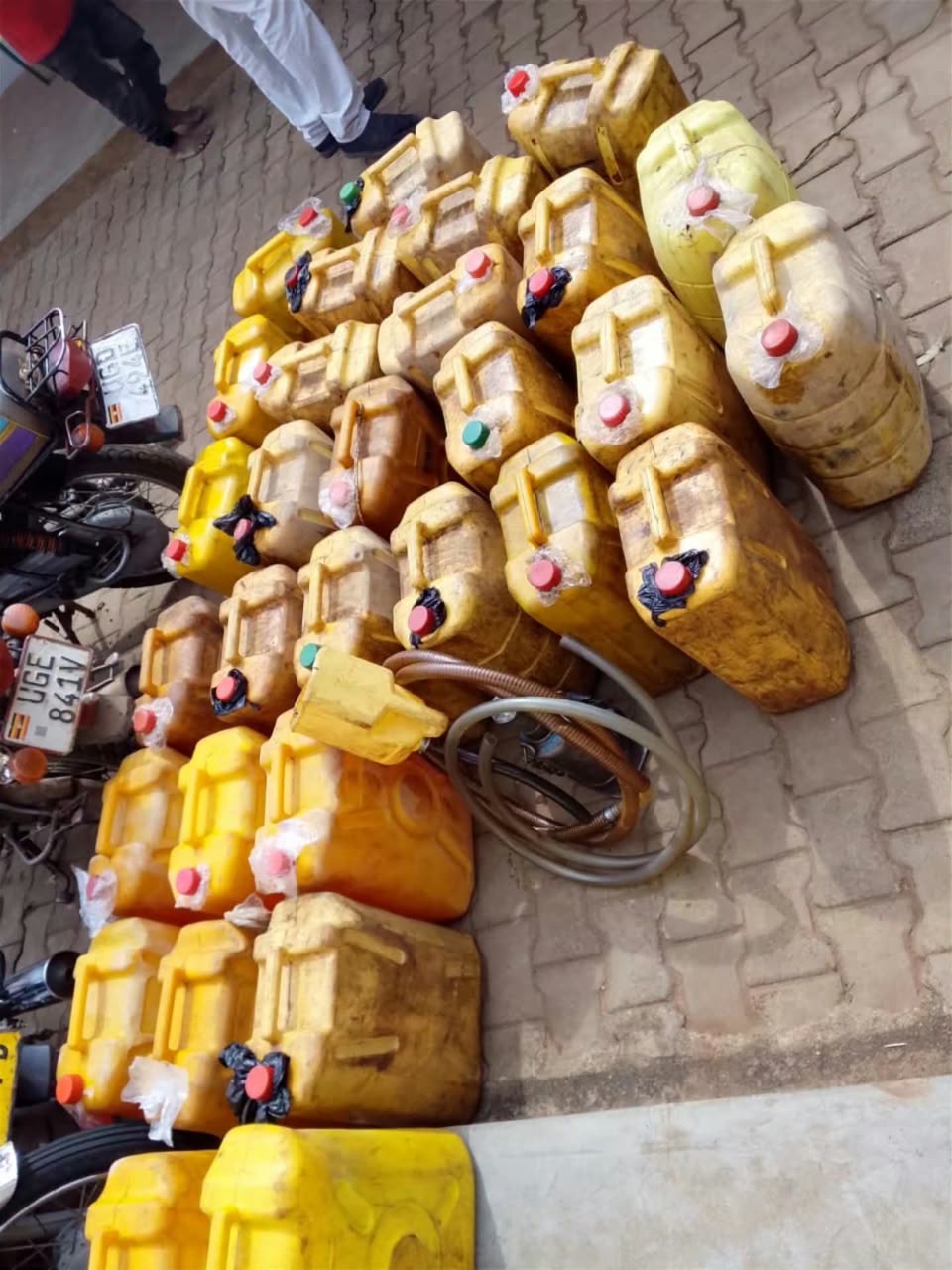
The discoveries in Nakalama and Naabirye villages in Iganga District were part of an intelligence-led crackdown that resulted in four arrests, the recovery of 32 jerrycans of suspected stolen fuel, two motorcycles and equipment believed to have been used in fuel siphoning.
What initially appeared to be complaints of fuel disappearing from trucks has now developed into a wider investigation into suspected activities involving the extraction, transportation and storage of petroleum products.
At the centre of the investigation are allegations of fuel being siphoned from trucks travelling along the Iganga–Jinja and Iganga–Tororo highways, two important transport routes connecting businesses, fuel suppliers and communities.
The operation raises a broader question: how much does fuel theft cost the transport industry, petroleum businesses and the communities where suspected stolen products are stored?
A Trail of Suspected Stolen Fuel According to Uganda Police Force spokesperson ACP Kituma Rusoke, the operation followed a report received on Monday, November 9, 2026, indicating that approximately 600 litres of fuel had allegedly been stolen from a truck parked at Igenge Petrol Station along the Iganga–Jinja Highway.
Police subsequently organised an intelligence-led operation targeting suspected fuel storage locations in Nakalama Sub-county.
On Tuesday, November 10, officers began searching Nakalama Village at approximately 12:50 p.m.
Their first discovery was several jerrycans of petrol concealed behind a structure.
During the operation, police arrested Mukama Abasi, 22, in connection with the recovery.
Officers later searched premises occupied by a man identified as Fahadi, where they recovered additional jerrycans containing diesel, empty containers and drums suspected to have been used for storing fuel.
The search was extended to Naabirye Village, where more jerrycans of petrol were discovered concealed in a maize plantation.
Additional containers containing petrol and diesel were recovered from a village store.
Among the exhibits were a siphoning tube and a vehicle jack, items investigators suspect may have been used to extract fuel from trucks.
Police also seized two motorcycles, registration numbers UGD 494E and UGE 841V, on suspicion that they had been used to transport the suspected stolen petroleum products.
Two other suspects, Obonyo Geoffrey, 19, and Isiko Amisi, 23, were arrested during the operation.
The four suspects were detained at Iganga Central Police Station as investigations continued.
The Economic Cost Beyond the Jerrycans
While the recovery of 32 jerrycans represents a significant development in the police investigation, the economic implications of suspected fuel siphoning extend beyond the quantity of petroleum products recovered.
Fuel is one of the major operating expenses for road transport businesses. Companies transporting petroleum products and commercial goods depend on accurate fuel records, secure transportation and accountability throughout delivery operations.
When fuel disappears during transportation, the financial consequences may affect several parties, including petroleum suppliers, transport companies, truck owners and other businesses involved in the supply chain.
Transport operators may face additional costs arising from investigations, security measures, operational disruptions and disputes over missing petroleum products. The suspected illegal trade can also undermine confidence in the transportation and distribution of petroleum products.
For businesses operating on tight margins, unexplained losses can create further financial pressure. However, the actual financial losses associated with the suspected activities in Iganga remain unclear as police investigations continue.
Are Highway Trucks Becoming Vulnerable?
Preliminary police inquiries suggest that the suspected fuel theft could involve individuals extracting petroleum products from trucks, allegedly with the cooperation of some drivers.
Investigators suspect that fuel is removed from vehicles parked along the highways before being transported and stored at different locations for possible illegal sale.
If established, such activities would point to vulnerabilities in the security arrangements surrounding petroleum transportation.
Truck drivers are entrusted with transporting valuable products over long distances, often making overnight stops along major highways. The allegations therefore raise questions about monitoring systems, accountability, security at parking locations and the responsibility of individuals involved in petroleum transportation.
Police have not yet established the full extent of the suspected network or confirmed the involvement of all individuals who may have been connected to the alleged activities.
A Community Safety Concern The discovery of suspected stolen fuel in a maize plantation and village storage facilities also brings another dimension to the investigation: public safety.
Petroleum products are highly flammable and require appropriate storage and handling. Keeping petrol and diesel in unsuitable containers or locations can expose nearby households, businesses and property to fire hazards.
In densely populated communities, an accident involving improperly stored fuel could have consequences extending far beyond the individuals suspected of being involved in the illegal trade.
The operation therefore highlights the importance of community vigilance and cooperation with security agencies.
Residents are encouraged to report suspicious fuel storage, unusual movements of petroleum products and activities that could indicate illegal trading.
Police Intensify the Warning
ACP Rusoke said police were pursuing investigations following the arrests and recovery of the suspected stolen petroleum products.
Security authorities have reiterated warnings against fuel siphoning, illegal possession and the purchase or sale of stolen petroleum products.
Truck drivers, fuel dealers and members of the public have been cautioned against facilitating or participating in such activities. Police have also warned that individuals found involved will be pursued and subjected to the due process of the law.
The recovered fuel, motorcycles and other items have been retained as exhibits to support investigations.
The Bigger Question for Uganda's Transport Industry
The Iganga operation has exposed more than suspected fuel storage locations. It has drawn attention to the importance of protecting petroleum products as they move through Uganda's road transport network.
For transport companies, petroleum suppliers and truck owners, the security of fuel consignments is directly connected to business accountability and operational costs.
For communities along major highways, preventing illegal fuel storage is also a matter of public safety.
Police are continuing investigations to establish whether the suspects have links to the reported theft of approximately 600 litres of fuel from the truck parked at Igenge Petrol Station and whether other individuals are involved.
The identities and roles of all those connected to the alleged activities remain subject to investigation.
Ultimately, the success of the crackdown will not be measured only by the 32 jerrycans recovered or the four suspects arrested, but also by whether authorities can establish how the suspected operation worked, identify any wider network and prevent further losses along Uganda's important transport corridors.
Founder & Chief Editor
Founder and Chief Editor of Osmara Digital Media. Journalist and historian telling Africa's stories through an African lens, from West Nile to the continent.
Related stories

Intelligence-led operations lead to arrest of over 300 suspects in Kampala
Inside Iganga Central Market: Traders Count Costs as Low Sales and Rising Expenses Put Livelihoods to the Test

Kyanja's remarkable transformation: From quiet farmland to modern Kampala suburb