Kampala’s Daily Commute: How Workers Balance Traffic, Transport Costs and Road Safety
From boda-bodas and taxis to private cars, Kampala’s workers face daily choices over time, transport costs, convenience and road safety as they navigate the capital.

Founder & Chief Editor · 5 September 2026 · 7 min read
By Osmara Digital Media
KAMPALA, UGANDA — Every weekday morning, Kampala begins moving long before many offices, shops and businesses officially open. From the outskirts of the city to the central business district, thousands of workers leave their homes early, hoping to beat the morning rush and arrive at their workplaces on time. For many of them, however, travelling through Kampala has become a daily test of patience, financial planning and personal safety as they contend with congested roads, crowded public transport and unpredictable journey times.
For workers in Kampala capital city, the question of how to travel to work is rarely based on convenience alone. It is often a decision shaped by income, distance, time and the urgency of reaching a destination. Some commuters choose boda-bodas because motorcycles can move through congested areas more easily, while others depend on taxis because they are relatively affordable. Those with access to private vehicles may enjoy greater comfort and flexibility, but they still have to contend with traffic congestion, fuel expenses, parking challenges and vehicle maintenance costs.
The boda-boda commuter: Paying more to save time For many Kampala workers who cannot afford to lose hours in traffic, boda-bodas have become one of the most convenient ways of moving around the city. Motorcycle taxis can navigate narrow roads, busy junctions and heavily congested areas, sometimes allowing passengers to reach their destinations considerably faster than larger vehicles. For workers whose jobs require punctuality or whose daily responsibilities involve moving between different parts of the city, that ability to save time can make the boda-boda an attractive option.
However, the speed and convenience associated with boda-bodas also come with concerns about road safety. Passengers are exposed to the surrounding traffic and can be particularly vulnerable when motorcycles are involved in collisions. The quality of riding also varies from one operator to another, meaning that passengers have to make quick decisions about which rider to trust. During peak hours, when demand is high and roads are congested, the pressure to move quickly can further complicate the safety situation.
The cost of using a boda-boda can also become significant for workers who rely on motorcycles every day. Although a single journey may appear manageable, repeated trips over an entire month can consume a considerable portion of a worker’s income. This leaves many commuters facing a difficult choice between spending more money to save time and choosing a cheaper means of transport that may require considerably more time.
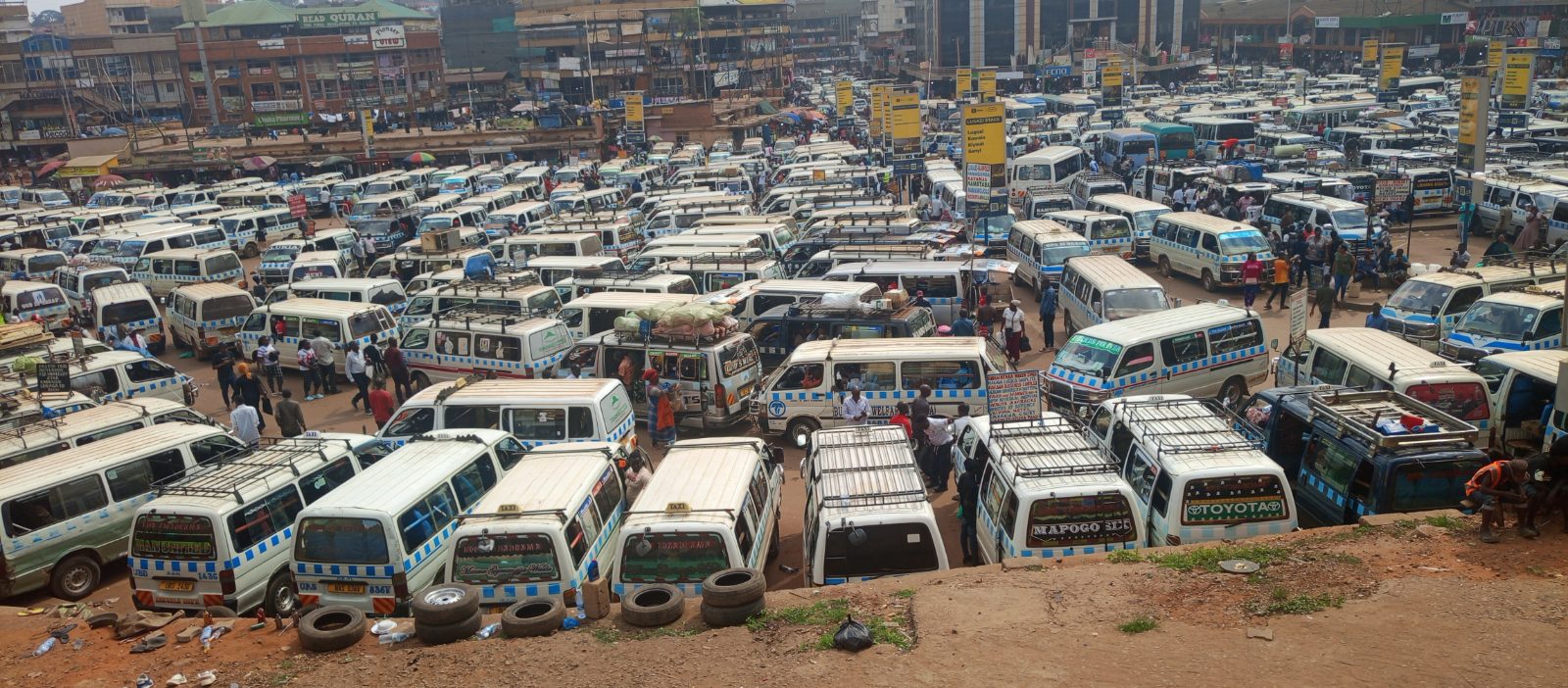
The taxi commuter: Affordable transport, unpredictable journeys For thousands of Kampala residents, taxis remain an essential part of daily life. They provide an affordable means of travelling between neighbourhoods and the city centre and remain particularly important to workers who cannot afford to use boda-bodas for every journey. A taxi passenger can share the cost of a journey with other travellers, making the service more economical for people managing limited household incomes.
The challenge, however, is that affordability does not always translate into reliability. During peak hours, passengers may have to wait for taxis with available seats, walk to designated routes or compete with other commuters for space. Once on the road, the length of the journey can change dramatically depending on traffic conditions. A trip that might take a relatively short time during quieter hours can become a much longer journey when thousands of vehicles converge on the same roads.
For workers, this unpredictability has consequences beyond inconvenience. Arriving late at work can affect productivity, attendance and relationships with employers, while spending long hours travelling reduces the amount of time available for family responsibilities and personal activities. A commuter who leaves home early to avoid traffic may still find themselves delayed because of congestion, road works, accidents or other disruptions along the route.
The private-car driver: Comfort does not guarantee a quick journey Private vehicles offer a different commuting experience, providing drivers with greater control over when they leave home, where they stop and how they travel. For some Kampala workers, driving to work is necessary because of the nature of their jobs, the locations they visit or the need to transport children and other family members. The privacy and comfort of a private vehicle can make the journey less physically demanding than crowded public transport.
Yet private motorists are not immune to Kampala’s transport challenges. Once a vehicle enters a congested road, the driver is often forced to move at the same slow pace as surrounding traffic. Long queues can consume fuel while frequent braking and acceleration increase vehicle wear. Drivers must also consider the cost of fuel, parking, servicing, insurance and unexpected mechanical repairs, making private transport expensive even when it offers greater comfort.
For some motorists, the financial burden of driving is accepted as the price of convenience. Others may eventually consider returning to public transport when fuel and maintenance costs become too high. This demonstrates that Kampala’s transport problem affects commuters across different income groups, although the nature of the burden differs from one traveller to another.
The hidden cost of Kampala’s traffic The cost of travelling around Kampala cannot be measured only by the amount of money paid for a taxi, boda-boda ride or fuel. Time is another important cost, particularly for workers whose daily schedules are already demanding. Spending several hours travelling each day can reduce the amount of time people have for work, family, education, rest and other activities.
For businesses, widespread delays can also have economic consequences. Employees who spend long periods in traffic may arrive late or exhausted, while customers and suppliers can face difficulties reaching business premises. Small traders and informal workers who depend on frequent movement around the city may find that rising transport costs directly reduce their daily earnings.
The impact is particularly significant for workers who make multiple journeys during the day. Someone who travels from home to work, then to another location for an assignment and finally back home may face several transport payments within a single day. Over weeks and months, these expenses can become a substantial part of household expenditure.
Road safety remains a major concern As Kampala continues to grow, the interaction between vehicles, motorcycles, pedestrians and other road users is becoming increasingly important. Many pedestrians have to share busy roads with fast-moving vehicles, while poorly managed crossings and congested junctions can make walking through some parts of the city difficult and risky.
Boda-boda riders and their passengers face particular exposure because motorcycles offer less physical protection than cars and other larger vehicles. Safe riding practices, proper enforcement of traffic regulations and responsible behaviour by all road users are therefore essential if Kampala is to reduce the risks associated with daily movement. Road safety is not only the responsibility of one group. Drivers, motorcycle riders, passengers, pedestrians, transport operators and authorities all have roles to play. Better compliance with traffic rules, improved pedestrian facilities, clearer transport management and greater public awareness could contribute to making daily journeys safer.
A city searching for a better way to move Kampala’s transport challenge is closely connected to the city’s rapid growth. As more people move into the metropolitan area for employment, education, business and other opportunities, the demand for efficient transport continues to increase. The city therefore faces the difficult task of ensuring that its transport infrastructure and systems keep pace with the growing population and changing economic activities.
For ordinary workers, the desired solution is not complicated. They want to be able to leave home, find affordable transport, travel safely and arrive at their destinations without losing an unreasonable amount of time on the road. Whether they use a boda-boda, taxi or private vehicle, commuters want a transport system that allows them to plan their day with confidence.
The three journeys tell different stories, but they reveal the same underlying challenge. The boda-boda passenger may spend more money in exchange for speed, the taxi passenger may save money but sacrifice time, while the private-car driver may gain comfort but carry the heavy costs of fuel, parking and maintenance.
Ultimately, Kampala’s daily transport story is about more than vehicles and roads. It is about people and the choices they make every morning simply to reach work and provide for their families. Until the city can make movement more affordable, predictable and safe, commuting will remain one of the most important daily challenges facing Kampala’s working population.
Founder & Chief Editor
Founder and Chief Editor of Osmara Digital Media. Journalist and historian telling Africa's stories through an African lens, from West Nile to the continent.