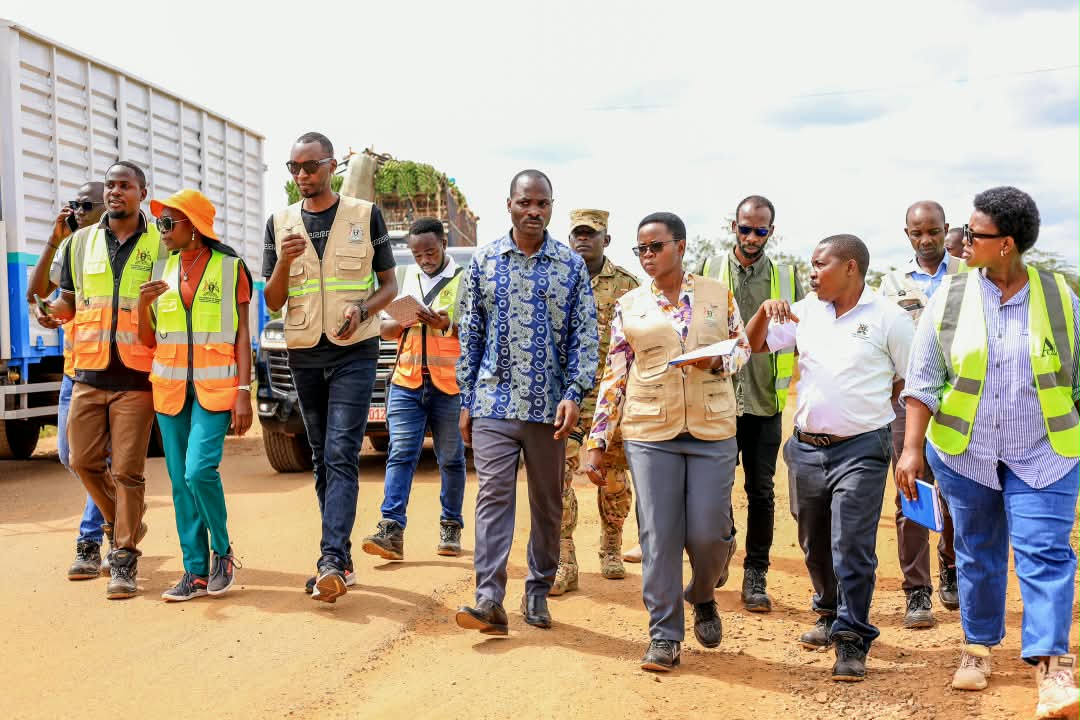
Passengers Put Journeys on Hold to Join Uganda’s Monthly Clean-Up Drive
Passengers travelling from Kampala to Arua embrace Uganda’s monthly national cleaning exercise at Bondo, willingly pausing their journeys to clean roadsides and Bondo Market.
Founder & Chief Editor · 29 August 2026 · 7 min read
By Osmara Digital Media
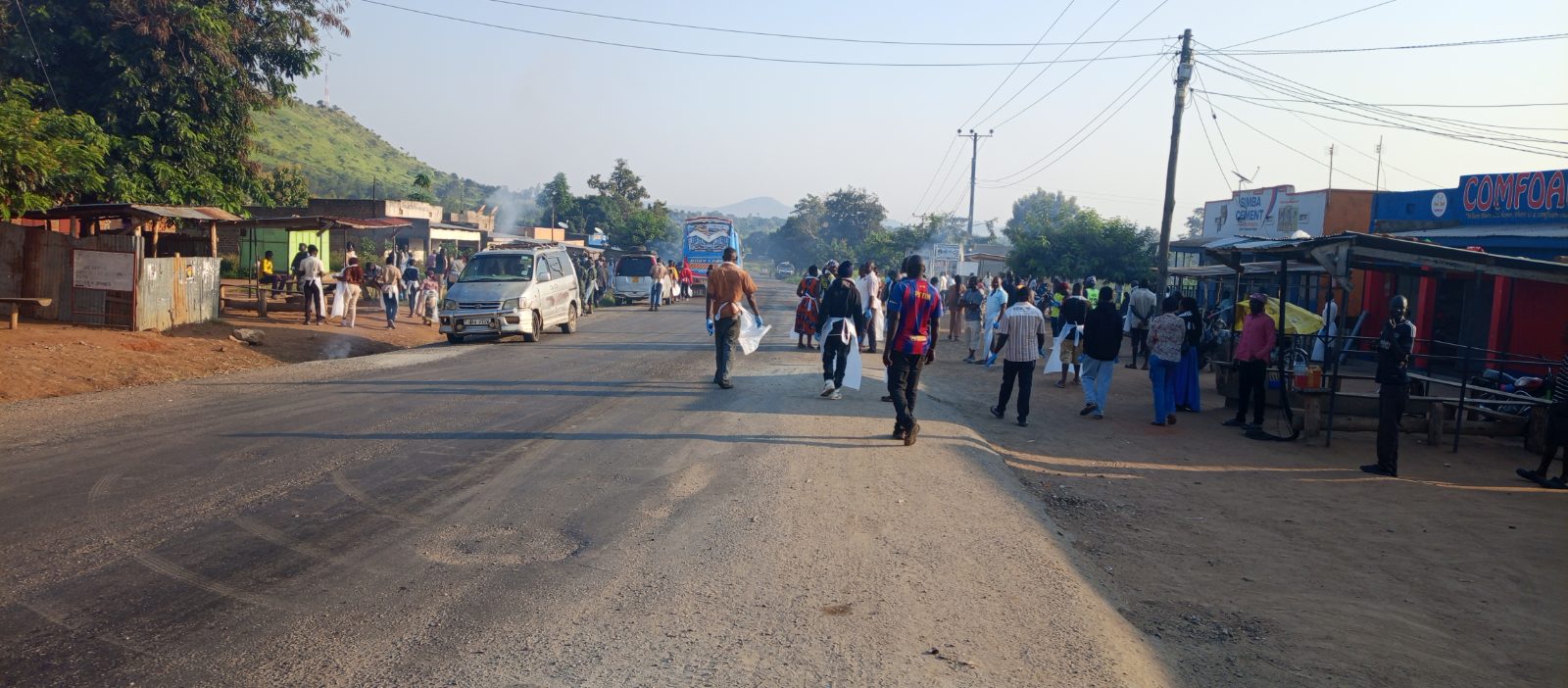
BONDO, UGANDA — The buses, lorries and trailers travelling from Kampala towards Arua had their destinations ahead of them, but on the last Saturday of the month, their journey took an unexpected and meaningful pause at Bondo. At about 7:00 a.m., vehicles arriving at the Bondo checkpoint were calmly asked by Uganda People's Defence Forces (UPDF) personnel to stop and allow passengers to participate in the monthly national cleaning exercise.
What followed was not a scene of frustration or resistance, but one of remarkable cooperation, enthusiasm and civic responsibility, as passengers understood the purpose of the exercise and willingly stepped out of their vehicles to join the clean-up.
The travellers already knew that the temporary halt would last for three hours and that the vehicles would be allowed to continue their journey at 10:00 a.m. Rather than treating the pause as an inconvenience, they embraced it as an opportunity to contribute to the cleanliness of the country through which they were travelling. Passengers who had been seated in buses and trucks became volunteers along the roadside, joining residents and other participants in collecting plastic bottles, discarded plastic bags and other waste that had accumulated along the highway.
The atmosphere at Bondo was particularly encouraging because participation appeared to come with a strong sense of understanding and goodwill. People did not need lengthy persuasion to appreciate why they had been asked to come out of their vehicles. They recognised that the roads carrying them from Kampala to Arua are shared public spaces and that keeping them clean is a responsibility that extends beyond government workers and local authorities. For the passengers, the exercise offered a practical opportunity to demonstrate the simple principle that if Uganda belongs to all its citizens, then protecting and maintaining its environment must also be a shared responsibility.
As the clean-up progressed, the roadside gradually took on a different appearance. Plastic bottles and discarded cavera bags that had previously been scattered along the highway were picked up and placed into collection bags, while participants swept and cleared sections of the road. Other volunteers moved towards Bondo Market, where they joined in cleaning the trading area and improving the surroundings used daily by traders, customers and residents. The work created a strong sense of collective purpose, with people who had arrived in Bondo merely as travellers temporarily becoming part of the local community effort.
The participation of professionals added another encouraging dimension to the exercise. Professors, doctors, lawyers and people from other professional backgrounds were seen joining the clean-up and taking part happily alongside ordinary residents and fellow travellers. Their involvement demonstrated that environmental responsibility does not belong to a particular social class or occupation. Whether someone spends the day in an office, a hospital, a classroom, a courtroom, a shop or behind the wheel of a vehicle, everyone shares the same environment and therefore has a role to play in protecting it.
Their participation also sent an important message to young people watching the exercise. When highly educated and professionally accomplished Ugandans willingly pick up litter, sweep roadsides and clean public spaces, they demonstrate that there is nothing undignified about serving one's community. On the contrary, such participation can be understood as an expression of humility, citizenship and pride in one's country. The sight of professionals working alongside passengers, traders, residents and young people presented cleanliness as a responsibility worthy of every Ugandan.
The Bondo experience also demonstrated that environmental responsibility does not have to stop at the boundaries of one's home or workplace. Travellers may not live in Bondo, but for the few hours they spent there, they treated the area as a place worthy of their care. They cleaned a road they were using, contributed to the appearance of a market they had not come to trade in and worked alongside people they might never have met under ordinary circumstances. In doing so, they showed that the country begins wherever a Ugandan finds himself or herself.
This is perhaps one of the most positive possibilities created by the monthly cleaning exercise. If passengers can learn to take responsibility for the roads they use, transport operators can encourage travellers to keep waste inside vehicles until proper disposal points are available, and businesses along highways can take greater responsibility for their surroundings, the impact of the initiative can extend far beyond the last Saturday of each month. The exercise can gradually encourage people to think differently about littering and to understand that keeping Uganda clean is a daily responsibility rather than an activity reserved for a particular day.
The three-hour pause at Bondo therefore carried a meaning much greater than the temporary interruption of a journey. It provided an opportunity for Ugandans from different communities and professions to meet around a common purpose and demonstrated how simple acts of cooperation can produce visible results.
The passengers knew that their buses, lorries and trailers would continue towards Arua at 10:00 a.m., but they also knew that before continuing their journey, they had an opportunity to leave the section of Uganda they had passed through cleaner than they found it.
The exercise presented a positive picture of national mobilisation because citizens were not simply waiting for authorities to provide a clean environment for them. They were actively participating in creating it. The passengers' willingness to step out of their vehicles and join the exercise showed that national development can sometimes begin with very ordinary acts of responsibility, such as picking up a plastic bottle from the roadside, collecting a discarded plastic bag, sweeping a market or helping clear a dirty public space.
The spirit displayed at Bondo also offers a wider vision for Uganda. If the positive attitude witnessed among the passengers can be sustained, the monthly exercise could gradually become a catalyst for broader behavioural change. Travellers could become more conscious about littering during journeys, families could become more committed to keeping their surroundings clean, businesses could take greater responsibility for the spaces around their premises, and communities could develop stronger partnerships around waste management and environmental protection.
The most important achievement of the monthly exercise, therefore, may not simply be the amount of rubbish collected on the last Saturday. Its deeper success will be measured by whether the people who participate carry the same sense of responsibility into the rest of the month. A passenger who helped clean Bondo could decide not to throw a plastic bottle out of a vehicle window on the next journey. A child who watched adults participate could grow up believing that keeping public spaces clean is normal. A business owner could begin maintaining the roadside outside the premises every day rather than waiting for a monthly exercise.
For the passengers travelling from Kampala to Arua, the last Saturday became more than a temporary break in their journey. It became a practical demonstration that the responsibility for Uganda's environment belongs to everyone. Their calm response to the request at Bondo, their willingness to participate and the happiness with which professionals and ordinary citizens worked together offered a hopeful picture of what can happen when Ugandans see themselves not merely as users of public spaces, but as custodians of them.
As the clock approached 10:00 a.m., the vehicles were ready to continue their journey towards Arua. Behind them, however, was a visibly cleaner stretch of Bondo and a community strengthened by several hours of shared effort. The passengers had arrived as travellers, but for those three hours they became volunteers, neighbours and environmental ambassadors, demonstrating through their actions that a cleaner country can be built when ordinary citizens are willing to contribute.
The Bondo experience carries a simple but powerful lesson for the rest of Uganda: the journey towards a cleaner nation does not always require extraordinary actions. It can begin when a traveller chooses not to litter, when a professional willingly picks up a broom, when a family cleans its surroundings, when a trader protects a market and when a community decides that its public spaces deserve the same care as its homes.
Uganda's monthly cleaning exercise can therefore become much more than a three-hour interruption to traffic. If embraced positively and sustained across the country, it can grow into a national culture in which cleanliness is associated with dignity, responsibility, community pride and love for Uganda. The passengers at Bondo showed that when citizens understand the purpose and embrace the spirit of an initiative, even a temporary pause in a journey can become an opportunity to make the country better.
The journey eventually continued, but the message left behind remained on the cleaned places: Uganda belongs to all of us, and keeping it clean is a responsibility we can proudly share.
Founder & Chief Editor
Founder and Chief Editor of Osmara Digital Media. Journalist and historian telling Africa's stories through an African lens, from West Nile to the continent.
Related stories

KYABAZINGA MOBILISES BUSOGA LEADERS TO TACKLE TEENAGE PREGNANCY AND POVERTY
PRESIDENT MUSEVENI COMMISSIONS $53M MILITARY FACILITY, DEEPENS UGANDA-RUSSIA DEFENCE COOPERATION
PRESIDENT MUSEVENI COMMISSIONS 280 UPDF OFFICER CADETS, CALLS FOR ECONOMIC PROTECTION AND STRONGER SECURITY