From a PLE Examination Question to a Cocoa Farming Dream: Osman Draga's Story
Osman Draga turns a childhood dream inspired by a PLE examination question about cocoa farming in Ghana into a practical farming journey, using his experience to educate his grandchildren, aspiring farmers and existing cocoa growers.
Founder & Chief Editor · 11 November 2026 · 3 min read
By Osmara Digital Media
Sometimes, a simple examination question can inspire a dream that lasts a lifetime.
When I sat my Primary Leaving Examination (PLE), one of the questions I remember encountering was about cocoa farming in Ghana. The examination paper featured a photograph of a man working on a cocoa plantation, accompanied by questions about cocoa cultivation.
As I looked at the photograph, something inspired me. I remember thinking that one day I wanted to become a cocoa farmer so that my own photograph could also appear in a PLE examination paper.
That childhood thought stayed with me.
Today, I am pursuing that dream through my involvement in cocoa farming. My ambition is not only to grow cocoa but also to acquire practical knowledge, understand modern farming techniques and inspire younger generations to appreciate agriculture.
Interestingly, I now want my grandchildren and other interested people to use my cocoa farming experience as a learning opportunity, just as the photograph of the Ghanaian farmer inspired me when I was young.
Example PLE Questions for My Grandchildren and Other Interested Learners
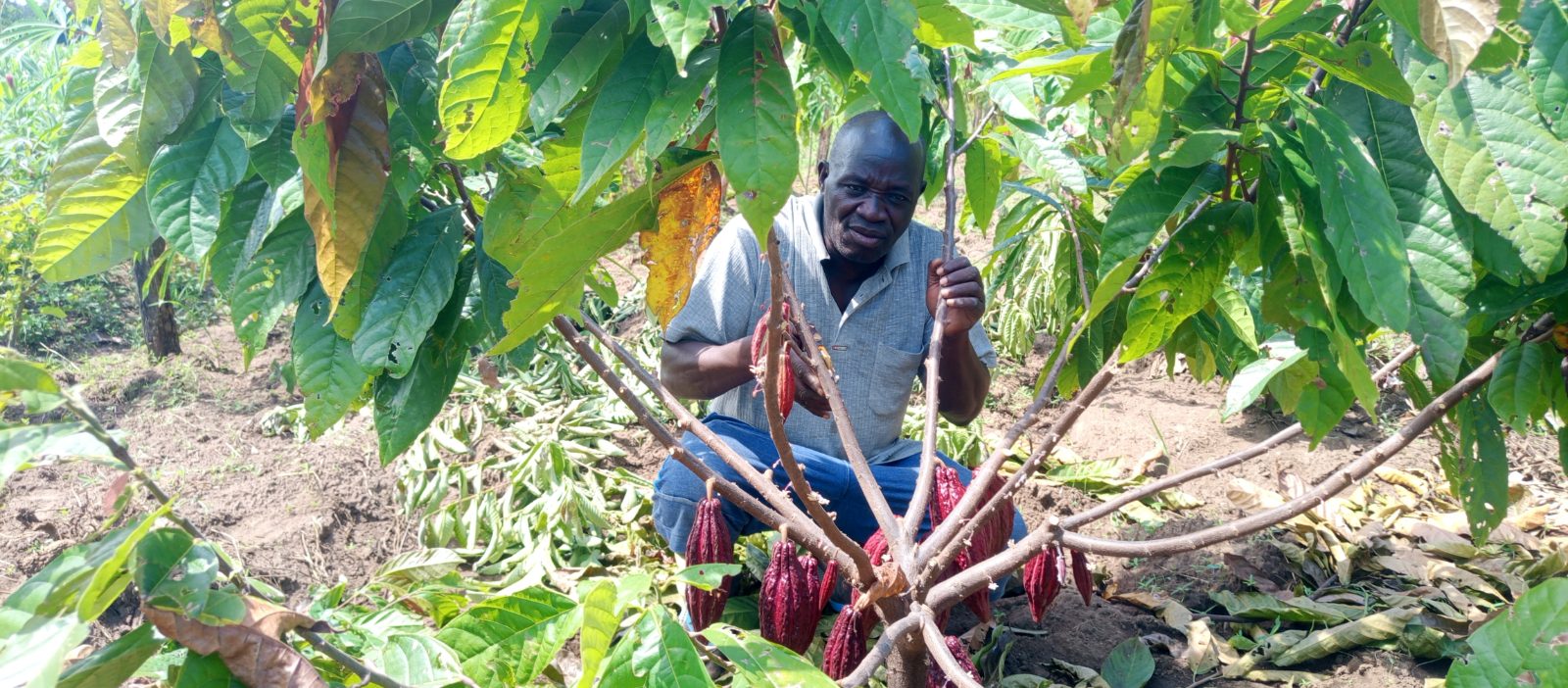
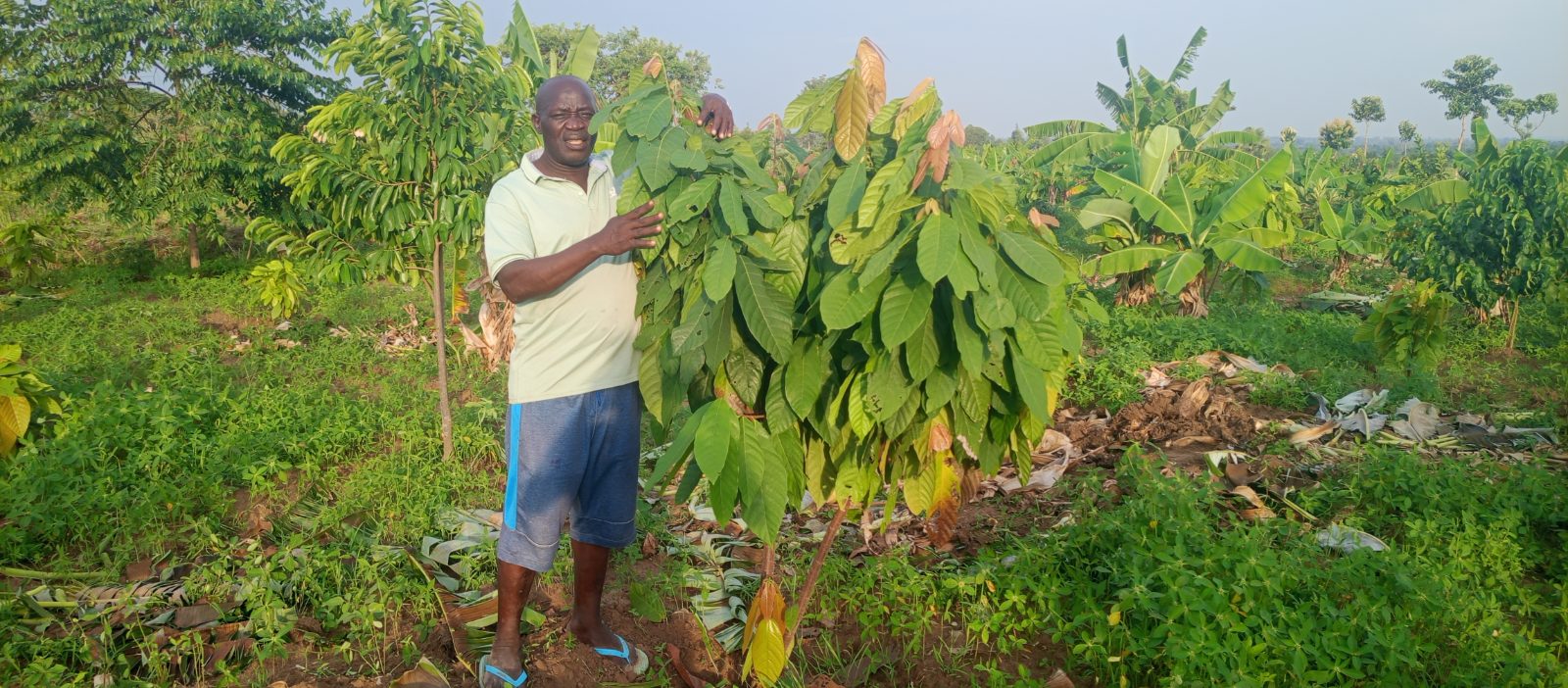
Imagine that the photograph accompanying this article shows Osman Draga working on his cocoa plantation in Olua village Pajama parish, Tara sub county in Maracha district. Study the photograph and answer the following questions.
Question 1: Based on the photograph, the farmer is seen pruning a cocoa tree that already has some large pods. Briefly explain one main reason why a farmer would prune a tree at this stage.
Answer: To ensure that nutrients are directed towards the development and ripening of the remaining pods rather than being used for unnecessary vegetative growth.
Question 2: Using Diagram A, which illustrates chupon removal, identify and describe the part of the plant being removed.
Answer: A chupon is a vigorous vertical shoot that grows from the trunk or main branches of a cocoa tree. It is removed because it consumes nutrients and energy that could otherwise support productive growth.
Question 3: Study Diagram B. The farmer has created an open-centre shape for the tree structure. What is the name given to the point where the main trunk of a young cocoa plant branches out?
Answer: The jorquette.
Question 4: Explain one benefit of maintaining an open-centre tree canopy, as shown in Diagram D, for the overall health of a cocoa plantation.
Answer: It allows sunlight and air to reach different parts of the tree, reducing excessive humidity and helping limit the spread of diseases such as Black Pod.
Learning Beyond the Classroom
These questions are not intended exclusively for children preparing for their examinations. They can also serve as a learning resource for people interested in starting cocoa farming and those already growing cocoa who wish to improve their knowledge and plantation management skills.
Cocoa production requires practical knowledge, patience, commitment and proper management. Understanding practices such as pruning, chupon removal, identification of the jorquette and maintaining an open-centre canopy can help farmers maintain healthier trees, minimise disease risks and improve plantation productivity.
My interest in cocoa farming goes beyond personal achievement. I want to demonstrate that agriculture can provide opportunities for wealth creation, employment and sustainable livelihoods.
I also hope that my grandchildren will appreciate the importance of agriculture and understand that farming is not merely an activity passed down through generations but an enterprise that requires knowledge, innovation and investment.
Perhaps one day, a PLE examination paper will feature a photograph of Osman Draga working on his cocoa plantation, accompanied by questions designed to educate future generations about cocoa production.
If that happens, it will be a remarkable moment for me. The photograph of a Ghanaian farmer that inspired me will have come full circle through my own journey.
Sometimes, the people we see in examination books become the inspiration behind the dreams we pursue in real life.
Founder & Chief Editor
Founder and Chief Editor of Osmara Digital Media. Journalist and historian telling Africa's stories through an African lens, from West Nile to the continent.
Related stories
Day Two: Cocoa Farmers Turn Students Again as Jabara Training Moves From Classroom to Field
Stop Counting Your Age, Start Planting Your Legacy: How Cocoa Is Becoming a Gift for Future Generations
Koboko Cocoa Farmers Cooperative Takes Farmers Back to Class at Jabara