Shs694b Lake Victoria water scheme to benefit 1 million residents in Wakiso and Mpigi
The Shs694 billion Wakiso West Water and Sanitation Project will draw water from Lake Victoria to serve more than one million people in Wakiso and Mpigi, including residents of informal settlements struggling with unreliable water supplies.

Founder & Chief Editor · 4 November 2026 · 3 min read
KAMPALA — For families in Kyengera, Nsangi, Kajjansi and Mpigi, accessing clean and reliable water has become an everyday struggle, with some households forced to buy water from wells or wait for rationed supplies.
In Kyengera, where rapid population growth and expanding residential settlements have increased demand, the pressure on existing water infrastructure has become increasingly evident.
In August, some residents complained ofbuying water from wells at between Shs1,000 and Shs2,000 per jerrycan, an additional expense for households already struggling with the rising cost of living.
However, more than one million people could soon benefit from improved access to clean water following the Government's launch of the Shs694 billion (€145 million) Wakiso West Water and Sanitation Project.
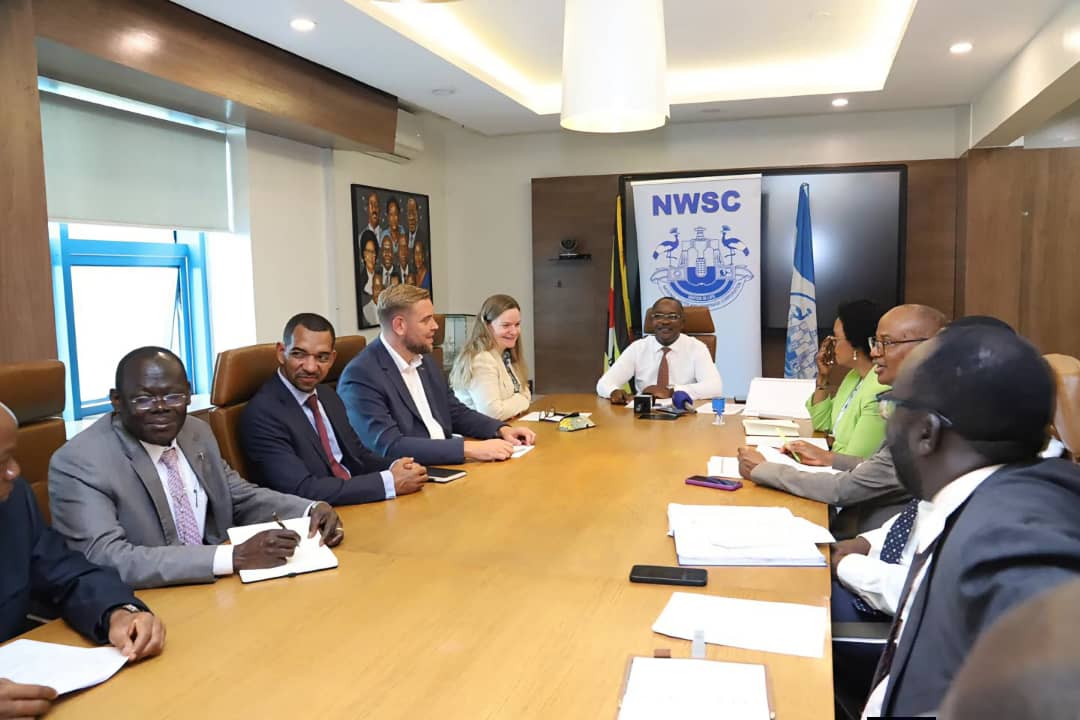
Implemented through the National Water and Sewerage Corporation (NWSC), the investment will draw water from Lake Victoria at Bwerenga to serve communities south and west of Kampala, where demand has outgrown the existing supply infrastructure.
The scheme will cover Kyengera, Nsangi, Kajjansi, Kasanje, Kiringente, Wakiso Town Council and Mpigi Town Council, as well as communities along the Entebbe Road corridor and areas between Entebbe, Masaka and Mityana roads.
About 160,000 of the expected beneficiaries live in informal settlements, where access to clean water and proper sanitation remains a major challenge.
Speaking during the launch, NWSC Managing Director Dr Silver Mugisha said the investment would provide more than one million people with uninterrupted access to safe drinking water upon completion.
"Upon completion, the project is expected to provide over 1 million people with uninterrupted access to safe, reliable drinking water," Dr Mugisha said.
At the centre of the initiative will be a new water treatment plant at Bwerenga, designed to treat 62.5 million litres daily. Its intake infrastructure will have the capacity to draw up to 200 million litres a day from the lake.
The system will include 94.2 kilometres of transmission pipelines and 78.5 kilometres of secondary pipelines, supplying five reservoirs at Kaga, Nsangi, Nanziga, Mpigi and Bukasa. Together, the reservoirs will hold more than 15.25 million litres.
For residents of informal settlements, the scheme will establish 941 community water dispensers and yard taps fitted with electronic prepaid meters.
The facilities will serve communities in Kimbejja, Katereke, Kisozi/Kitemu, Nsangi, Kasenge, Kikajjo, Bweya, Kitende, Namulanda, Nkungulutale, Kafumu, Kikonkoma, Lwanga, Bumoozi, Kakoola, Kavule, Maziba, Ssisa and Wamala.
Dr Mugisha said the facilities were intended to make safe water more accessible and affordable, particularly for underserved communities.
Beyond drinking water, the investment will address sanitation challenges through a faecal sludge treatment plant along Ssekiwunga Road in Kajjansi, with capacity to handle at least 400,000 litres daily.
The facility is expected to reduce indiscriminate disposal of faecal waste, protect surface and groundwater resources from contamination and minimise public health risks.
Solar installations generating at least 2,945 kilowatts will also be established at selected sites.
The announcement followed the signing of a Shs47.5 billion consultancy contract involving Danish firm NIRAS A/S, German engineering firm Fichtner GmbH & Co. KG and Ugandan sub-consultants M&E Associates Ltd and Alliance Consultants Ltd.
The consultants will prepare detailed designs, tender documents and supervise construction.
The first phase, funded through an Impact Fund Denmark grant, will take 20 months, while the second will cover 30 months of construction supervision and a 12-month defects liability period.
The investment comes as Wakiso and surrounding communities experience rapid population growth, putting additional pressure on existing water infrastructure.
Although the Katosi treatment plant was commissioned in December 2022 with a capacity of 160 million litres daily, it currently operates at about half that level because the distribution network cannot transport its full output.
For households spending money and time searching for water, the new infrastructure offers hope of more reliable supplies, improved sanitation and better public health.
If completed as planned, the scheme could transform access to essential services for families, schools, businesses and health facilities across the beneficiary communities.
Founder & Chief Editor
Founder and Chief Editor of Osmara Digital Media. Journalist and historian telling Africa's stories through an African lens, from West Nile to the continent.