Police Warn Relatives Against Evicting Widows and Orphans from Land in Iganga
Police and child protection officials in Iganga have warned relatives against evicting widows and orphans from land and property, saying perpetrators risk legal action.

Founder & Chief Editor · 7 September 2026 · 4 min read
By Barasa Richard
IGANGA, UGANDA — September 7, 2026, Police and child protection officials in Iganga District have warned relatives against evicting widows and orphans from their land and property, describing the practice as unlawful and cautioning perpetrators that they could be held accountable.
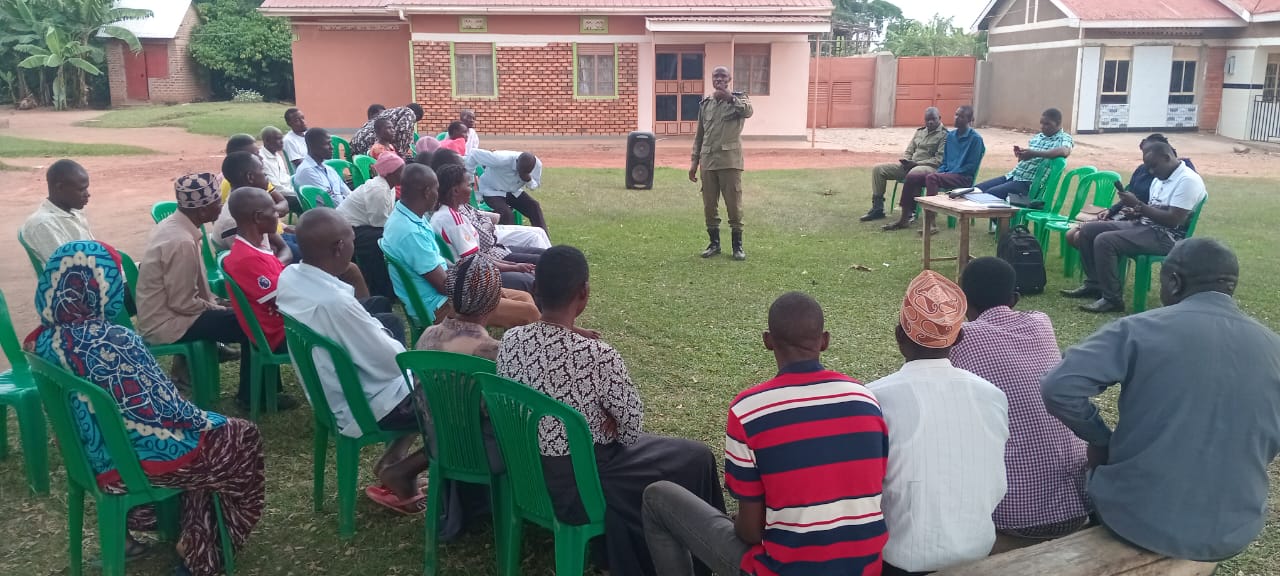
The warning was issued by the Busoga East Community Liaison Officer, Afande Ibrahim Batamye, and Iganga District Probation and Welfare Officer, Godfrey Ntale, during a community meeting organised by Redeem International in Nasuuti Village, Nambaale Sub-county.
The meeting followed a dispute involving the family of the late Ssande Mukupya, a resident of Busimba-Nasuuti Village, where his widow, Jackline Namukombe, says she was evicted from her land and deprived of property, including cows and goats.
According to information presented during the meeting, Namukombe alleges that relatives identified as Kyomugendo Sylvia, Mbwali Susan and Baleeta Richard were involved in taking control of her land and other property. The allegations have now become the subject of legal proceedings.
Addressing residents, Batamye warned relatives and other community members against using family relationships or customary practices as a justification for taking property belonging to widows and orphans. He said such disputes should be handled through lawful procedures rather than intimidation, eviction or force, warning that people found to have unlawfully deprived vulnerable family members of their property could face legal consequences.
Ntale also condemned the practice, stressing that widows and children have rights that must be protected. He urged families involved in succession and land disputes to seek lawful solutions instead of forcing widows and orphans off their property.
Mary Gabula, the legal officer at Redeem International, said the organisation had already taken legal action over Namukombe's case. She said some of the people accused of evicting the widow had been arrested and released on police bond, but were required to report back and comply with the ongoing legal process. Henry Anthony Wabwiire, the organisation's coordinator, urged the accused persons to respect the court process, warning that failure to comply with legal requirements could result in further action.
Namukombe, who spoke during the meeting, described the difficulties she has experienced since losing access to her land and property. She expressed gratitude to community members and organisations that had intervened in her case and supported her efforts to reclaim what she says belongs to her.
Land and property disputes involving widows remain a concern in parts of rural Uganda, where vulnerable women and children can face pressure from relatives following the death of a husband or parent.
Advocates say the motives behind such property grabbing can include financial gain, expansion of family landholdings and attempts to enforce customary practices that favour male relatives.
In some cases, relatives may seek to sell land or take control of agricultural produce for immediate financial benefit, while others may attempt to incorporate a widow's land into neighbouring family holdings. There are also cases where traditional beliefs are invoked to argue that ancestral property should return exclusively to male members of a clan.
The consequences can be severe. Displaced widows may be left without a stable source of food or income, while children and orphans can lose their homes, land and means of livelihood.
Government officials and cultural leaders have repeatedly called for the protection of widows, orphans and other vulnerable people from unlawful land grabbing and disinheritance. State Minister for Lands Harriet Ntabazi has previously cautioned land grabbers and emphasised the government's commitment to addressing illegal land transactions and restoring land rights to vulnerable groups. Officials have also pointed to limited awareness of land and succession laws as one of the factors contributing to property disputes. Cultural leaders have equally spoken against the practice. The Katikkiro of Buganda, for example, has condemned the disinheritance of widows as a practice driven by greed and urged relatives to seek legitimate means of earning a livelihood rather than taking advantage of vulnerable family members.
District authorities in different parts of Uganda have also recognised property grabbing as a persistent problem that can leave women and children displaced despite legal protections. Community advocates say the response of local leaders and police is critical. They argue that land and inheritance disputes involving widows should not automatically be dismissed as private family disagreements when allegations of intimidation, violence, unlawful eviction or property theft are involved.
They further warn that in communities where conservative interpretations of customary land ownership remain influential, widows may face pressure from clan members who believe women should not independently control family or ancestral land.
The Iganga meeting therefore served as both a warning to relatives involved in property disputes and a call for communities to protect the rights of widows and children through the law rather than through customary pressure or force.
Founder & Chief Editor
Founder and Chief Editor of Osmara Digital Media. Journalist and historian telling Africa's stories through an African lens, from West Nile to the continent.
Related stories
IGANGA RDC DIRECTS TOWN CLERK, CAO TO PRODUCE ALL GOVERNMENT LAND TITLES FOR VERIFICATION
BABALANDA LAUNCHES ONE VOICE27 DIGITAL EVANGELISM MISSION IN IGANGA IGANGA | 6 SEPTEMBER 2026
Kamuli Police Arrest Man Accused of Impersonating Coffee Enforcement Officers