No Grass, No Water: How the Dry Spell Is Pushing Western Uganda’s Cattle Farmers to the Edge
Western Uganda’s cattle farmers are struggling as prolonged dry conditions leave grazing fields bare and water sources depleted, forcing animals to survive on dry grass.

Founder & Chief Editor · 18 August 2026 · 4 min read
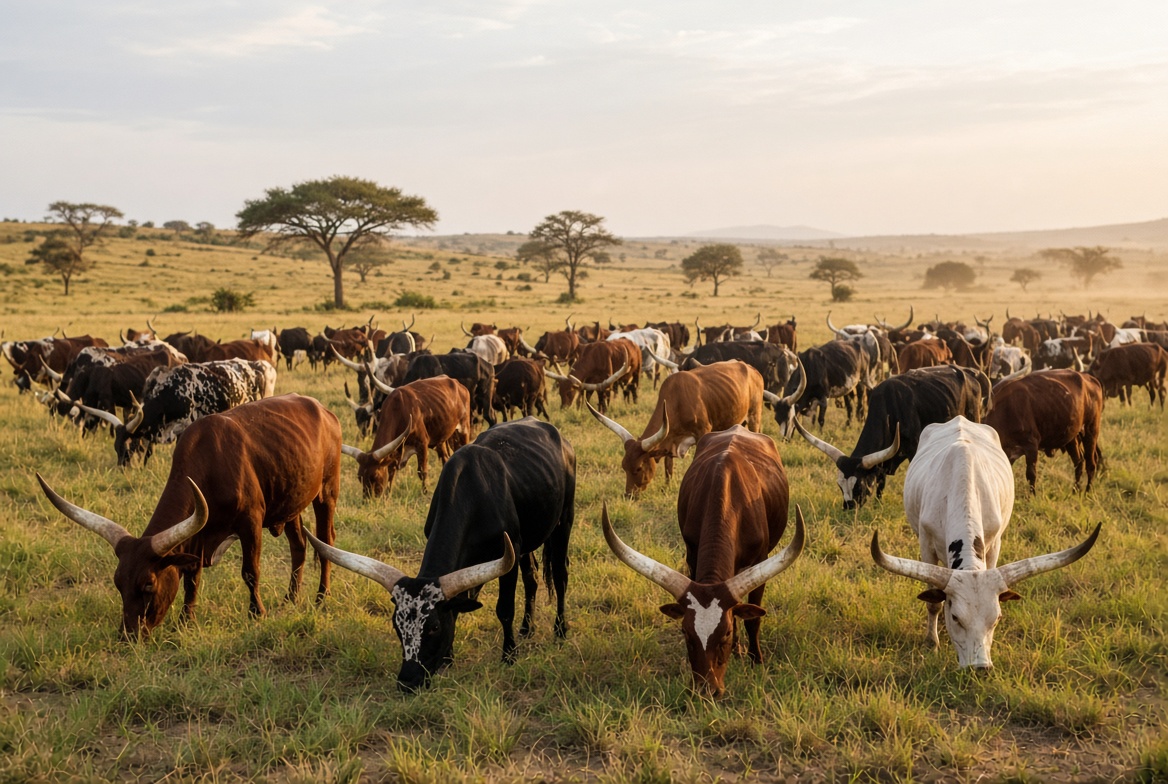
WESTERN UGANDA — Across parts of Western Uganda, the dry spell is turning once-green grazing fields brown, leaving cattle farmers facing a growing struggle to keep their animals fed and watered.
During a recent tour of the region, the situation on the ground was worrying. Cattle could be seen feeding on dry grass, while some traditional water sources had significantly reduced or dried up. For livestock keepers, the challenge is no longer simply about maintaining productivity—it is increasingly about keeping their animals alive.
The conditions come as Uganda experiences a period of drier and warmer-than-normal weather.
Government forecasts issued for June to August warned of below-average rainfall across much of the country, with Western Uganda—including Mbarara, Rukungiri, Isingiro and Ibanda—among the areas expected to experience persistent dry conditions. Cattle are paying the price For cattle farmers, the most immediate problem is pasture.
As the grass dries up, cattle are forced to depend on whatever vegetation remains. In some areas, farmers are watching their animals struggle to find enough nutritious feed.
The situation affects the animals' body condition and productivity. Dairy farmers are particularly vulnerable because inadequate feed can translate into declining milk production, directly affecting household income.
The Famine Early Warning Systems Network has warned that pasture conditions in Uganda are expected to decline rapidly during the dry period, with prolonged below-average rainfall and higher temperatures putting additional pressure on livestock.
Water is becoming an equally serious concern. Farmers who traditionally rely on dams, ponds and other local water sources are being forced to search farther for water or spend money transporting it to their animals. In some cattle-keeping communities, muddy and shrinking water sources are becoming the only available option. Recent reporting from Uganda's cattle corridor has documented farmers selling cattle simply to reduce pressure on limited pasture and water.
A threat to farmers' wealth Cattle are more than animals for many families in Western Uganda. They are savings, household assets and a source of milk, meat, manure and income.
When pasture disappears, however, the value of that wealth begins to decline. Farmers facing feed and water shortages may have little choice but to sell animals. But selling during a widespread dry spell can mean accepting lower prices because many farmers are trying to reduce their herds at the same time.
Uganda's National Adaptation Plan for the agriculture sector warns that prolonged drought can reduce pasture and water availability, increase feed costs and force livestock owners to sell cattle. Large-scale distress sales can subsequently push livestock prices down, reducing household income and productive assets.
The struggle behind the cattle For an observer, a cow chewing dry grass may appear to be an ordinary scene during the dry season. But for the farmer watching it, the picture is different.
Every day without rain means less pasture. Every drying water source means another challenge. Every animal that loses weight represents a reduction in the value of the farmer's herd.
And when milk production falls, the effects extend beyond the farm to household food and income.
The situation also raises concerns about animal health. Weak animals facing nutritional stress can become more vulnerable to disease, while farmers may struggle to afford supplementary feeds and veterinary services.
Farmers need more than rain The current situation highlights the need for long-term investment in livestock water infrastructure and climate-resilient farming.
The Ministry of Water and Environment launched a five-year project in April 2026 aimed at improving water security and climate resilience in Uganda's cattle corridor, including better access to water for production and sustainable land and water management.
But for farmers already facing dry conditions, long-term interventions may not provide immediate relief. Livestock keepers need practical support such as water harvesting and storage, pasture conservation, hay and silage production, drought-resilient fodder and accessible veterinary extension services.
Agricultural experts have also encouraged farmers to supplement grazing with hay, silage and crop residues rather than relying entirely on natural pasture.
A warning from the field The dry spell in Western Uganda is more than a weather story.
It is a livelihood story. It is the story of farmers watching their grass disappear, their water sources shrink and their cattle struggle for survival.
The sight of cows eating dry grass under the harsh sun should therefore be a warning—not only to farmers but also to policymakers.
If the dry conditions persist, the question may soon move from how much milk farmers can produce to how many cattle they can save.
For Western Uganda's cattle keepers, the message from the field is becoming increasingly clear: No grass means less milk. No water means weaker cattle. And without urgent support, the dry spell could leave lasting scars on one of the region's most important livelihoods.
Founder & Chief Editor
Founder and Chief Editor of Osmara Digital Media. Journalist and historian telling Africa's stories through an African lens, from West Nile to the continent.
Related stories

Museveni Urges Busoga Families to Turn Small Landholdings into Wealth-Creation Opportunities

Museveni Hails Pastor Kayanja’s Ministry, Calls for African Unity and Prosperity at Big Fix Conference
Koboko Farmer Bets on Coffee and Cocoa to Unlock Agricultural Potential