Ghana–China Forum Proposes Market Access Council to Boost Local Exports
Ghanaian stakeholders have proposed a Ghana–China Market Access Council to help local businesses overcome export barriers, access Chinese buyers, strengthen competitiveness and create new opportunities for trade and employment.

Founder & Chief Editor · 19 October 2026 · 4 min read
By Cde Justice Kaakyir Baako NTARMAH West Africa Correspondent | Osmara Digital Media
ACCRA, Ghana — Ghanaian businesses could gain improved access to the Chinese market following a proposal to establish a Ghana–China Market Access Council to help local exporters overcome trade barriers, strengthen competitiveness and turn preferential market access into increased exports, industrial growth and employment.
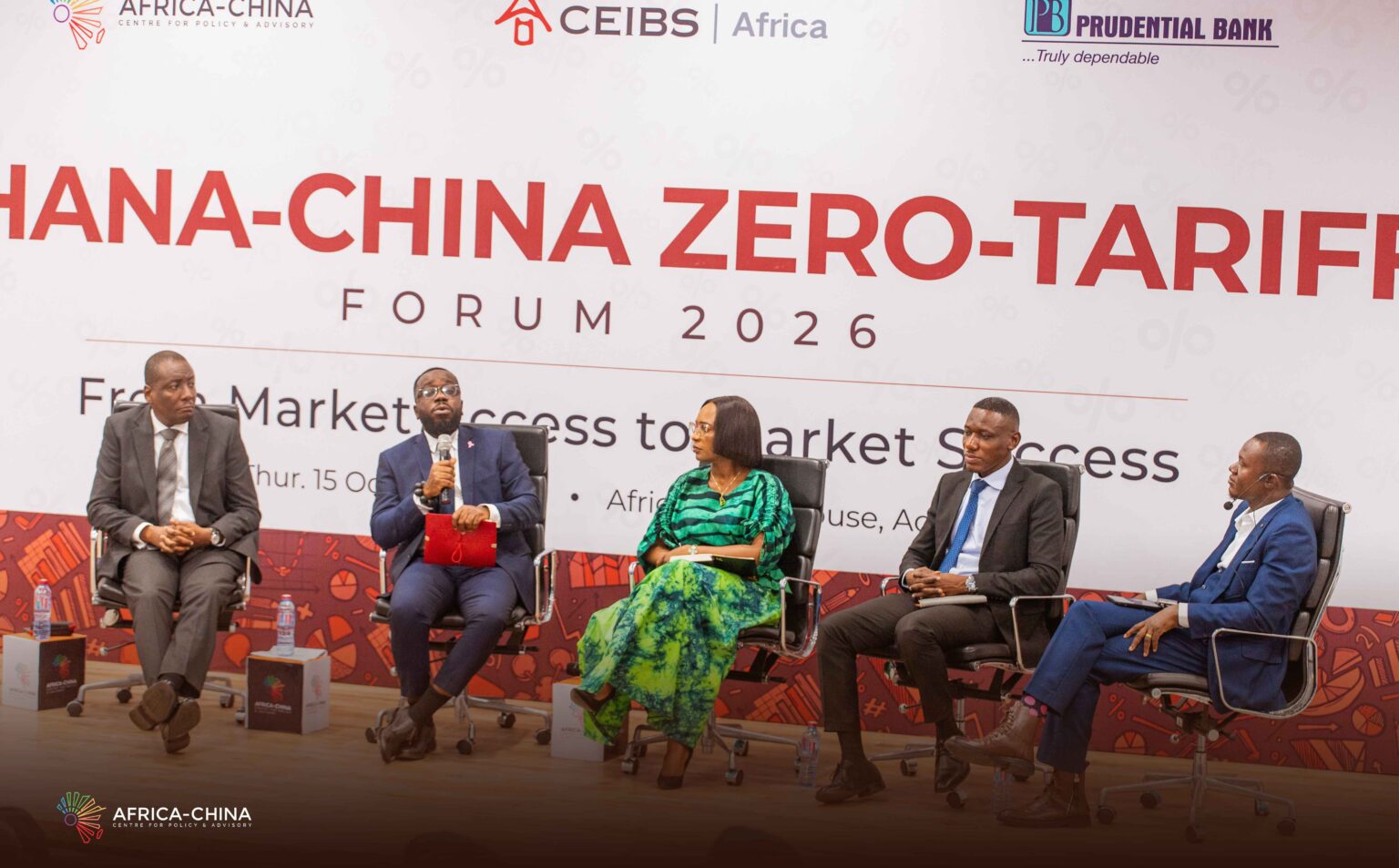
The proposal emerged at the High-Level Ghana–China Zero-Tariff Forum 2026, held on Thursday, 15 October, at the Secretariat of the African Continental Free Trade Area (AfCFTA) in Accra. Approximately 200 participants from government, the private sector, financial institutions, diplomatic missions, development organisations, academia and the media attended the forum.
Convened by the Africa-China Centre for Policy and Advisory (ACCPA) in partnership with CEIBS Africa, the forum was held under the theme “From Market Access to Market Success.”
Discussions focused on how Ghanaian producers, manufacturers, agribusinesses and small and medium-sized enterprises (SMEs) could benefit from China's evolving zero-tariff policy by expanding exports, accessing new customers and creating sustainable employment.
Proposed Council to Support Ghanaian Exporters
The proposal was raised by Eric Nii Amu Okotokata Dodoo-Amoo, Head of the China Desk at Ghana's Ministry of Finance, during a panel discussion.
The proposed Council would bring together government agencies, financial institutions, exporters, regulators, logistics providers, business associations and Ghana–China trade specialists to coordinate support for businesses seeking to enter the Chinese market.
It could help exporters navigate product standards, certification requirements, financing, logistics, market intelligence and connections with credible Chinese buyers.
For many Ghanaian businesses, particularly SMEs, entering international markets requires substantial investment, reliable supply chains and an understanding of unfamiliar regulations. Limited access to affordable financing, export information and established distribution networks can make these challenges more difficult.
A coordinated platform could help businesses identify available support, clarify institutional responsibilities and reduce duplication among export-support agencies.
Opportunities for Agriculture and Manufacturing
The forum highlighted opportunities for Ghanaian agricultural producers, food processors, manufacturers and other export-oriented enterprises to expand their presence in international markets.
However, participants emphasised that preferential market access alone would not guarantee commercial success. Businesses must still meet applicable standards, offer competitive prices, maintain product quality and packaging, and deliver goods reliably.
Agricultural producers may need to improve post-harvest handling, traceability and product consistency, while manufacturers may require better equipment, certification and production capacity.
Strengthening these areas could help Ghanaian businesses compete in China and other international markets while encouraging domestic value addition.
Expanding exports could also generate opportunities for farmers, transport operators, packaging companies and warehouse providers, supporting broader economic activity and job creation.
Access to Finance Remains Critical
Access to affordable finance was another important consideration in discussions about export competitiveness.
Businesses need working capital to purchase raw materials, process products, obtain certification, package goods and transport consignments. Smaller enterprises may struggle to finance large orders, particularly when dealing with unfamiliar buyers or extended payment cycles.
The proposed Council could strengthen coordination between exporters, banks, export-promotion agencies and development finance institutions to improve awareness of available trade-finance facilities and identify financing gaps.
Such support could help smaller businesses expand production and participate more effectively in international trade, alongside larger companies with established export networks.
ACCPA Calls for Practical Results
Paul Frimpong, Executive Director of ACCPA, stressed the need for a coordinated, business-focused approach to convert market access into actual exports.
“The Council should be an action-oriented platform that brings the relevant institutions together, resolves practical barriers and focuses on measurable export outcomes,” Frimpong said.
ACCPA expressed its readiness to support the proposed Council through policy research, stakeholder coordination, China-focused market intelligence, institutional partnerships and engagement between Ghanaian exporters and Chinese market actors.
The proposal builds on an earlier Ghana–China Zero-Tariff Policy Roundtable convened by ACCPA and CEIBS Africa, which examined Ghana's preparedness in areas including product standards, logistics, trade finance, productive capacity and buyer engagement.
Implementation Will Determine Success
The forum underscored the importance of stronger Ghana–China economic cooperation in promoting trade diversification, industrial development and private-sector growth.
If established, the proposed Council's effectiveness would depend on a clear mandate, adequate resources, strong institutional participation and measurable performance targets.
These could include the number of businesses supported, new exporters entering the Chinese market, commercial partnerships facilitated and growth in eligible exports.
For Ghanaian businesses, success will ultimately depend on whether the initiative helps them secure buyers, fulfil orders, increase profitability and expand employment.
The proposed Ghana–China Market Access Council could provide a practical link between trade policy and business growth, helping Ghanaian enterprises translate preferential market access into stronger exports, domestic value addition and sustainable economic opportunities.
Founder & Chief Editor
Founder and Chief Editor of Osmara Digital Media. Journalist and historian telling Africa's stories through an African lens, from West Nile to the continent.
Related stories

African Development Bank Approves €40 Million Facility to Boost Cameroon’s Trade and Local Production

Ghana’s Three Teachers’ Unions Suspend Strike as Government Negotiations Continue

IGANGA CHAIRPERSON APPEALS TO STATE HOUSE FOR UNIVERSITY SCHOLARSHIPS FOR BRIGHT, NEEDY STUDENTS