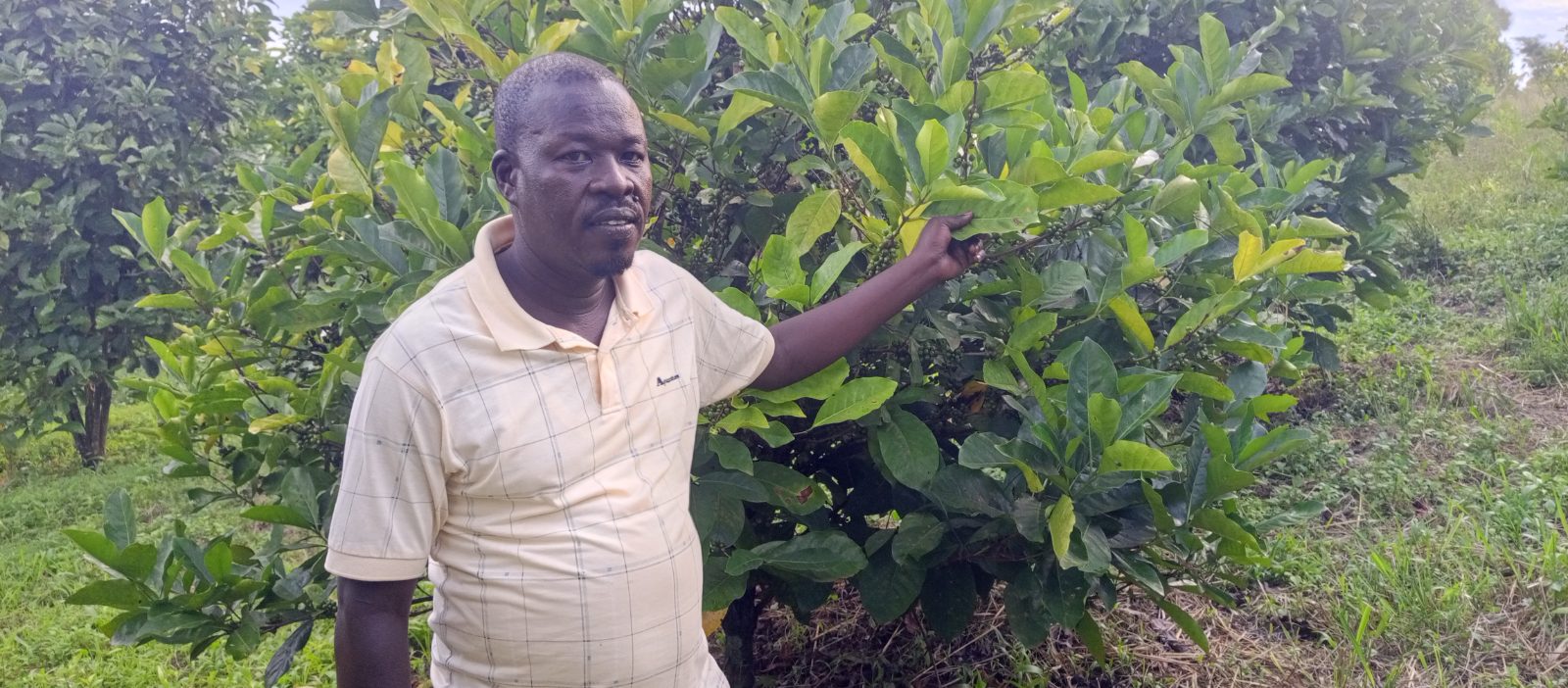
THE MAN UGANDA FORGOT: ALEX YAFFESI LOBIDRA — WHY IS HIS NAME MISSING FROM HISTORY?
Osmara Digital Media investigates the forgotten legacy of Alex Yaffesi Lobidra, a member of Uganda’s first Parliament whose independent voice received little national recognition.
Founder & Chief Editor · 11 August 2026 · 11 min read
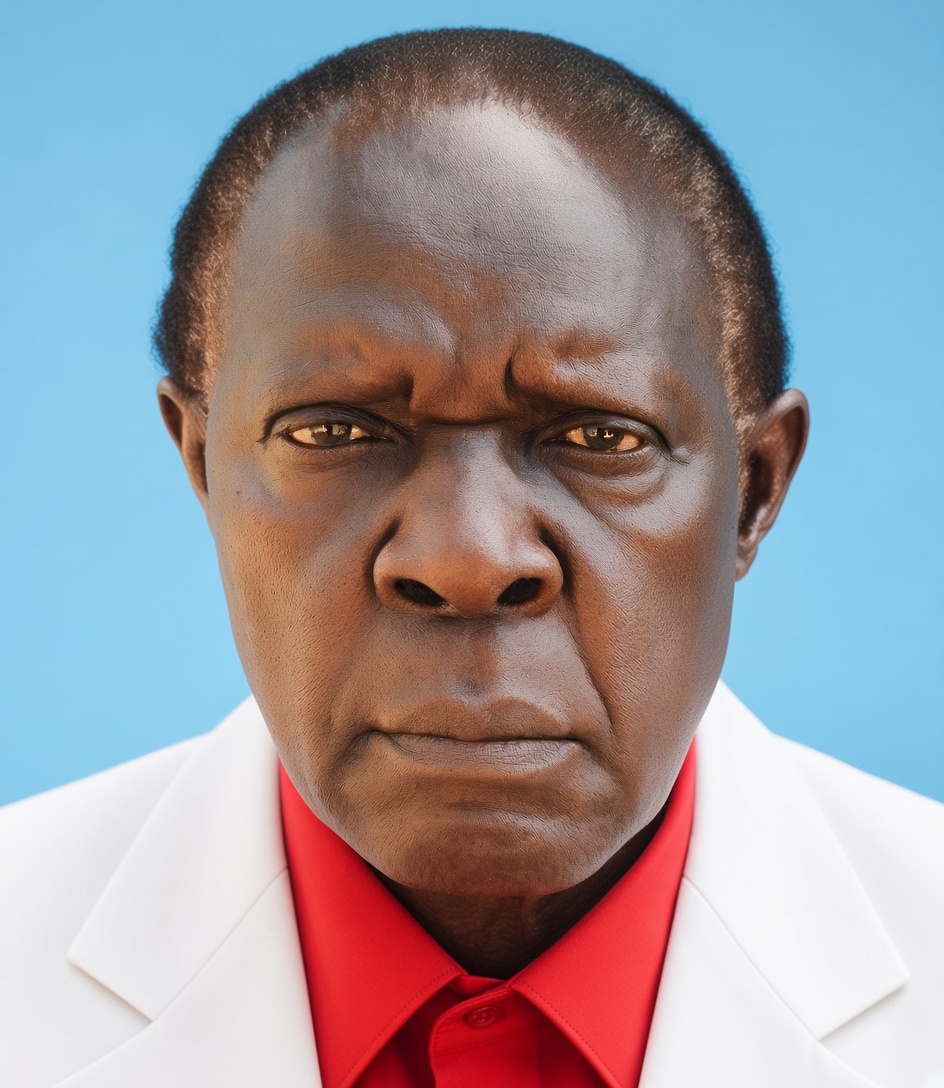
Osmara Digital Media reopens the forgotten story of one of Uganda’s earliest parliamentary voices “Until the lion has his own storyteller, the hunter will always have the best part of the story.” For more than six decades, Uganda has told and retold the story of its independence, celebrating the leaders whose names became firmly established in the national memory. Presidents, ministers, party leaders and prominent independence-era politicians have continued to dominate history books, political speeches, documentaries and national commemorations.
But history has another side. Some of the people who participated in building the institutions of the new Uganda gradually disappeared from public memory, even though their names remain preserved in parliamentary records, newspapers and government documents.
One of those people is Alex Yaffesi Lobidra. His historical record shows that he was a member of Uganda’s first Parliament, representing West Nile and Madi North-West. He entered Parliament as a Uganda People’s Congress politician, later broke with his party and crossed the parliamentary floor, becoming an Independent. He challenged an increase in MPs’ allowances and later returned to government service, where he was appointed Permanent Secretary in the Ministry of Housing and Labour.
Yet today, outside historical and archival circles, Lobidra’s name is rarely mentioned alongside the prominent political figures of Uganda’s independence generation. That gap between what the historical record shows and what the public remembers is the reason Osmara Digital Media has decided to reopen his story.
This is not an attempt to manufacture a hero or rewrite Uganda’s history. It is an effort to examine the evidence, recover a forgotten political voice and understand how a man who participated in Uganda’s earliest parliamentary politics came to occupy such a small place in the country’s contemporary historical memory. After more than six decades, the Lobidra story deserves another look.
A POLITICIAN AT THE BIRTH OF INDEPENDENT UGANDA Uganda became independent in October 1962, entering a new political era in which the institutions of an independent state were still being established. Parliament was developing its traditions. Political parties were defining their influence. Elected representatives were beginning to establish the relationship between Parliament, government, political parties and the electorate. It was within this environment that Alex Yaffesi Lobidra entered national politics. Historical accounts identify Lobidra as a UPC politician representing West Nile and Madi North-West in Uganda’s first Parliament. His position placed him among the legislators who participated directly in the early development of Uganda’s post-independence parliamentary system. But his importance was not simply that he was elected. It was what he did once he arrived in Parliament.
THE MP WHO CROSSED THE PARLIAMENTARY FLOOR According to historical accounts published by Daily Monitor, Lobidra entered Parliament as a UPC representative but later broke with the party over the proposed expulsion of Kenyan trade unionists from Uganda. On November 6, 1962, only weeks after independence, Lobidra announced that he had crossed the parliamentary floor and would remain an Independent rather than join the Democratic Party. Daily Monitor described him as the first Ugandan political maverick following that decision. The move was significant because Uganda was still a very young country. Party loyalty was already becoming a powerful force in Parliament, yet Lobidra demonstrated that an elected representative could disagree with his own political organisation and choose to stand independently. His decision therefore represents an important early episode in the development of parliamentary independence in Uganda. It also gives his story relevance beyond West Nile. The tension between party loyalty and an MP’s individual judgement remains part of parliamentary politics today. Lobidra confronted that tension when Uganda’s parliamentary traditions were still being established.
THE KENYAN QUESTION The disagreement that pushed Lobidra away from the UPC position concerned Kenyan traders and trade unionists in Uganda. Historical accounts indicate that members of the UPC government supported action against Kenyans because of concerns about economic competition and the activities of Kenyan trade unionists. Lobidra opposed the position. His argument went beyond the immediate dispute. He challenged the use of economic competition as a justification for removing another community and warned about the precedent such reasoning could create. The historical importance of his intervention became more striking a decade later. In 1972, Idi Amin’s government expelled Uganda’s Asian population. Daily Monitor later drew attention to the connection between Lobidra’s earlier parliamentary warning and the events that unfolded under Amin. It would be wrong to claim that Lobidra predicted the 1972 expulsion. The available evidence does not establish that. What can be established is that he was participating in an early parliamentary debate over citizenship, economic competition, exclusion and belonging. Those questions would later become some of the most painful issues in Uganda’s history. His intervention therefore deserves to be remembered as part of the country’s early debate over how governments treat communities regarded as economically or politically problematic.
THE MP WHO OPPOSED INCREASING PARLIAMENTARY ALLOWANCES Lobidra’s independent political position was not limited to the dispute involving Kenyan traders. In 1963, Uganda’s first Parliament debated a proposal to increase MPs’ allowances from £720 to £1,200. According to Daily Monitor, only two members of the 92-member Parliament opposed the increase: Alexander Lobidra and George Magezi. Lobidra questioned whether a country with limited revenue could afford such an increase at a time when ordinary citizens were facing economic difficulties. He argued that political leaders should set an example rather than concentrate on increasing their own financial benefits. He also questioned the need for MPs to use expensive vehicles to travel around their constituencies and suggested motorcycles as a cheaper alternative. Instead of supporting the proposed increase to £1,200, Lobidra favoured a smaller increase to £800. Parliament nevertheless proceeded with the larger increase. But the significance of Lobidra’s position lies in the fact that he challenged a proposal that would directly benefit members of Parliament themselves. More than sixty years later, Uganda continues to debate the cost of political leadership, MPs’ allowances, privileges and the use of public resources. Lobidra was raising similar concerns in the first years of independence, when Uganda was still building its institutions and operating with limited resources. His intervention therefore provides an early example of a Ugandan legislator questioning political privilege and calling for greater restraint in the use of public resources.
FROM INDEPENDENT MP TO GOVERNMENT SERVICE Lobidra’s political journey did not end after he crossed the parliamentary floor. According to Daily Monitor, he remained an Independent MP and continued challenging the ruling party before President Apollo Milton Obote brought him back into UPC in 1966. He was subsequently appointed Permanent Secretary in the Ministry of Housing and Labour. That appointment adds another important dimension to his career. Lobidra was not simply an opposition voice who disappeared from public life. He moved from Parliament into senior government administration at a time when Uganda’s public institutions were still developing. Historical compilations of Uganda’s early governments also identify Alexander Y. Lobidra among senior officials and describe him as a Madi from Northern Uganda. Yet this part of his life remains relatively unexplored in public discussions. A fuller understanding of his contribution as Permanent Secretary would require further examination of government records, civil service documents, newspapers and other archival material. That is one of the areas where the investigation must continue.
A POLITICAL CAREER THAT MAY HAVE STARTED BEFORE INDEPENDENCE Lobidra’s political story may extend further back. Historical research into Uganda’s early party politics indicates that Alex Lobidra stood as an Independent in the 1958 Legislative Council elections before later joining UPC. If confirmed through original electoral records and contemporary newspaper reports, this would place Lobidra within Uganda’s pre-independence political transition and suggest that his independent political character was visible even before he entered the first Parliament of independent Uganda. This is significant for West Nile’s political history because it places Lobidra within a generation of leaders who participated in Uganda’s movement towards self-government. However, this part of his story requires further archival investigation. The objective is not to fill gaps with speculation but to establish what the original records can prove.
HOW DID LOBIDRA BECOME FORGOTTEN? The historical record establishes that Lobidra was an active participant in Uganda’s early political development. He represented West Nile and Madi North-West. He crossed the parliamentary floor. He challenged his own party. He opposed increased parliamentary allowances. He later served in senior government. Yet his name is rarely heard today outside specialist historical accounts. That disconnect is at the heart of this investigation. There may be several reasons his legacy faded. His story may have been overshadowed by presidents and more powerful political figures. He did not establish a political dynasty that could keep his name in the national conversation. His independent positions may also have made his political story less convenient for later narratives. It is also possible that West Nile’s broader contribution to Uganda’s early political development has not received sufficient attention. These possibilities require evidence rather than assumption. What is clear, however, is that Lobidra’s name has not received sustained national recognition proportionate to his documented place in Uganda’s first Parliament.
THE SILENCE FROM WEST NILE For Osmara Digital Media, the issue becomes even more significant because Lobidra represented a part of the country whose political history remains rich but whose early national voices are not always remembered by later generations. West Nile has produced generations of MPs, ministers, civil servants, academics, political activists and community leaders. Yet Lobidra rarely features prominently in contemporary discussions about the region’s political pioneers. Osmara Digital Media has not established evidence of a sustained modern campaign by West Nile political leaders to commemorate Lobidra nationally. That does not mean that no individual politician has ever mentioned him. Establishing such an absolute claim would require examining decades of parliamentary speeches, local newspapers, public ceremonies and political records. The more defensible finding is that his legacy has not received sustained public attention. That absence matters because communities have a responsibility to preserve their history. Political boundaries may change. Constituencies may be divided or renamed. New generations of leaders may emerge. But the historical contributions of those who represented communities during critical moments do not disappear simply because electoral maps change. A LEGACY THAT BELONGS TO UGANDA Lobidra’s story should not be reduced to a West Nile issue. His parliamentary actions were part of the early history of Uganda’s national political institutions. His career raises issues that remain relevant today: party loyalty, parliamentary independence, political privilege, public expenditure, economic competition, citizenship and the responsibility of elected representatives to their constituents. His record does not provide simple answers to these issues. But it demonstrates that these debates existed in Uganda from the earliest days of independence. That alone makes his story worth preserving.
THE HISTORY WAS NEVER COMPLETELY LOST There is an irony in calling Lobidra forgotten. He has not completely disappeared. His name remains in parliamentary records, newspaper archives, historical research and government-related documents. The problem is that the evidence is scattered. One part of his story may exist in a parliamentary account. Another may be found in an old newspaper. Additional information could exist in government archives, family collections or oral histories. When those pieces are never brought together, a historical figure can effectively disappear from public consciousness even though evidence of his life remains. That is where journalism has a role. WHY OSMARA DIGITAL MEDIA HAS COME FORWARD Osmara Digital Media has come forward because silence should not be allowed to become history. For decades, Uganda’s independence story has been repeatedly told, but national history should not belong only to the most famous names. The dissenters matter. The independent voices matter. The backbenchers matter. Representatives from regions far from the political centre matter. And people whose contributions have faded from public memory matter. Osmara Digital Media believes journalism has a responsibility not only to report what is happening today but also to help society understand what happened yesterday. This investigation is therefore not intended to manufacture a hero, attack contemporary leaders or rewrite Uganda’s history. It is intended to reopen the record. It is intended to bring Lobidra’s name back into the national conversation and allow the evidence to determine his place in Uganda’s history. PHASE ONE ENDS, BUT THE LOBIDRA FILE REMAINS OPEN This publication marks Phase One of the Osmara Digital Media investigation into Alex Yaffesi Lobidra. The first phase establishes what the available historical record shows: Lobidra was part of Uganda’s first Parliament, represented West Nile and Madi North-West, broke with his political party, became an Independent, opposed an increase in parliamentary allowances and later served as a senior government official. But that is only the beginning. Phase Two will go deeper into the man behind the parliamentary record. Osmara Digital Media will continue examining parliamentary documents, government archives, historical newspapers and family sources in an effort to reconstruct his political and personal journey more completely. The investigation will also seek information from his descendants, historians, former public servants, community elders and political leaders who may hold pieces of a story that has remained fragmented for generations. The search is not simply about recovering a forgotten name. It is about understanding how Uganda was built politically and ensuring that the people who participated in that process are not permanently reduced to footnotes. After more than six decades, Alex Yaffesi Lobidra deserves to be remembered, investigated and discussed on the strength of the historical record.
PHASE TWO COMING SHORTLY Osmara Digital Media will continue the investigation until Ugandans fully understand who Alex Yaffesi Lobidra was, what he contributed to the country and why his name faded from the history he helped make.
Founder & Chief Editor
Founder and Chief Editor of Osmara Digital Media. Journalist and historian telling Africa's stories through an African lens, from West Nile to the continent.
Related stories
Michael Arereng and Stephen Ouma Recall the Day They Witnessed Idi Amin’s Grenade Attack in Kibuli
Yumbe’s Cultural Heritage: Traditions That Still Define the People
Dr Michelle Corral to Visit Bidi Bidi in Yumbe District with Hope and Christmas Gifts