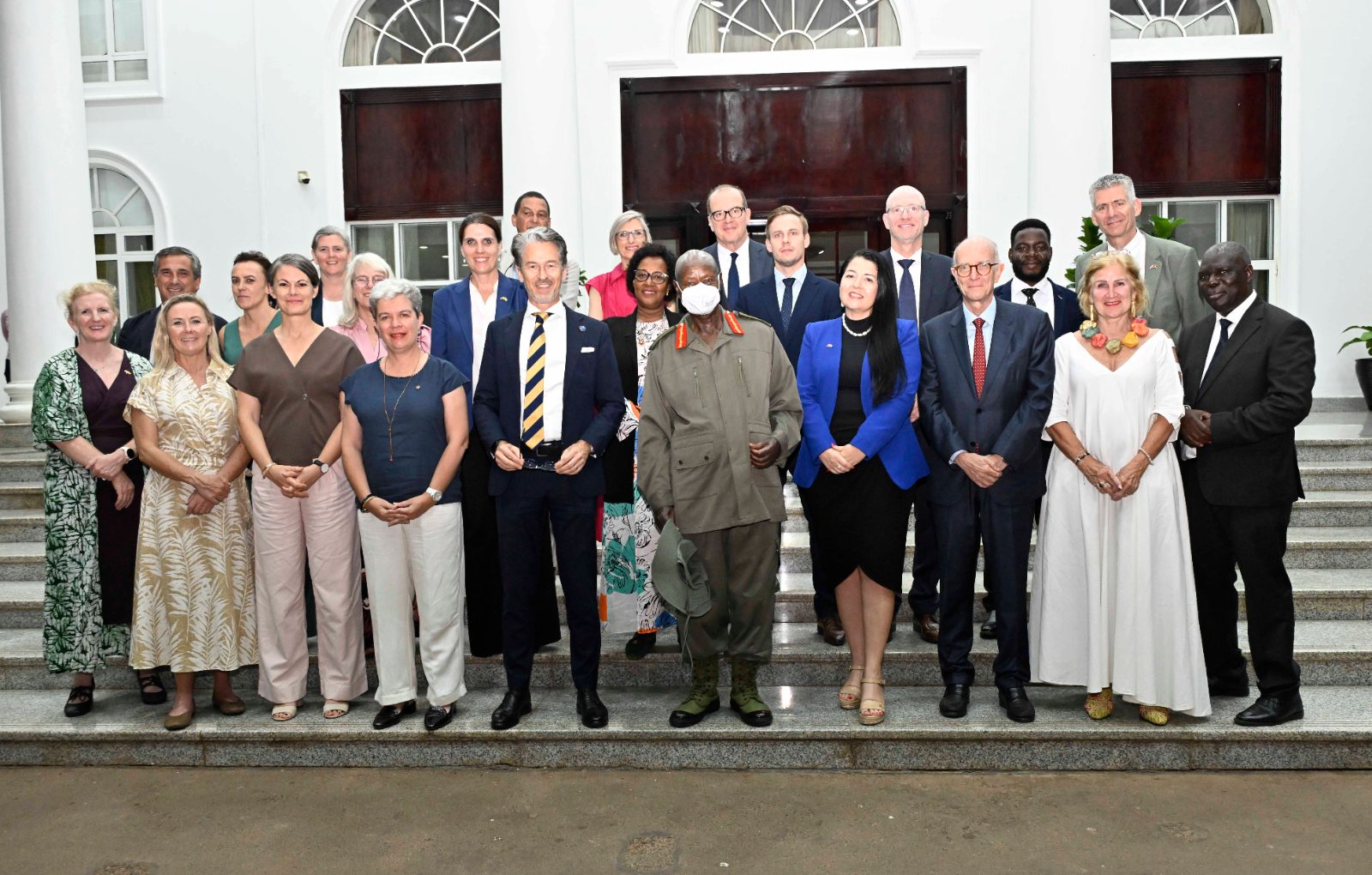
Museveni Lectures African Defence Chiefs: Strong Economies and Political Unity Are Foundations of Security
President Yoweri Kaguta Museveni has challenged African defence chiefs to recognise economic strength, political cohesion and strategic cooperation as essential pillars of national security and continental stability.
Founder & Chief Editor · 9 October 2026 · 4 min read
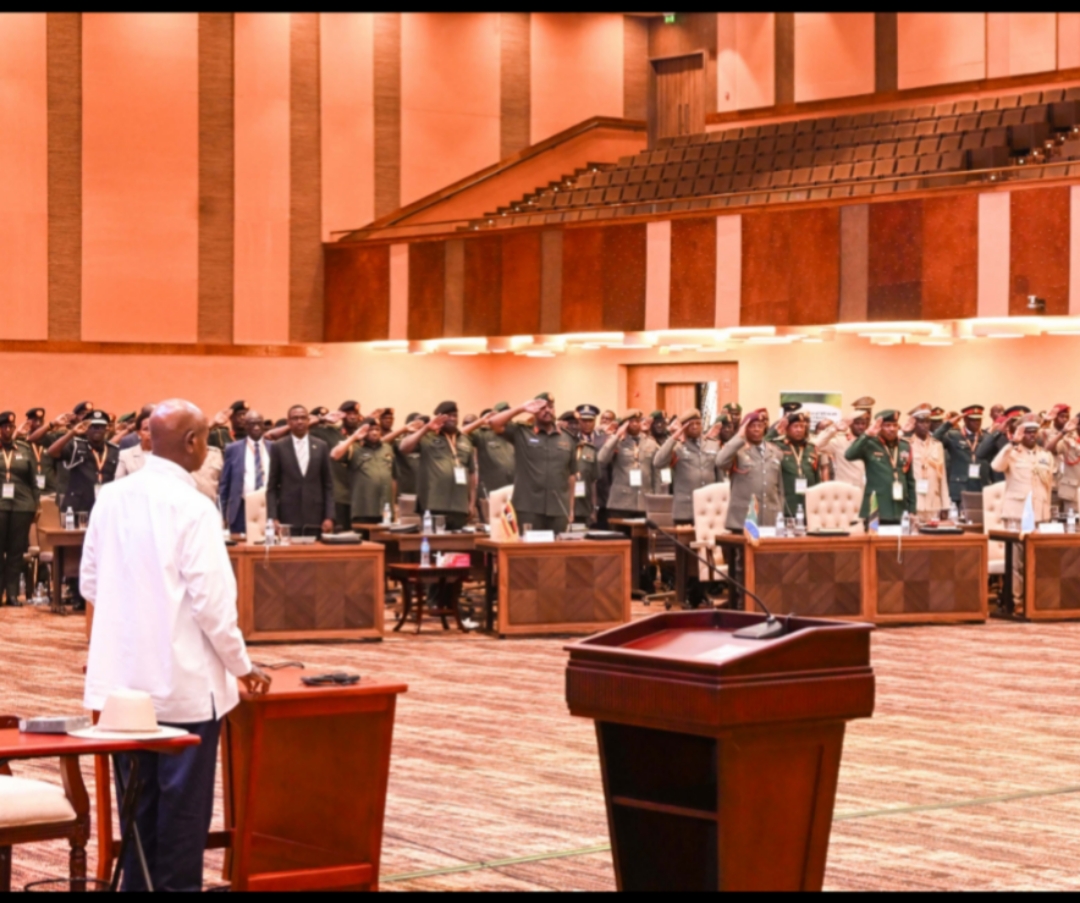
President Yoweri Kaguta Museveni has challenged African countries to strengthen their economies, political cohesion and strategic cooperation, saying these are essential foundations for national security and continental stability.
President Museveni, who is also Commander-in-Chief of the Uganda People’s Defence Forces (UPDF), delivered the message while closing the inaugural Conference of African Defence Chiefs on Military Operations Other Than War at Speke Resort Munyonyo in Kampala.
The four-day conference, which began on October 5, was hosted by Gen. Muhoozi Kainerugaba, Chief of Defence Forces and Senior Presidential Advisor for Special Operations, under the theme: “Strengthening Adaptive Noncombatant Military Response to Emerging Complex Security Threats in Africa.”
Addressing defence chiefs, intelligence leaders and military commanders, President Museveni posed three fundamental questions: Can a country have a strong army without a strong economy? Can it maintain security without political cohesion? And can it ignore geographical challenges, such as being landlocked, when planning its defence?
He said the answers determine a country's capacity to defend itself, even during peacetime.
Economic Strength and Wealth Creation
President Museveni emphasised that national security begins with economic strength, which depends on the production of goods and services and the ability to generate maximum returns.
“In the case of Uganda, we have guided our people about the four sectors where wealth is found. These are commercial agriculture, manufacturing and artisanship, services and ICT,” he said.
He explained that production must be supported by reliable markets, noting that communities producing similar goods cannot always sustain one another through domestic trade alone.
This, he said, makes patriotism economically important because citizens must recognise that their prosperity depends on supporting one another across communities.
“Love Uganda. Why? It is because, among many other reasons, you need Uganda for your prosperity,” President Museveni said, explaining the principle underlying the National Resistance Army (NRA), the UPDF and the National Resistance Movement (NRM).
Pan-Africanism and Collective Security
President Museveni said Uganda's growing production of sugar, milk, maize and manufactured goods demonstrated the need to expand beyond the domestic market.
He linked this economic reality to Pan-Africanism, tracing the movement's historical foundations to the establishment of the African National Congress (ANC) in South Africa in 1912.
He called for stronger African markets, including the East African common market and the Continental Free Trade Area, alongside political federation where possible.
President Museveni argued that African countries should move beyond divisions based on tribe and religion and recognise the shared interests that unite their citizens.
He also linked regional cooperation to collective defence, saying an East African Political Federation could enable member states to pool resources and strengthen their strategic capabilities.
“Uganda alone, even when it is a developed country, may not be able to play such a role. We do not even have access to the sea,” he said.
He cited the possibility of a Federal Army of East Africa capable of defending member states across land, sea, air and space, arguing that countries working together could undertake strategic responsibilities that would be difficult to manage individually.
Leadership, Strategy and Wealth Creation
President Museveni said African countries must correctly identify who creates wealth and the role of government in supporting that process.
He maintained that Uganda regards the private sector as the principal engine of wealth creation, while government provides infrastructure, security and an enabling environment for production and investment.
Using an analogy from the biblical Book of John, he distinguished between an owner and a hired shepherd to illustrate why those with a direct stake in an enterprise are more likely to protect and sustain it.
He warned that mistakes in economic planning, political cohesion and national strategy could undermine a country's future, describing the correct answers to these questions as “destiny shaping.”
Defence Forces Beyond Warfare
President Museveni highlighted the UPDF's contribution to national development beyond conventional military operations.
He said the military supports infrastructure development, including roads, railways, stadia and barracks, while contributing to agriculture, manufacturing and selected public health initiatives.
He added that the UPDF maintains operational readiness through training during peacetime and said the quality and cost of some military construction projects should challenge civilian contractors to improve their efficiency and workmanship.
The President welcomed the visiting delegations and urged investors to support Africa's productive capacity by investing in the continent and purchasing African-made goods.
Addressing Emerging Security Threats
The conference brought together defence chiefs from 18 countries and commanders from the African Union Support and Stabilization Mission in Somalia (AUSSOM), the United Nations Organization Stabilization Mission in the Democratic Republic of the Congo (MONUSCO), the United Nations Interim Security Force for Abyei (UNISFA) and the United Nations Mission in South Sudan (UNMISS).
Participants examined emerging security challenges, including cybersecurity, artificial intelligence, drones, peace support operations, climate change, disaster management, pandemics, border security and the protection of critical infrastructure.
The Minister of Defence and Veteran Affairs, Hon. Kiryowa Kiwanuka, described Uganda's hosting of the conference as timely, given the growing complexity of security threats facing Africa.
He commended Gen. Muhoozi Kainerugaba for championing a theme that extends beyond conventional warfare to address cyber threats and other non-traditional security risks.
“Our theme of ‘Strengthening Adaptive Noncombatant Military Response to Emerging Complex Security Threats in Africa’ is very important because it addresses the security threats that the region continues to face, hence timely,” the minister said.
He said the conference aimed to strengthen cooperation, information sharing and preparedness among African defence forces.
Founder & Chief Editor
Founder and Chief Editor of Osmara Digital Media. Journalist and historian telling Africa's stories through an African lens, from West Nile to the continent.
Related stories
PRESIDENT MUSEVENI COMMISSIONS 280 UPDF OFFICER CADETS, CALLS FOR ECONOMIC PROTECTION AND STRONGER SECURITY
Minister Namuganza Declares Herself PLU Founder, Throws Weight Behind Muhoozi Presidency Bid
PRESIDENT MUSEVENI COMMISSIONS $53M MILITARY FACILITY, DEEPENS UGANDA-RUSSIA DEFENCE COOPERATION