AU and IFRC Push for Stronger Country Leadership to End Hunger in Africa
The African Union Commission and IFRC are urging African governments and development partners to strengthen national leadership, increase investment and build resilient food systems to accelerate the continent's fight against hunger.

Founder & Chief Editor · 12 November 2026 · 2 min read
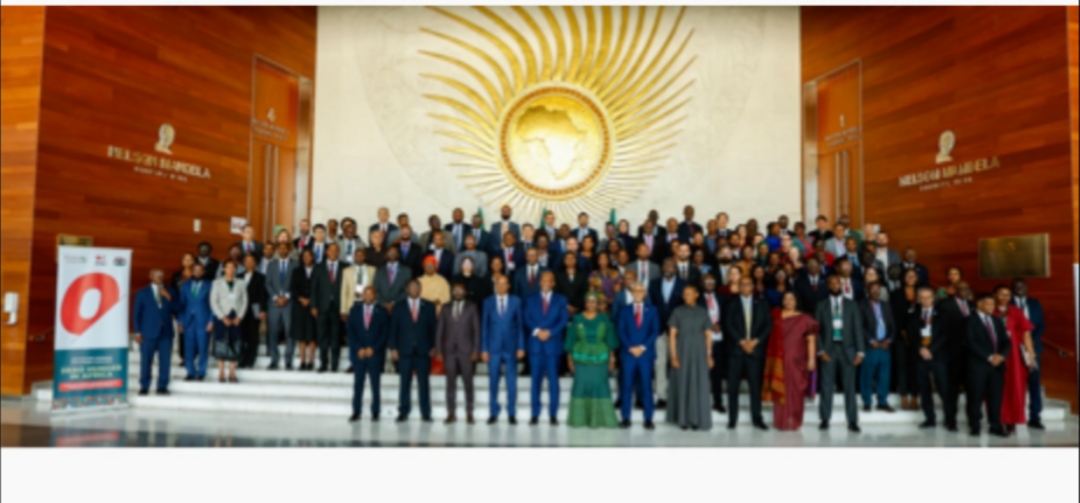
ADDIS ABABA, Ethiopia – The African Union Commission (AUC) and the International Federation of Red Cross and Red Crescent Societies (IFRC) have called for stronger government leadership, increased investment and coordinated action to accelerate efforts towards ending hunger across Africa.
The call was made during the AU–IFRC High-Level Convening on Advancing Durable Solutions Towards Zero Hunger in Africa, held in Addis Ababa, Ethiopia, on November 4, 2026.
The meeting brought together African leaders, AU Member States and development partners to discuss sustainable approaches to food and nutrition security, strengthen resilient food systems and mobilise long-term investment to address recurring food crises.
The convening was hosted by the Government of Ethiopia and co-convened by His Majesty King Letsie III of Lesotho, the African Union Champion for Nutrition.
According to the 2025 State of Food Security and Nutrition in the World report, an estimated 306.5 million people in Africa were undernourished in 2024, while more than half of the continent's population experienced moderate or severe food insecurity.
African Union Commission Chairperson H.E. Mahmoud Ali Youssouf said ending hunger was not merely a humanitarian responsibility but a fundamental requirement for peace, stability, economic transformation and sustainable development.
He called for a shift from emergency responses towards addressing the structural causes of hunger through sustained investment and stronger national leadership.
IFRC Secretary General Jagan Chapagain emphasised that achieving zero hunger required collective responsibility, transformative government leadership and investment from development partners.
He also highlighted the continuing impact of the El Niño phenomenon on African communities, reinforcing the need for stronger preparedness and resilience.
King Letsie III urged African leaders to move from responding to hunger towards preventing it, while translating political commitments into practical action.
The discussions also highlighted the Food Security Resilience Platform (FSRP) and its flagship Food and Nutrition Resilience Programme (FNRP), which support integrated community resilience initiatives.
The programme initially focuses on Ethiopia, Kenya, Somalia, South Sudan and Lesotho.
Participants identified key priorities, including climate-resilient agriculture, improved nutrition, stronger livelihoods, anticipatory action and better coordination of public and private financing.
The meeting also called for an AUC–IFRC Commitments Tracking Mechanism to strengthen accountability and monitor implementation.
The initiative forms part of wider continental efforts to advance Agenda 2063, the Sustainable Development Goals and Africa's ambition to achieve food and nutrition sovereignty.
The leaders stressed that success must ultimately be measured by improved household food security, stronger livelihoods and communities better prepared to withstand future crises.
Founder & Chief Editor
Founder and Chief Editor of Osmara Digital Media. Journalist and historian telling Africa's stories through an African lens, from West Nile to the continent.
Related stories
AU-SAFGRAD, FAO Convene 26 African Countries to Advance Sustainable Irrigation Development
Uganda Signs Host Country Agreement to House African Union Humanitarian Agency Headquarters
AFREC trains 23 Nigerian officials to improve energy statistics