Africa’s Rising Cities: 15 Urban Centres Set to Drive the Continent’s Next Growth Wave
From Kampala and Nairobi to Lagos and Kigali, Africa’s cities are expanding rapidly, creating new centres of business, technology, trade, manufacturing and innovation.

Founder & Chief Editor · 15 August 2026 · 5 min read
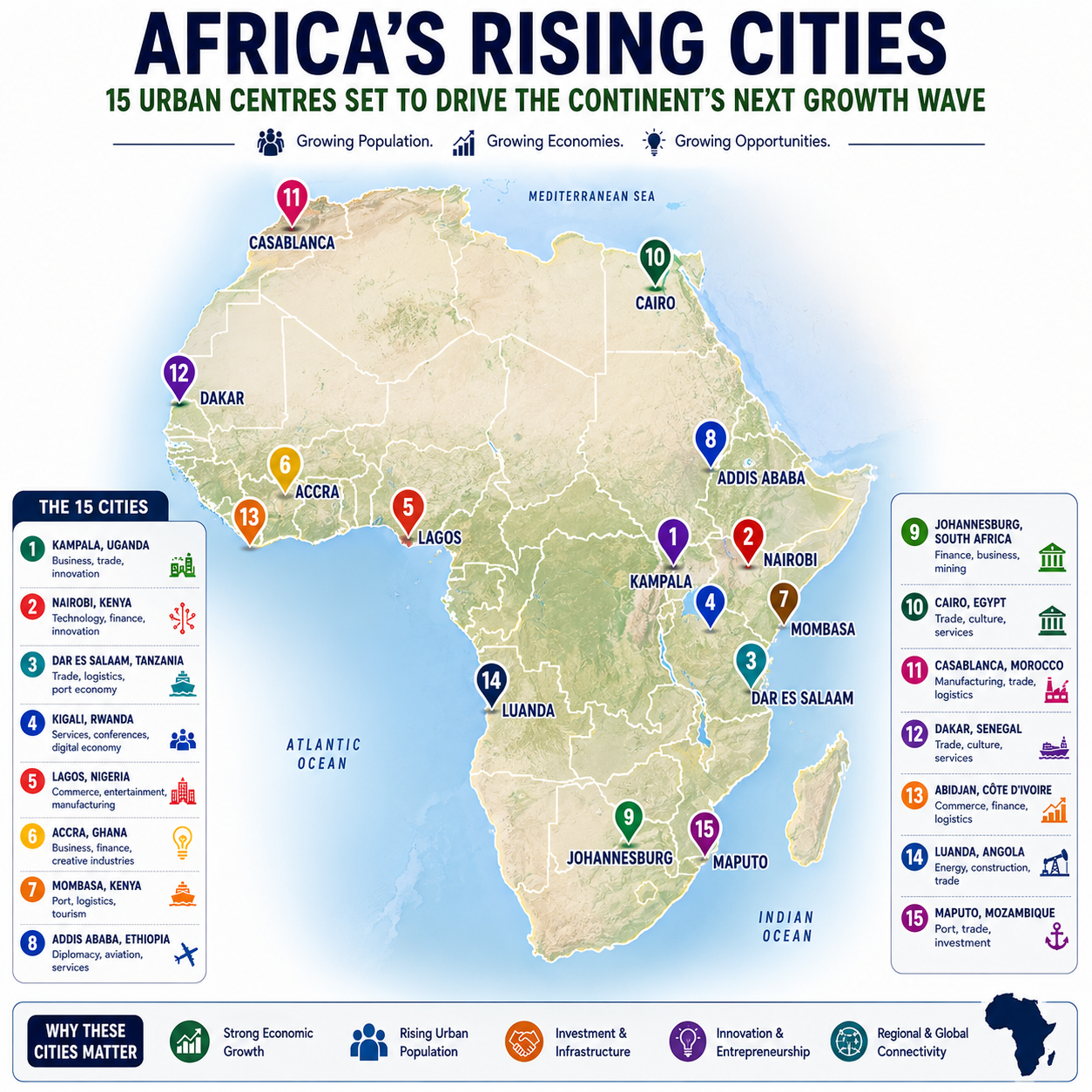
Millions of people are moving to cities in search of jobs, education, business opportunities and better services. As populations grow, African cities are becoming more important to the continent’s economic future.
The next growth story may therefore be written not only by countries, but by cities. From East Africa’s technology hubs to West Africa’s commercial giants and North Africa’s industrial centres, these 15 cities are positioning themselves to shape Africa’s future.
-
Kampala, Uganda: East Africa’s growing business hub Kampala sits at the centre of Uganda’s economic, political and commercial life. The city is expanding its technology, financial services, real estate, construction, retail and hospitality sectors. Its strategic position also connects businesses to markets in South Sudan, Rwanda, eastern Democratic Republic of Congo, Tanzania and Kenya. As Uganda develops its oil sector, manufacturing and regional trade, Kampala could become an increasingly important commercial gateway for the Great Lakes region. Its growing young population is also driving entrepreneurship, digital businesses and creative industries.
-
Nairobi, Kenya: Technology and finance powerhouse Nairobi has established itself as one of Africa’s leading technology and financial centres. The city is home to a growing ecosystem of startups, fintech companies, international organisations and regional headquarters. Its location also makes it a natural gateway to East African markets. Nairobi’s challenge will be managing rapid population growth while improving transport, housing, infrastructure and public services.
-
Dar es Salaam, Tanzania: Gateway to East Africa Dar es Salaam is becoming increasingly important to regional trade. Its port connects Tanzania to international markets and serves as a gateway for several landlocked countries. The city's growing population, construction industry, logistics sector and commercial activity could strengthen its position as one of East Africa’s most important economic centres.
-
Kigali, Rwanda: The clean and connected city Kigali has built a reputation for urban planning, cleanliness, technology, tourism and business services. The city is positioning itself as a regional centre for conferences, investment and digital innovation. Its relatively small size allows Rwanda to pursue ambitious urban development strategies that could influence other African cities.
-
Lagos, Nigeria: Africa’s commercial giant Lagos is one of Africa’s largest and most influential urban economies. It is a centre for finance, entertainment, technology, manufacturing, trade and entrepreneurship. The city's enormous consumer market gives businesses access to millions of potential customers. Lagos is also home to Nigeria’s powerful creative industries, including Afrobeats, film and fashion.
-
Accra, Ghana: West Africa’s emerging business hub Accra has become a major centre for business, technology, finance, tourism and creative industries. Its growing startup ecosystem and expanding international connections are attracting investors and entrepreneurs. The city is also benefiting from Ghana’s position as a gateway to West African markets.
-
Mombasa, Kenya: The port city connecting Africa to the world Mombasa's greatest economic asset is its location. The port is a major gateway for East African trade, connecting the region to international shipping routes. Beyond logistics, Mombasa has enormous potential in tourism, fisheries, manufacturing and the blue economy. Its future could be shaped by the combination of port development and coastal tourism.
-
Addis Ababa, Ethiopia: Africa’s diplomatic capital Addis Ababa is more than Ethiopia’s capital. It is home to major continental and international institutions, giving the city an important diplomatic role. Its aviation connections, growing population, construction sector and ambitions for industrial development could further strengthen its economic importance.
-
Johannesburg, South Africa: Financial powerhouse Johannesburg remains one of Africa’s most important financial and commercial centres. The city hosts major corporations and financial institutions and plays a central role in South Africa’s economy. Its sophisticated financial sector, infrastructure and business ecosystem give it continued influence across the continent.
-
Cairo, Egypt: Africa’s megacity Cairo is one of Africa’s largest urban centres and a major hub for finance, trade, manufacturing, culture and tourism. Its location along the Nile and proximity to the Suez Canal gives Egypt enormous strategic importance in global commerce. Cairo's large consumer market also makes it an important destination for regional and international investment.
-
Casablanca, Morocco: Manufacturing and trade gateway Casablanca is Morocco’s commercial and industrial heart. The city has strong links to manufacturing, finance, logistics and international trade. Its proximity to Europe and connections with African markets give it an important role in Africa-Europe commerce.
-
Dakar, Senegal: Atlantic gateway Dakar is emerging as an important West African centre for trade, logistics, culture and services. Its Atlantic location provides access to international markets. The city's growing infrastructure and services economy could strengthen Senegal's position as a regional business hub.
-
Abidjan, Côte d’Ivoire: West Africa’s economic engine Abidjan is one of the most important commercial centres in Francophone West Africa. It is a hub for finance, trade, manufacturing and logistics. The city's growing infrastructure and expanding consumer market are strengthening its regional influence.
-
Luanda, Angola: Energy and infrastructure hub Luanda is Angola's economic centre and a major hub for oil, construction, trade and services. As Angola seeks to diversify beyond oil, the city could increasingly become a centre for logistics, manufacturing and regional commerce.
15.Maputo, Mozambique: Gateway to the Indian Ocean Maputo is positioning itself as an important gateway between southern Africa and international markets. Its port, proximity to South Africa, tourism potential and growing services sector provide several opportunities for economic expansion. The city could benefit further from investment in logistics, infrastructure, energy and regional trade.
Cities will shape Africa’s next growth wave Africa's future will increasingly depend on what happens in its cities. Urban centres create markets, attract investment, connect businesses and concentrate talent. But rapid urbanisation also brings serious challenges. African cities will need more affordable housing, reliable electricity, efficient public transport, clean water, better waste management and digital infrastructure. The cities that successfully address these challenges could become powerful engines of economic transformation. Kampala and the East African opportunity For Uganda, Kampala's future is closely connected to the growth of East Africa. The city's expanding business community, technology sector, universities, financial institutions and regional connections give it a strong foundation. But Kampala's growth will require investment in roads, public transport, housing, sanitation, drainage, digital infrastructure and urban planning. If those investments keep pace with population growth, Kampala could strengthen its position as one of Africa's emerging regional business centres. Africa’s cities are competing for the future The competition among African cities is no longer simply about population size. It is about innovation, connectivity, investment, talent, infrastructure and quality of life. Nairobi is competing through technology and finance. Lagos through its enormous market and creative industries. Kampala through regional trade and entrepreneurship.
Dar es Salaam through ports and logistics. Kigali through services and urban development. Casablanca through manufacturing and international trade.
The cities that combine these strengths will be best positioned to capture Africa's next wave of economic growth. Africa's urban future is already taking shape — and these cities will be at the centre of it.
Founder & Chief Editor
Founder and Chief Editor of Osmara Digital Media. Journalist and historian telling Africa's stories through an African lens, from West Nile to the continent.
Related stories
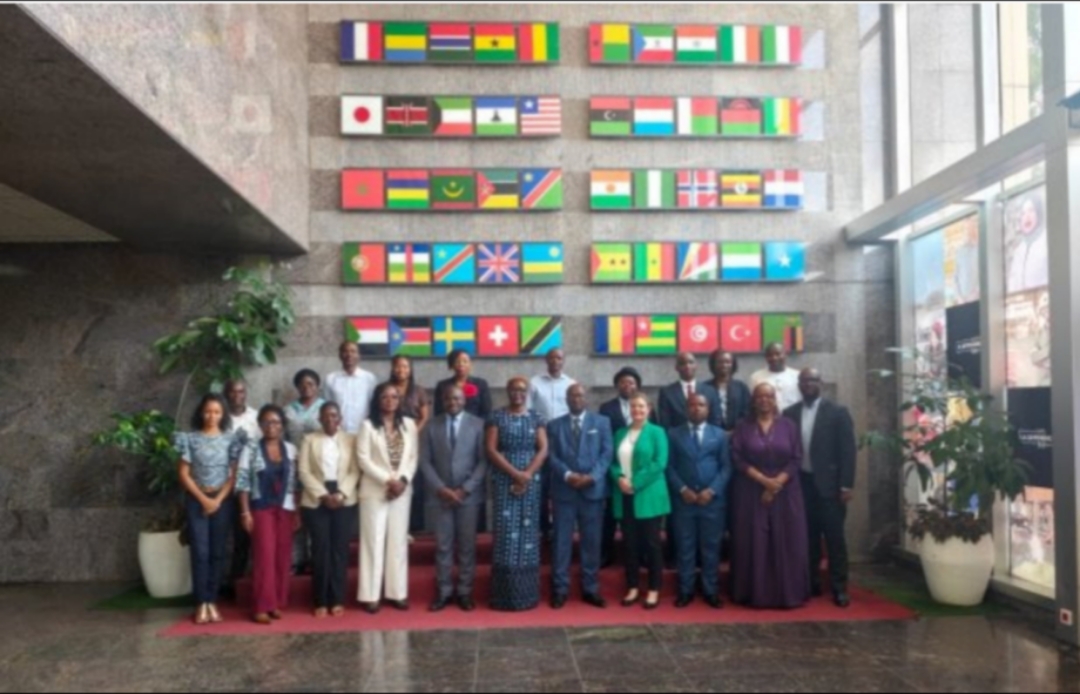
Africa Urged to Build Gender-Responsive Tax Systems to Boost Inclusive Growth

Hon. Mariam Seif Secures Electricity Expansion for Over 30 Villages in Iganga District

UJU Calls for Stronger Media Partnerships to Advance Press Freedom and Journalists’ Welfare in Uganda