Africa’s Critical Minerals: The Race for the Resources Driving the Green Economy
Africa’s critical minerals offer huge opportunities, but questions remain over fair benefits and sustainable use.
Founder & Chief Editor · 26 July 2026 · 4 min read
By Osmara Digital Media-Africa in Focus
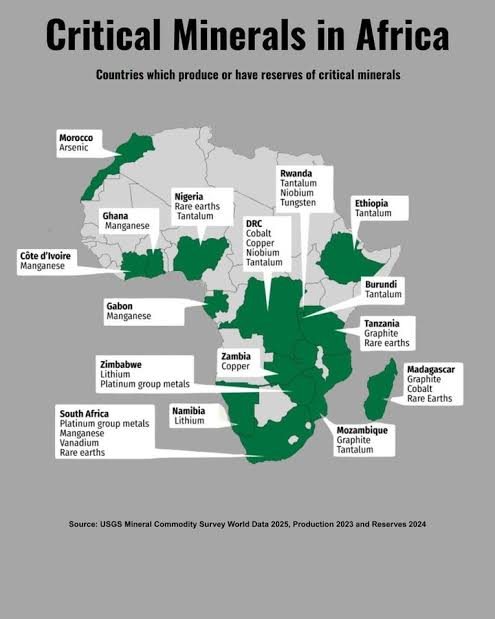
Africa is becoming a major centre in the global race for critical minerals that power modern technologies, including electric vehicles, renewable energy systems, smartphones, and advanced industries. The continent is home to vast deposits of minerals such as cobalt, lithium, copper, graphite, manganese, nickel, and rare earth elements. These resources are increasingly important as countries move toward cleaner energy and reduce dependence on fossil fuels. However, Africa faces a major challenge: transforming mineral wealth into lasting economic benefits for its people while avoiding the problems of exploitation, environmental damage, and unfair trade. Democratic Republic of Congo: The World’s Cobalt Giant The Democratic Republic of Congo (DRC) is the world’s leading producer of cobalt, a key mineral used in lithium-ion batteries for electric vehicles, laptops, and mobile phones. The country also has large deposits of copper, lithium, and other minerals. The copper-cobalt belt in the southern part of the DRC, especially around Katanga and Lualaba provinces, has become one of the most important mining regions globally. Despite its mineral wealth, the DRC continues to face challenges including illegal mining, poor working conditions, and calls for greater local benefits from international mining companies. Zimbabwe: Rising Lithium Power Zimbabwe has become one of Africa’s leading lithium producers, attracting investment as global demand for electric vehicle batteries increases. The country has major lithium deposits in areas such as Bikita, Arcadia, and Kamativi. Lithium has become known as “white gold” because of its importance in the clean energy transition. Zimbabwe is seeking to process more minerals locally rather than exporting raw materials, aiming to create jobs and increase revenue. Mozambique: Graphite for Clean Energy Mozambique has some of the world’s largest graphite reserves, especially in Cabo Delgado Province. Graphite is essential for battery production, particularly in electric vehicles. The country is positioning itself as an important supplier for the growing renewable energy market. However, insecurity in some parts of Cabo Delgado has affected mining operations and development efforts. Zambia: Copper and the Energy Transition Zambia is one of Africa’s biggest copper producers, with major deposits in the Copperbelt region. Copper is vital for electricity networks, solar panels, wind turbines, and electric vehicles. As demand for renewable energy increases, Zambia’s copper resources are becoming even more strategically important. The country is working to expand mining investment while encouraging more local processing. South Africa: Platinum, Manganese and Rare Minerals South Africa has some of the world’s largest reserves of platinum group metals, manganese, chromium, and other minerals. Platinum is important for hydrogen fuel technologies, while manganese is used in battery production. The country’s well-developed mining industry remains a major contributor to its economy, though it faces challenges including energy shortages and environmental concerns. Namibia: Uranium and Rare Earth Potential Namibia is known for uranium production and is also developing interest in rare earth minerals used in advanced technologies. Its mining sector continues to attract global investors looking for resources needed for future energy systems. Madagascar: Nickel, Cobalt and Graphite Madagascar has important deposits of nickel, cobalt, and graphite. The country’s minerals are increasingly valuable due to growing demand for batteries and renewable energy technologies. The Challenge: Africa Must Add Value Experts argue that Africa should move beyond exporting raw minerals and invest in local processing, manufacturing, and skills development. Instead of only shipping raw cobalt, lithium, or copper abroad, African countries are seeking to develop industries that create more jobs and retain more value within the continent. The African Continental Free Trade Area (AfCFTA) offers opportunities for countries to cooperate, build regional supply chains, and strengthen Africa’s role in the global mineral market. The Future of Africa’s Mineral Wealth Africa’s critical minerals could become a powerful engine for economic transformation. But success will depend on strong governance, environmental protection, fair partnerships, and ensuring communities living near mining areas benefit. The question facing Africa is not whether it has the resources — the continent clearly does. The challenge is whether these resources can be managed to build a more prosperous and sustainable future. Meta Title Africa’s Critical Minerals Future Meta Description Explore Africa’s critical minerals, from Congo’s cobalt to Zimbabwe’s lithium, and how resources could shape the continent’s green economy. Tags Critical Minerals, Africa Mining, Cobalt, Lithium, Copper, Green Economy, Energy Transition, Africa Development Alt Text African mining workers extracting critical minerals for global industries Captions Africa’s mineral wealth is becoming central to the global clean energy transition. Cobalt from the Democratic Republic of Congo and lithium from Zimbabwe are among resources powering future technologies. African countries are seeking greater value from their natural resources through local processing and investment.
Founder & Chief Editor
Founder and Chief Editor of Osmara Digital Media. Journalist and historian telling Africa's stories through an African lens, from West Nile to the continent.
Related stories

BUSOGA KINGDOM URGES PR PROFESSIONALS TO PUT PUBLIC TRUST BEFORE PUBLICITY
PRESIDENT MUSEVENI URGES SHEEMA FARMERS TO EMBRACE IRRIGATION, COMMERCIAL AGRICULTURE
KYABAZINGA MOBILISES BUSOGA LEADERS TO TACKLE TEENAGE PREGNANCY AND POVERTY