
Arua Women Debate: Why Maids Are Taking Over Husbands
Arua women say excessive reliance on maids, combined with wives spending too much time on phones and social media, can create emotional distance in marriages and open space for inappropriate relationships.

Founder & Chief Editor · 11 August 2026 · 3 min read
By Osmara Digital Media
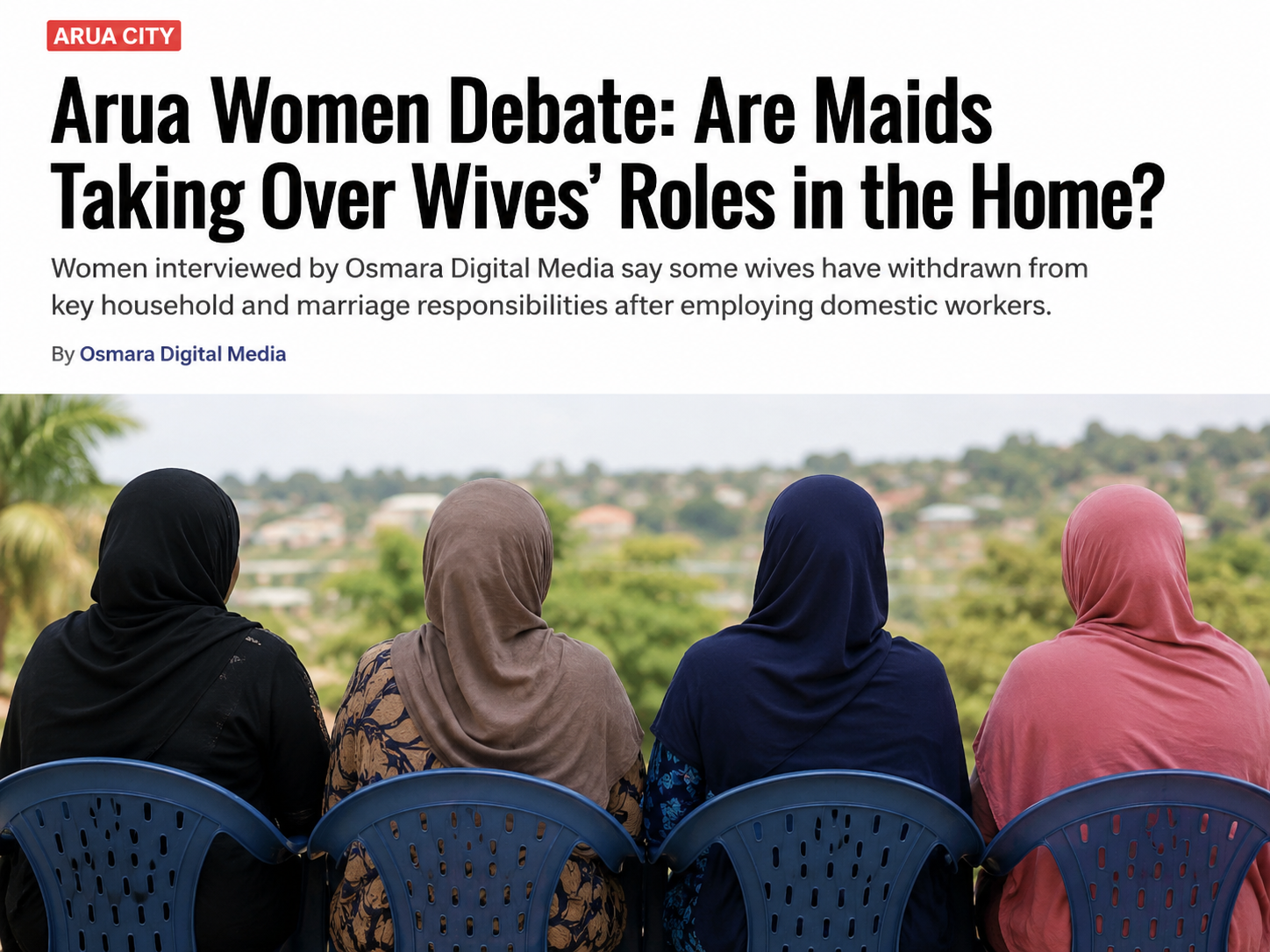
ARUA CITY — Women in Arua City are debating why some husbands can become emotionally or romantically attracted to domestic workers, with some women blaming not only the increasing role of maids in households but also the amount of time some wives spend on their phones and social media.
Women interviewed by Osmara Digital Media said the problem can begin when a wife gradually withdraws from activities that once brought her closer to her husband, leaving a domestic worker to spend more time around him and attend to his daily needs.
According to the women, a maid may prepare the husband's meals, serve him, wash and iron his clothes, keep his room organised and sometimes attend to other household needs. When the same person is constantly around the husband, they said, familiarity can develop and boundaries may become difficult to maintain.
But some women said the situation is not always created by the maid. They pointed to what they described as a growing habit among some wives of spending long periods on their phones, scrolling through social media, chatting with friends, watching videos or following online trends while domestic workers handle most of the work at home.
They argued that a woman can be physically present in the house but emotionally absent from her marriage if much of her attention is directed towards her phone. “Sometimes the wife is sitting with her phone for hours, looking at Facebook, TikTok or WhatsApp, while the maid is cooking, serving the husband and doing everything in the house,” one woman said.
The women said this can create a situation where the domestic worker spends more meaningful time with the husband than his wife does. While preparing meals or completing household duties, the maid may naturally interact with the husband, ask about his day and respond to his needs.
The participants stressed that this does not mean every husband will become attracted to a maid, nor does it make a domestic worker responsible for a husband's behaviour. They said married men have a responsibility to respect their marriages and maintain professional boundaries with domestic workers.
However, they argued that couples should recognise how daily routines can affect relationships. Some women also criticised wives who, after employing maids, stop cooking completely or refuse to personally prepare and serve certain meals for their husbands. They said domestic help should reduce the workload rather than completely remove a wife's participation in family life.
The debate also touched on the bedroom, with some women questioning situations where domestic workers are regularly allowed into the couple's private space to make the bed, arrange personal belongings or perform other intimate household tasks. For the women interviewed, boundaries should be established from the beginning. A maid can cook, clean, wash clothes and help with children, but the couple should decide which responsibilities should remain personal to them.
The women also acknowledged that modern family life is changing. Many wives work outside the home, run businesses, pursue education or manage other responsibilities, making domestic assistance necessary. They said hiring a maid should therefore not be viewed as a failure by a wife to perform household duties. Instead, they argued that the bigger issue is balance.
A husband should not be emotionally neglected because his wife is constantly occupied with her phone, just as a domestic worker should not be placed in a position where she becomes responsible for meeting the emotional or personal needs of the man who employs her.
The women said couples should make time for conversations, meals, companionship and other activities that strengthen their relationship, rather than allowing phones, social media or domestic workers to dominate their family life.
Ultimately, the Arua debate is less about blaming maids and more about how husbands and wives manage attention, affection, technology, household responsibilities and personal boundaries.
For the women who spoke to Osmara Digital Media, employing domestic help can make family life easier, but a marriage still requires the personal presence and effort of both partners.
Founder & Chief Editor
Founder and Chief Editor of Osmara Digital Media. Journalist and historian telling Africa's stories through an African lens, from West Nile to the continent.