Africa’s Health Workers Are Leaving: Who Will Treat the Continent’s Growing Population?
Africa faces a growing health workforce crisis as migration, unemployment, low salaries and poor working conditions threaten the continent’s ability to provide quality healthcare.

Founder & Chief Editor · 9 August 2026 · 8 min read
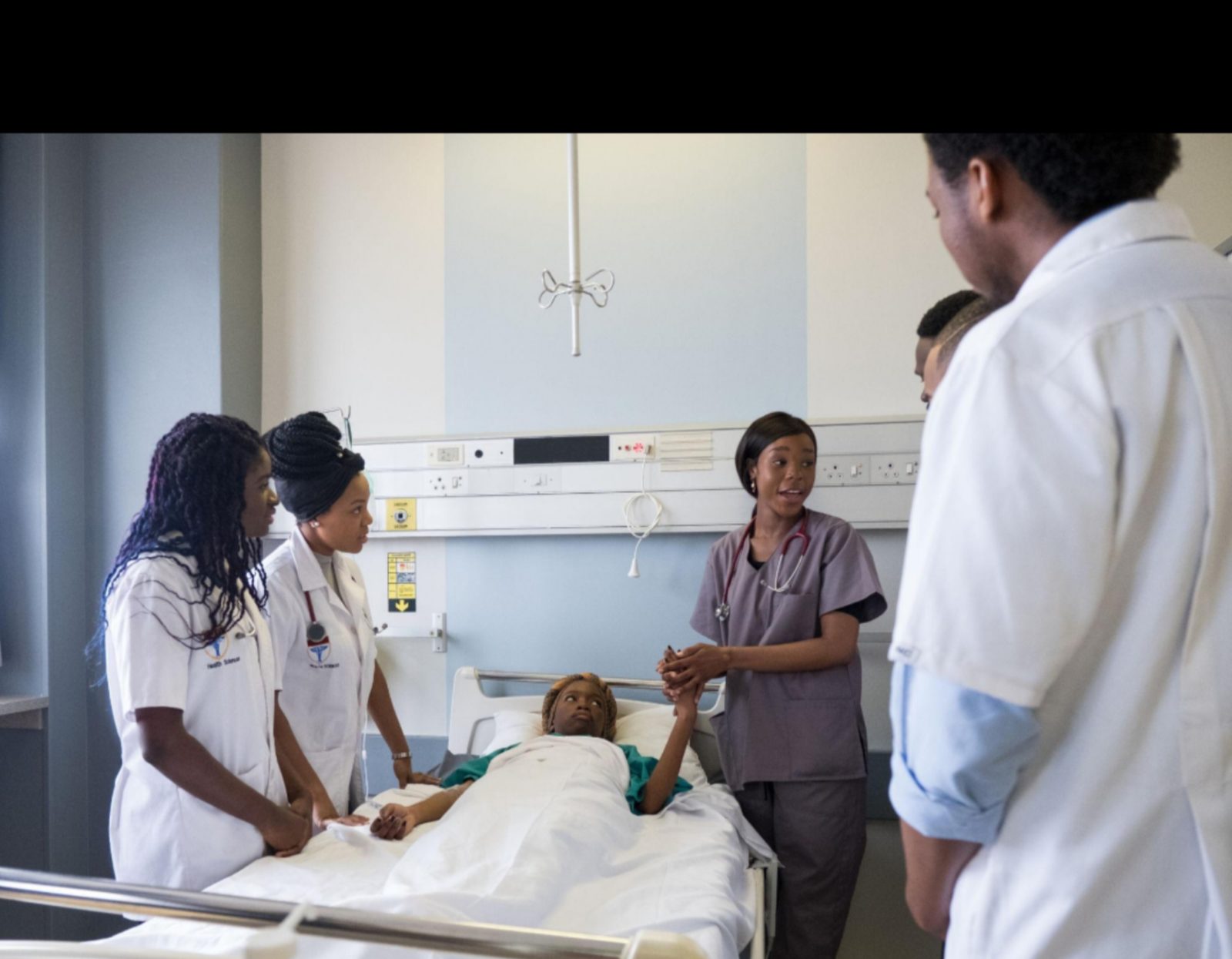
Africa is facing a health workforce crisis that is becoming increasingly difficult to ignore. Across the continent, governments are training more doctors, nurses, midwives, pharmacists, laboratory scientists and other health professionals, yet millions of people continue to struggle to access quality healthcare. At the same time, growing numbers of trained professionals are seeking opportunities outside their countries, leaving already overstretched health systems with fewer experienced workers.
The World Health Organization’s State of the Health Workforce in Africa 2026 report puts the scale of the problem into sharp focus. The WHO estimates that Africa could still face a shortage of about 5.85 million health workers by 2030, despite substantial growth in training and in the overall health workforce. At the same time, an estimated 943,000 trained health workers were unemployed in 2024, exposing a striking contradiction: a continent that desperately needs more health professionals is also struggling to employ many of those it has already trained.
The crisis, therefore, is not simply about how many health workers Africa produces. It is about whether governments can create jobs for them, pay them adequately, provide safe and functional working environments, and offer professional opportunities that give them reasons to build their careers at home.
The workers are being trained—but where are the jobs? Africa’s health workforce has expanded considerably over the past decade. According to WHO, the regional health workforce grew from approximately 1.6 million in 2013 to 5.1 million in 2022, while training institutions continue to produce large numbers of graduates. But the expansion in training has not automatically translated into better access to healthcare.
WHO’s 2026 assessment points to a labour-market mismatch in which some countries have unemployed or underemployed health professionals while hospitals, health centres and rural communities continue to experience serious staffing shortages. In some low- and lower-middle-income African countries, nearly 30 percent of newly trained health graduates remain unemployed or underemployed one year after graduation.
This raises a difficult question for policymakers: Why train health workers if health systems cannot afford to employ them?
For a young doctor or nurse who has spent years pursuing professional training, unemployment can become a powerful incentive to look beyond national borders. When opportunities abroad offer better salaries, more predictable employment and improved working conditions, migration can quickly become an attractive option. Why are Africa’s health workers leaving?
Health-worker migration is rarely driven by a single factor.
WHO identifies low wages, poor working conditions, limited career advancement, inadequate equipment and supplies, and weaknesses in health-system governance among the factors pushing professionals away from their home countries.
The African Health Observatory similarly points to inadequate remuneration, poor working conditions, political instability, underinvestment in health systems, limited career progression and weak management support as important drivers of migration.
Behind these statistics are individual decisions shaped by difficult working realities. A doctor may spend long hours treating patients in an overcrowded hospital without access to essential equipment. A nurse may be responsible for far more patients than can reasonably be managed safely. A midwife may work through the night with inadequate staffing. A newly qualified professional may spend years waiting for a government appointment while watching colleagues secure better-paying jobs abroad. For many, leaving may therefore feel less like abandoning their country and more like pursuing professional survival.
Rural communities are paying the highest price The workforce crisis is particularly severe outside Africa’s major cities. Urban hospitals are more likely to attract specialists, offer better-equipped facilities and provide greater opportunities for professional development. Rural health centres, by contrast, often struggle to recruit and retain experienced personnel.
The result is a troubling imbalance: the communities with some of the greatest healthcare needs can have some of the fewest health workers. When experienced professionals leave rural facilities, the burden on those who remain increases. Workloads become heavier, burnout becomes more likely and the quality and availability of services can suffer. In turn, poor working conditions can encourage even more workers to leave. The problem is therefore not only the number of health workers Africa has. It is also where those workers are located and whether the health system can keep them there.
Africa’s paradox: unemployed graduates and understaffed hospitals Perhaps the most striking feature of Africa’s health workforce crisis is that it cannot simply be explained by saying the continent does not train enough professionals.
Africa can have unemployed health graduates and understaffed hospitals at the same time. WHO estimates that about 943,000 trained health workers were unemployed in 2024, even as the continent remains on course to face a multi-million-worker shortage by 2030.
The contradiction points to a deeper financial and structural problem. Governments need resources not only to train health professionals but also to create positions, pay salaries, equip facilities and provide opportunities for career development. Without adequate health financing, expanding training institutions can produce more graduates without creating enough jobs to absorb them.
WHO estimates that countries would need to increase spending by approximately US$4 per person annually, or expand workforce budgets by around 15 percent each year, to close the workforce gap. The agency also estimates that every US$1 invested in the health workforce can generate up to 10 times that amount in financial returns and more than 30 times in wider social and economic benefits.
The message is clear: investing in health workers is not simply an expenditure. It is an investment in the continent’s economic and social future.
What happens when Africa loses its trained professionals? The consequences of health-worker migration extend far beyond individual hospitals. When a doctor, nurse, pharmacist, laboratory scientist or specialist leaves, a country loses not only an employee but also years of investment in education, training and professional development.
Those who remain often have to absorb the additional workload. A hospital with fewer specialists may experience longer waiting times. A rural health centre with too few nurses may struggle to provide round-the-clock services. A shortage of midwives can place additional pressure on maternal healthcare, while a lack of laboratory professionals can delay diagnosis and treatment.
These shortages become even more serious as African countries face a combination of infectious diseases, maternal and child health challenges and a rapidly growing burden of non-communicable diseases such as diabetes, hypertension and cardiovascular disease.
A health system cannot function effectively without the people who operate it. Can Africa compete with richer countries? This is one of the most difficult questions facing African policymakers. Wealthier countries can often offer salaries, working conditions, specialist training and career opportunities that many African governments struggle to match. As global competition for skilled health professionals increases, African countries risk becoming training grounds for health systems elsewhere. But simply preventing health workers from leaving is unlikely to solve the problem.
Health professionals have the right to seek better opportunities, support their families and pursue career ambitions. Restricting migration without addressing the reasons professionals want to leave would only treat the symptom rather than the cause.
The more sustainable solution is to make staying attractive. That requires competitive remuneration, safe working environments, functioning hospitals and health centres, adequate medicines and equipment, professional development, transparent recruitment systems and stronger leadership within health institutions. Africa must compete not only for patients and investment, but also for its own skilled professionals. A continental workforce strategy African countries are increasingly recognising that the problem requires a coordinated response.
WHO’s Africa Health Workforce Agenda 2026–2035 focuses on planning, training and retaining health workers, with greater attention to employment, financing, education and workforce management.
The strategy comes as the continent's health training capacity continues to expand. WHO reported in July 2026 that Africa’s training capacity had increased by about 70 percent since 2018, even as the continent could still face a shortage of approximately 5.8 million health workers by 2030.
The challenge now is turning strategies and commitments into actual jobs and better working conditions. Africa does not simply need more doctors, nurses, midwives and other professionals graduating from universities and training institutions. It needs health systems capable of employing, supporting, protecting and retaining them. The question Africa must answer The future of African healthcare may depend less on how many health workers the continent can train and more on whether it can convince those workers to stay.
If doctors, nurses, midwives, pharmacists, laboratory scientists and other professionals continue leaving because they cannot find employment, earn sustainable incomes or work in acceptable conditions, Africa’s workforce crisis will deepen.
But if governments invest in health workers as seriously as they invest in hospitals, equipment and infrastructure, the same professionals currently viewed through the lens of migration could become one of the continent’s greatest development assets. The question is no longer simply, “How many health workers does Africa have?”
The more urgent question is: “What must Africa do to make its health workers stay?” Turning the story into an investigation For Osmara Digital Media, this issue offers an opportunity to go beyond the WHO statistics and examine what the workforce crisis looks like on the ground.
A five-country investigation involving Uganda, Ghana, Nigeria, Kenya and Zimbabwe could compare health-worker salaries and allowances, numbers of trained but unemployed professionals, doctor-to-population and nurse-to-population ratios, rural versus urban staffing, migration patterns, working hours, patient workloads, availability of medicines and equipment, and government health-workforce budgets. The investigation could also put human experiences at the centre of the story by speaking to health workers who have left Africa, professionals preparing to leave, and those who have chosen to remain despite difficult conditions. Their experiences could provide the clearest answer to the question at the heart of Africa’s health workforce crisis: What would it take for Africa’s health workers to stay?
Founder & Chief Editor
Founder and Chief Editor of Osmara Digital Media. Journalist and historian telling Africa's stories through an African lens, from West Nile to the continent.