
Muni NTC Becomes UNITE Muni Campus as Teacher Reforms Take Shape
Arua City's Muni National Teachers College has been rebranded as UNITE Muni Campus, part of Uganda's drive to unify and upgrade teacher training.
West Nile Correspondent · 14 July 2026 · 2 min read
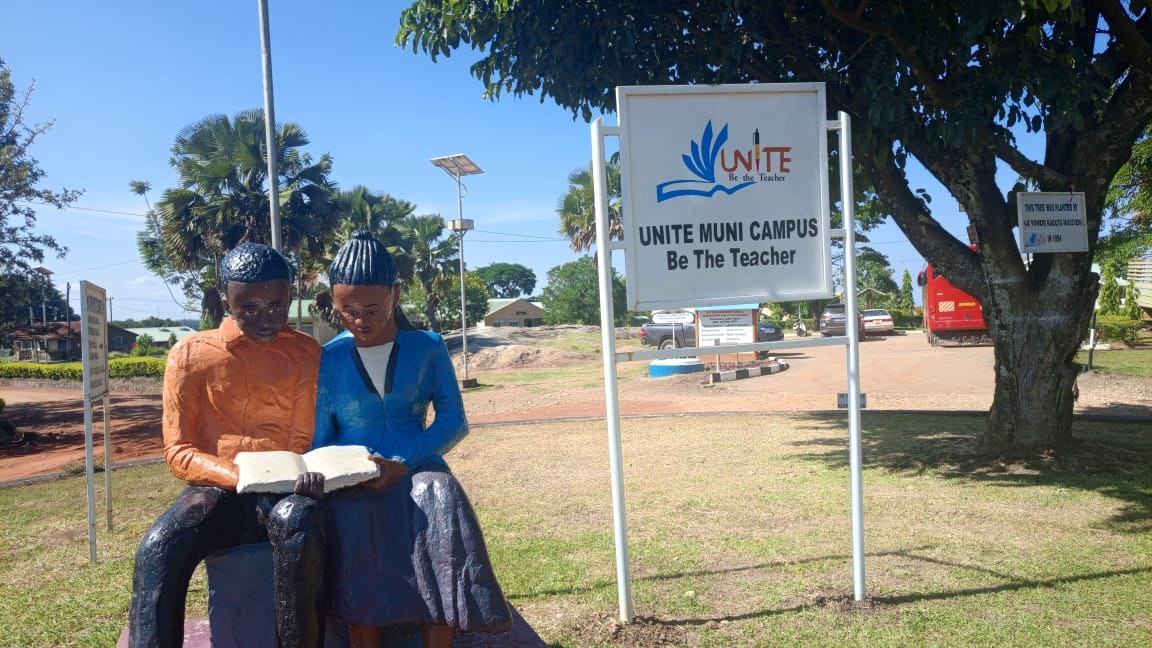
ARUA, Uganda - Muni National Teachers College, for years one of the most recognisable names in teacher training in northern Uganda, has been rebranded as the Uganda National Institute of Teacher Education (UNITE) Muni Campus, folding the Arua City institution into a single national body now responsible for preparing the country's teachers.
New signage bearing the UNITE name and its motto, "Be The Teacher", recently went up at the campus, replacing the old college branding. On the grounds, a statue of two students reading together gives the refreshed identity a physical centrepiece, a deliberate image of the scholarly culture the reforms are intended to build.
Why the name has changed
The rebrand is more than a change of letterhead. It flows from Uganda's National Teacher Policy, adopted in 2019, which committed the government to professionalising teaching, raising the minimum qualification for teachers to a bachelor's degree and consolidating teacher education under one national institution.
UNITE is that institution. Under the reforms, Uganda's National Teachers' Colleges, Muni among them, are being brought together as campuses of the new institute rather than operating as stand-alone colleges. The intention is a harmonised system: one admissions framework, one curriculum standard and one quality assurance regime for teacher education across the country.
For decades, National Teachers' Colleges trained secondary school teachers to diploma level, while degrees remained the preserve of universities. The policy shift means student teachers are now expected to work towards degree-level qualifications, and the consolidation under UNITE is designed to make that pathway consistent wherever a student enrols.
What it means for student teachers
For those studying at Muni, the most immediate difference is identity: they are now students of a national institute with a campus in Arua City, not of a regional college. Over time, the reforms are meant to translate into standardised programmes, shared benchmarks with the institute's other campuses and qualifications that carry the same weight nationwide.
Supporters of the consolidation argue it should also help close the gaps between what individual colleges offered. Rather than each college marking its own homework, a single institute is answerable for quality across all of its campuses.
A significant moment for West Nile
The change carries particular weight in West Nile, where Muni has long been the anchor institution for teacher training. The region has for years faced shortages of qualified teachers, a pressure compounded by the presence of some of Uganda's largest refugee settlements, where classrooms are frequently overcrowded.
Keeping a campus of the national institute in Arua City keeps degree-track teacher education within reach of students from across West Nile, sparing them the cost of relocating to central Uganda for training. It also adds to Arua's growing profile as an education centre, alongside Muni University on the city's outskirts.
Whether the rebrand delivers better teachers will depend on what follows: funding, staffing and the discipline to hold every campus to the same standard. For now, the new signs and the statue of the two readers announce the ambition plainly enough. Teacher education in Uganda is being rebuilt as one system, and West Nile has a seat at the table.
West Nile Correspondent
Correspondent covering education, sport and community stories from northern Uganda. Occasional vlogger and livestreamer.